Showing posts with label word consciousness. Show all posts

Sunday, July 28, 2024

Sixth Grade ESL Study: Promoting Awareness of Unknown Word Meanings

What a fine thing it would be, if students would take note of new and unfamiliar words -- and think about them -- rather than merely skipping over them. This post adds more to the theme of developing word consciousness, including sensitivity to unknown words.
 
The method described here requires one student to develop knowledge of unfamiliar words within a text, in order to then teach the meanings to a small group. This method was successful with a small group of ESL students in sixth grade. 
 
Eminent researcher Andrew Biemiller, expertly assisted by Jody Panto, carried out this study in 2010. I recently asked him more about it, and he provided me with a brief excerpt/ summary for this blog, shown below.


A Procedure for Promoting Student Awareness for Unknown Word Meanings 
excerpt from Biemiller, 2010

 
In a preliminary study with 6 ESL sixth grade students in 1 class for 16 weeks, my assistant, Jody Panto, and I undertook to increase students’ vocabulary. Most of the students in this class spoke English as a second language and spoke their native language at home. Our general goal was to encourage a higher level of asking about unfamiliar words. 
 
Panto’s basic routine for a reading session involved having each student in a reading group take responsibility for the vocabulary on one or two pages of text. The texts were somewhat more complex than these students would be expected to read on their own. The program emphasized seeking direct assistance for unfamiliar words, both from peers and from teachers when necessary. 

Wednesday, April 22, 2020

Mindfulness, Madness, and Morphology


MINDFULNESS is a noun composed of three morphemes, mind + ful + ness. It is an abstract noun, a nebulous quality, a characteristic, a psychological state, and in some sense, an entity. Abstract, invisible, untouchable. But its presence within a group or an individual, and its lack, can feel quite concrete.


According to Online Etymological Dictionary these concepts are not new. The word mindfulness has been in use for about five centuries and in the Buddhist sense for over a century. Mindless has been around six centuries or more. Note the Old English meaning ‘senseless, beside oneself, irrational, wanting power of thought.’ In terms of the plague, Europe would have known this state of mind.

The spread of covid 19 -- and the widely variable, rapidly changing information that surrounds it -- has spurred us to become more...or less...something. More vigilant. More reactive. More confused.  Also more compassionate, more courageous, more mindful.


Literacy Activities at Home or at School

1. Students -- or entire families -- could discuss the meaning of mindfulness and its counterpart, mindlessness. Evaluate current affairs and news reports as exemplifying mindfulness or mindlessness, somewhere between the two, or something else entirely. Discuss your reasons.

2. Draw up a list of synonyms and near-synonyms for each word. Try out the Visual Thesaurus website. To learn how, check out the post Beware the Obscure Adjective at Wordshop.

3. Become artful. Play with color, font size, and positioning. Create a word cloud from news articles on coronavirus, using text copied and pasted into Wordle or any cloud-maker. For more ideas on how to use word clouds, refer to a previous post on Word Clouds, Key Concepts and History. Some word cloud programs allow the words to fit into shapes.


MORPHOLOGY ACTIVITIES


Discuss the image Mind Full, or Mindful?  
What's the message? How does the morphological construction differ? How does the meaning differ?


Explore the morphology and etymology of mindfulness:

Explore the base mind and the suffixes -ful and -ness. Follow the links embedded in the text below and discuss the content and implications.

According to Online Etymology Dictionary, the word mind is a noun with its roots in Old English, Proto Germanic, and theoretically, it hails all the way back to one of the great ancestral mother tongue, ProtoIndoEuropean (PIE). The original meaning of of the concept was strongly associated with memory, remembering. Survival itself required a good memory.

mind: "that which feels, wills, and thinks; the intellect," late 12c., mynd, from Old English gemynd" memory, remembrance; state of being remembered; thought, purpose; conscious mind, intellect, intention" 

Discuss morphologically related words like mindset, minding, unmindful, mastermind, etc.

Utilize the Word Searcher website, created by Neil Ramsden. Notice the spelling sometimes differs from American English, as the author is based in Europe. Type mind into the Word Searcher field. Find 27 words that include that base. Discuss the meanings of these words.


Explore words ending with the suffix -ful

Type ful$ into the Word Searcher bar -- the suffix (ful) followed by the dollar sign $ to indicate placement at the end of the word.  I found 150 matches, including lawful, bagful, cupful, eyeful, baleful, needful, painful, gleeful, neglectful, disdainful, purposeful, teaspoonful. How are they alike and different? How could they be sorted into different groups?


Explore words ending with the suffix -ness

Utilize the Word Searcher website agin. Type ness$ into the search bar -- the suffix (ness) followed by the dollar sign $ to indicate placement at the end of the word. Notice again that the spelling sometimes differs from American English, as the author is based in Europe.

Try to decipher the meaning of previously unknown words by examining the morphological construction. For example, younger students might analyze and discuss shyness, goodness, grayness, wetness,  silliness, swiftness, heaviness, etc.  Note that most of the words generated through this search incorporate the suffix –ness, but a handful do not, as  in lioness and patroness (lion + ess and patron + ness). So, to deal with that, play Will the Real Suffix Please Stand Up, as described in The Descriptive Suffix -ish.

Older students might discuss the meaning and usage of academic words found by Word Searcher, including conspicuousness, coyness, aptness, flirtatiousness, inquisitiveness, meaninglessness, neighborliness. 


Explore words ending with both suffixes -ful and -ness:

Type fulness$ into the search bar.  Notice that the search engine only found 45 matches. Of those, some words are rarely used and may be unknown to the student but could be deciphered via morphological analysis and verified via the dictionary.

For example, consider three results: gratefulness, mournfulness, peacefulness. Of those three words, which one is easiest to decipher because the base is known and transparent? How does grate relate to  the concept of appreciation, anyway? Is this a grate over a duct or what? Discuss gratitude. And grace. Key ingredients to achieving mindfulness. And to living in the present.


Peace,
Susan

Thursday, November 10, 2016

Meta Meta Meta

Metacognitive, Metalinguistic, Metamorphological


The purpose of Vocabulogic is to help educators "bridge the verbal divide" that exists between those students who freely use language as a precision tool and those who do not, for whatever reason. 

The photo of the Golden Gate Bridge (The Tahoe Guy / CC) is a metaphor for spanning the language gulf. This gulf is deepened by variance in socioeconomic status, including exposure to books and academic language in the home (e.g. Corson, 1984; Hart & Risley, 1995).

Vocabulogic strives to promote literacy via word-reasoning skills, knowledge, and a keener-than-normal conscious awareness of language. Numerous experts have posted on a variety of pertinent topics, always with some connection to language and literacy goals. Articles posted here implicitly or explicitly accord value to metacognition as it relates to some aspect of metalinguistic awareness.

Berko, 1958
“Metalinguistic awareness is broadly defined as the ability to think about and reflect upon the nature and functions of language” (Pratt & Grieve, 1984, p. 2). This type of cognition involves conscious awareness of language as an object that one can examine, manipulate, and reflect upon.

Metalinguistic awareness encompasses far more than the ability to reflect on single words. It includes awareness of phonemes and syllables, graphemes and symbols, morphemes and meaning, phrases and sentences, grammar and syntax, context and definitions, homonyms, synonyms and antonyms, slang, dialect, and jargon, lexical ambiguities, riddles, and word play. It includes metaphor, imagery, personification, onomatopoeia, and rhyming. In sum, metalinguistic awareness encompasses all aspects of language (Nagy, 2007). Or at least, it can. If needed. If called upon.

Flavell (1981) suggests that metalinguistic awareness falls under the general rubric of metacognition, which subsumes metamemory, meta-attention, metalinguistics, etc., all of which allow us to exercise intellectual oversight while learning. Gombert (1992) grouped metalinguistic awareness into six subcategories of language: metaphonological, metasyntactic, metalexical, metasemantic, metapragmatic, and metatextual.

More recently -- and highly pertinent to Vocabulogic -- Duncan, Casalis, and Colé (2009) included another subcategory: metamorphological awareness of word structure. Their conception of metamorphological awareness overlaps with several of Gombert’s subcategories, but also gleans from the growing body of research focused on morphological awareness.

Metalinguistic awareness facilitates early literacy (Andrews, Yaden, & Templeton, 1986; Donaldson, 1978).  Zipke asserted, “Metalinguistic awareness, the ability to manipulate language independent of meaning, is an important ingredient in learning to read.” (2011, p. 349). Cain (2007) investigated the relations between word reading accuracy, reading comprehension and two measures of syntactic awareness, which is a type of metalinguistic awareness. Assessing two groups of children, aged 7-8 and 9-10 years, she found evidence that word reading accuracy and syntactic awareness share unique variance that is not explained by vocabulary and grammatical knowledge or memory.

Activities involving conscious levels of “meta” thought include self-dialogue, thinking aloud to clarify our reasoning, and to gain a better sense of our own understanding. It also includes conversations that elucidate our thoughts to others, including teachers, hopefully receiving a thoughtful response in reply. Teachers can encourage independent thought at times, but also prompt students to work together, teaching them to explain their thinking as they problem solve or create. Metacognitive processing is integral to learning, and especially to mastery levels of learning.   Unless the need for metacognitive processing exists, thoughts will not necessarily become conscious. The teacher must create the task that generates the need for metacognitive, metalinguistic thought. Many such tasks are described throughout Vocabulogic.


References:

Andrews, J. F., Yaden, D. B., & Templeton, S. (1986). Metalinguistic awareness and beginning literacy: Conceptualizing what it means to read and write. Portsmouth, N.H: Heinemann.

Cain, K. (2007). Syntactic awareness and reading ability: Is there any evidence for a special relationship? Applied Psycholinguistics, 28, 679-694.

Corson, D.J. (1984) The lexical bar: lexical change from 12 to 15 years measured by social class, region and ethnicity. British Educational Research Journal 10, 2: 115-133.

Donaldson, M. (1978). Children’s minds. Glasgow: Collins.

Duncan, L. G., Casalis, S., & Colé, P. (2009). Early metalinguistic awareness of derivational morphology: Observations from a comparison of English and French. Applied Psycholinguistics, 30, 405-440.

Flavell, J. H. (1981) Cognitive Monitoring. In W. P. Dickson (Ed.), Children’s Oral Communication (pp. 35-60). New York: Academic Press.

Gombert JE. Le développement métalinguistique. Paris, France: Presses Universitaires de France; 1990.

Hart, B., & Risley, T.R. (1995). Meaningful differences in the everyday experience of young American children. Baltimore: Paul H. Brookes.

Nagy, W. E. (2007). Metalinguistic awareness and the vocabulary-comprehension connection. In R. K. Wagner, A. E Muse, & K. R. Tannenbaum (Eds.), Vocabulary acquisition: Implications for reading comprehension (pp. 52–77). New York: Guilford Press.

Pratt C, Grieve R. (1984). The development of metalinguistic awareness: An introduction. In Tunmer WE, Pratt C, Herriman ML (Ed.), Metalinguistic awareness in children (pp. 2–11). Berlin, Germany: Springer-Velag.

The Tahoe Guy, (Retrieved 2010).  Moon Over San Francisco. Licensed under Creative Commons. Cropped.

Zipke, M. (2011): First Graders Receive Instruction in Homonym Detection and Meaning Articulation: The Effect of Explicit Metalinguistic Awareness Practice on Beginning Readers. Reading Psychology, 32:4, 349-371.


Monday, September 17, 2012

On Politics and Word Meaning (with video)

I begin with Mark Forsyth's entertaining video clip discussing the etymology of a few political terms and conclude with George Orwell's more serious essay on politics and communication.

A number of Vocabulogic posts have explored how words tend to change in form, meaning, and usage over time, referencing the study of etymology. For example, in one post I describe how the Common Core State Standards include the study of etymology in high school English classes. See Etymology and Morphology Standards. In another post, Shane Templeton discusses how word meanings change over time and are "more than the sum of their parts".

Along the same lines, I offer an interesting video, courtesy of TED Talks. With plenty of humor and some embellishment, etymologist Mark Forsyth makes the point that words change meaning based on the usage at the time. Try as we might, we cannot control word meaning, nor cast it in cement. It is likely to take on a life of its own. Speechifiers take note!
Forsyth states:
"Politicians try to pick words and use words to shape reality and control reality, but in fact, reality changes words far more than words can ever change reality.”
Forsyth discusses two political terms, snollygoster and president. What's a snollygoster?  By the sound of the word, and knowing it is used to describe politicians, I suppose we can all guess.

Of more relevance, Forsyth explores how the term president came to reference the "chief executive officer for the US" and how its connotations have drastically changed since first applied to George Washington. The bit about the US Senate may be somewhat apocryphal, as some have suggested, but the story is entertaining and provides us with word-sleuthing material.

This short video might perhaps be interesting to secondary and tertiary students studying civics, US History, or etymology. The video runs 6.26 minutes, published June 2012. Watch it below, or view it directly at the site, TED.com.


Politicians and Language: 

How do the words we use reflect our personality? James (Jamie) W. Pennebaker, a psychologist at the University of Texas, analyzed the speech patterns used during the debate between President Obama and Governor Romney. His analysis includes the use of pronouns and function words as well as content words and positively or negatively charged phrases. He compares the two candidates to former Presidents Clinton, Bush, and Reagan. View his brief interview at Wordwatcher,  a You Tube channel hosted by UT Austin. You might be surprised at his analysis.

ALSO, if the relationship between words, ideas, and communication interests you, see George Orwell's essay, Politics and the English Language, published in 1946. I found it online, courtesy of Vincent Ferraro, Professor of International Politics at Mount Holyoke.

Citing five excerpts from various publications, Orwell shows how words can muddle our thinking -- how easily we can confuse ourselves and our audience with unclear language -- and not necessarily intentionally. But politicians on both sides of the aisle have been known to muddy the waters, as Orwell shows. He offers sound advice for anyone who wants to improve both their thought processes and their communication, concluding with the following statement:
Political language -- and with variations this is true of all political parties, from Conservatives to Anarchists -- is designed to make lies sound truthful and murder respectable, and to give an appearance of solidity to pure wind. One cannot change this all in a moment, but one can at least change one's own habits, and from time to time one can even, if one jeers loudly enough, send some worn-out and useless phrase -- some jackboot, Achilles' heel, hotbed, melting pot, acid test, veritable inferno, or other lump of verbal refuse -- into the dustbin, where it belongs.

Sunday, August 19, 2012

Video: The Joy of Lexicography (Erin McKean)

In the most recent post, I discussed the minimal reference to studying etymology allocated by the Common Core State Standards, and I attempted to make a case for spending some time on little word histories anyway, regardless of the Standards.

Today, a related topic -- lexicography.  Courtesy of TED Talks, I am excited to share Dr. Erin McKean's entertaining yet educational presentation on the nature of words, dictionaries, and lexicography, in general. This video lasts about 15 minutes, but it felt like 5, at least for me. Lots of laughter and jolly good word fun. Published in 2007, it's like a good book--even better the second time.

In the video below, Erin makes the case that a paper dictionary limits the amount of words that can "fit in the pan" (the book). She argues that in a digital environment there is no limit to the number of words that could fit. So, if not spatial constraints, why should a word be included in a dictionary? According to Erin, because we LOVE and USE the word. In The Joy of Lexicography, she says:
People say to me, "How do I know if a word is real?" You know, anybody who's read a children's book knows that love makes things real. If you love a word, use it. That makes it real. Being in the dictionary is an artificial distinction. It doesn't make a word any more real than any other way. If you love a word, it becomes real.
Applications for older students: The video is suitable for older students. Teachers could share it when discussing the limitations of a paper dictionary, the rise of new media,  the legitimacy of words, the joy of word play and creative expression, etc.

Jamie's Journey: The Savannah (Ebbers)
Applications for younger children: Encourage children to invent new words, and let them know that you are interested in the words they use, whether new or old. One way to encourage word coinage is by reading the chapter book Frindle. (I'm calling my pen a "frindle" by gum, no matter what  the dictionary says!) Frindle is best suited for grades 4-5. Likewise, for grades K-3, in Jamie's Journey: The Savannah, I use the word dreamer in an unusual way. (Image text: "With his mat on his back and his dreamer unfurled, Jamie journeys through town to the end of the world.") This word lends itself to questions like "What is our dreamer, where is our dreamer, and how important is it, to have a dreamer?

Why bother? Word coinage and discussions about the dictionary encourage metalinguistic awareness, which in turn fosters comprehension. Also, word coinage is one aspect of word consciousness, one of the four components of a robust vocabulary program (Graves, 2006). This type of instruction is important for a number of reasons, including motivational and metacognitive aspects of learning to read, write, and otherwise express ourselves.

Courtesy of TED Talks, Erin McKean, The Joy of Lexicography (~15 minutes).
(Give the video a moment to load, or see it directly at this link.)


Erin McKean, lexicographer, is the CEO and inspirational force behind one of my favorite new and interactive dictionaries, Wordnik. This digital dictionary provides examples of contextualized word usage from Twitter, etc., word images from Flickr, and all the basic stuff a traditional dictionary offers. In addition, Wordnik encourages us (students, too) to contribute new words and new uses for old words.

Caution: A reader recently advised caution when sending students to the Wordnik site. Depending on the word -- in her case, explicit -- Wordnik may yield inappropriate images and quotations.

Sunday, August 5, 2012

Etymology & Morphology Standards (survey results)

The Common Core State Standards (CCSS) provide learning goals for grades K-12. These new objectives have been adopted by 45 states (see map). In this post, I discuss the CCSS that pertain to etymology and morphology and argue that the Standards do not adequately address etymology. I begin with the survey results and conclude with websites and books for teaching etymology.


The survey reveals a somewhat keen  interest in word origins for more than half the respondents (72 of 127 voters). Given the readership of Vocabulogic, this is perhaps not surprising, but it is promising. If teachers are interested in something, students are more likely to become interested, too (especially if they like the teacher). In his classic work, Principles of Teaching, Thorndike (1906) suggested that the second cause of interest is the force of imitation; he argued that students will be interested in whatever interests the community—including their teachers and fellow students—and the interest will be acquired almost by infection.

DO THE STANDARDS INCLUDE MORPHOLOGY?
Yes, in the CCSS, the English Language Arts (ELA) Standards include morphological awareness (knowledge of word structure, especially via affixes and roots). While morphological awareness (MA) is never mentioned per se in the Standards, the related content is included as a sub-skill across every grade, K-12. However, to find the standards that apply to MA, one must search around a bit, hunting in the various domains under ELA: Reading, Language, Foundational Skills. Search for the terms inflectional endings, suffixes, prefixes, affixes, compound words, Greek and Latin roots. Below is one example standard, showing the morphology bits, from grade 3:

Determine or clarify the meaning of unknown and multiple-meaning word and phrases based on grade 3 reading and content, choosing flexibly from a range of strategies.
  • Determine the meaning of the new word formed when a known affix is added to a known word (e.g., agreeable/disagreeable, comfortable/uncomfortable, care/careless, heat/preheat). 
  • Use a known root word as a clue to the meaning of an unknown word with the same root (e.g., company, companion).

WHAT ABOUT ETYMOLOGY?
Etymology is the study of how words have changed in form, meaning, and usage over time, including the origins of words--whether a word was first used by the ancient Greeks, for example. See prior post and see post by Shane Templeton.

Etymology is almost forgotten in the Common Core ELA Standards. The search term etymology appears only twice (!!) across the entire document, K-12. The search term word origins is not found at all.  The standard first appears in grades 9-10 and repeats in grades 11-12:

Determine or clarify the meaning of unknown and multiple-meaning words and phrases based on grades 9–10 reading and content, choosing flexibly from a range of strategies.
  • Consult general and specialized reference materials (e.g., dictionaries, glossaries, thesauruses), both print and digital, to find the pronunciation of a word or determine or clarify its precise meaning, its part of speech, or its etymology. 

Hmm. It seems to me that the etymology bit was almost an afterthought. The language is certainly not strong, and only applies to high school. Why is etymology given slight attention? I know not. But, in support of this decision, researchers have not sufficiently explored how etymological insight relates to either morphological insight, vocabulary knowledge, or even orthographic knowledge (how to spell).

On the other hand, learning about word histories might be viewed as one way to make the word stick. If we know why a word is so named, and have a sense of its history, we might better remember it. Vocabulary researcher Stephen Stahl explained it like this, in his book Vocabulary Development (1999, pp 22-23):
"Telling word stories can make words memorable. Knowing that bilious comes from the medieval humor, bile, which caused anger...makes the word more memorable"
Likewise, knowing that robot originally meant "forced laborer or slave' (from Czech robotnik "slave," from robota "forced labor, drudgery") makes the word far more interesting, more three dimensional, cognitively "sticky" or memorable, and infused with history. In my view, learning etymology reinforces the study of history, and the reverse is also true.

There is another reason to include word origins long before high school. English freely adopts foreign loan words (prior post). English contains words from dozens--if not hundreds--of other languages. It is important to be aware of this fact, especially from a spelling perspective.

IMPLICATIONS for INSTRUCTION
I would not suggest spending a lot of time on word histories, but I see no reason to wait until high school to integrate the history of the word into the vocabulary lesson--with the caveat that this need only happen occasionally, and only if the etymology is interesting. Likewise, why not infuse etymology lessons into history lessons, where applicable and interesting?

Students might start exploring brief word histories as soon as they have a sense of the world and can read a world map--certainly by fourth grade. This should help them remember meanings, spell words, and pronounce words. Perhaps learning about word histories will help students realize that English is only one of many languages of the world. Indeed, it might help them become interested in learning another language.

RESOURCES: BOOKS AND WEBSITES FOR TEACHING ETYMOLOGY
Abracadabera to Zombie: More Than 300 Wacky Word Origins by Don and Pam Wulffson (short and sweet little etymologies, aimed at about grade 4)

Frindle, a chapter book aimed at about 5th grade, by Andrew Clements (fast paced and fun, used by many teachers)

A History of English in its Own Words, by Craig Carver (word histories provided, organized by time period: Anglo Saxon/Old English, French-based Middle English, Renaissance, etc.)

The Professor and the Madman: A Tale of Murder, Insanity, and the Making of the Oxford Dictionary, aimed at older students or adults, by Simon Winchester (a riveting read)

Douglas Harper's site: Online Etymology Dictionary

Ben Zimmer's website: Word Routes

Dave Wilton's website: Wordorigins.org 

Michael Quinion's website: World Wide Words 

Barry Popik's website: Barry Popik.com

Charles Hodgson's podcasts: Podictionary

Oxford English Dictionary: Oxford Online

Anu Garg's website: A Word a Day at Wordsmith.org

Fun with Words website: Etymology Section

References: 

Stahl, S. A. (1999). Vocabulary Development. Cambridge, MA: Brookline Books.

Thorndike, E. L. (1906). The Principles of Teaching: Based on Psychology. A. G. Seiler: New York.

Sunday, February 5, 2012

Polysemous Prefixes over- and under- (Survey Results)

Thanks for participating in the recent survey! The prefixes under- and over- are among the top 20 most commonly used prefixes, according to the The American Heritage Word Frequency Book (Carroll, Davies, & Richman, 1971). According to that source, in the school texts examined, the prefix over- was the 8th most common, and the prefix under- was the 20th most common. More Words shows 406 words that begin with the letter string under and 1,681 words that begin with over.

The poll is closed. The results are shown below, and general discussion follows, including application to the Common Core State Standards and implications for instruction.

Post publication note: Most of the words in the survey are compound words. In the comments below, the point is made that over- and under- are not actually prefixes, but instead bases. Please see the comments for more elaboration on this excellent point.


Frankly, I had a tough time responding to this poll myself (yes, I know, I created it!!). Trying to be devious (do I get absolution for admitting that?), I included a word that begins with the prefix un-, yet looks like under- (underived). I also included a word that is misspelled (*overian, for ovarian). No one fell for my tricks (attributing the 2% to statistical error for underived).

The survey question that surprised me was #2: underage--undersized. I expected more people to view these two words as sharing the same prefix, with the same meaning 'not enough, insufficient' but only 72% did so (136 of 190 respondents). Not sure why. I could be missing something important. I was also surprised by overlearn--overboard (I view them as different senses of the prefix) and by overfed--overnight (different, I'd say). Some words are just too nuanced for me, as with underlying--undergoing. A colleague thought they do share the same meaning, where the prefix means 'beneath, under'. She said, "Any underlying cause rests beneath all the symptoms, and when you undergo surgery, you go under anesthesia, or under the knife." If we can get students to explain their thinking in such ways, we are hitting the jackpot.

Think Map, Visual Thesaurus
To help me understand one survey item, I turned to the Visual Thesaurus. The Think Map to the left, generated for the targeted word underhanded, helps explain why 32 respondents felt that underarm and underhanded shared the same sense of the prefix. One colleague said that underhanded and underarm are different, because underarm suggests something spatial, directional, and physical, like a baseball pitch, but underhanded suggests something hidden and covert (sneaky, as shown in the Think Map). However, another colleague disagreed, stating that her husband is a coach, and her first thought was that you can throw an underarm pitch or an underhanded pitch (also included in the Think Map). Context matters! Prior experiences with the word make a difference! Instructional discussions matter, too.

Rather than going over each survey item, let's discuss the various meanings of the prefixes and several instructional applications. (Even without knowing the "right answer" to the survey items, the thought process is beneficial. This is an exercise teachers might share with students, but using known words, and providing some context.)

Native English speakers and Dual Language Learners might assume that over- means 'on top of, above' and under- means 'beneath, below' (as in overcoat, undershirt) but that is not the only interpretation. Over- also suggests 'too much' and under also suggests 'insufficient, not enough' (as in overexcited and underexposed). Words that contain the prefixes over- and under-  are more likely to suggest the notion of 'too much' or 'not enough', compared to a spatial meaning.

These are broad interpretations of the two prefixes. However, a closer consideration reveals more than two meanings for each prefix. Michael Quinion, at Affixes.org, provides a brief summary of the various interpretations of the prefix over-.  He states, "Its meanings are rather variable and diffuse, and difficult to categorize."  (Yes, indeed!)

Quinion describes multiple ways the prefix over- is used to convey word meaning:
1) suggests 'something beyond what is usual or desirable, even excessively so' (overambitious, overcareful, overfull, overprecise)

2) suggests ‘utterly’ or ‘completely’ (overawed, overjoyed, overcome) [as in overcome with emotion]

3) suggests 'a spatial sense of something above or higher up' (overhang, overarching, overlook)

4) suggests a figurative sense of 'something that is superior' (overseer, overlord, oversight committee)

5) suggests something 'outer' (overcoat, overshoes)

6) suggests something 'extra' (overtime, overpay) [an oxymoron]

7) suggests 'a motion forward and down, and hence of inversion' (overturning, overbalance, overthrow, overboard)

8) suggests 'covering a surface' (overpaint, overgrowth).

Implications for instruction: I can see no reason why a typical language user needs to know all these nuanced senses of the prefix, but school children should know the most commonly used interpretations. Furthermore, they should learn to think about this type of word analysis. With so many nuanced meanings of the prefix over- (and the prefix under-) it is clear that we cannot rely on simply memorizing lists of morphemes and their meanings. We might also encourage children to think about how morphemes and words interact together, with context, to convey meaning. The value is in the critical thinking and the discussion that students engage in when working collaboratively through these types of questions. Tip: When asking students to sort meanings, an "other" category is useful, for those words that are difficult to classify, and an "unknown" category helps separate the others from the unknowns.

Why bother? Teaching children to think in these ways increases their level of morphological awareness. Readers who reflect on various aspects of language are more likely to comprehend words, phrases, and passages (see post on metalinguistic awareness). In addition, interpreting affixes is one of the learning goals outlined in the Common Core State Standards for English Language Arts.

Application to The Common Core State Standards
      Vocabulary Acquisition and Use

  • L. 1. 4 [First Grade] Use frequently occurring affixes as a clue to the meaning of a word.
  •  L.2.4 [Second Grade] Determine the meaning of the new word formed when a known prefix is added to a known word (e.g., happy/unhappy, tell/retell).
  • L. 3. 4 [Third Grade] Determine the meaning of the new word formed when a known affix is added to a known word (e.g., agreeable/disagreeable, comfortable/uncomfortable, care/careless, heat/preheat).
    Source: English Language Arts Standards (Language subsection)
Questionable Lesson Plan: I searched the Web and found a lesson plan for teaching the prefix over-. I won't name the site, but it was not related to the Common Core. According to the webpage, the lesson applies to Grades 2 and 3.  I was happy to see the lesson, but only one meaning of over- is taught. Here is an excerpt:
Step 4. Define the meaning of over-, as well as words containing the prefix over-.  Look at the list of words with the prefix over-. Who knows what over- means? Over- means “too much.” Look at overwork. Overwork means “to work too much.” When the prefix over- is added to work, it changes the meaning of the word. Can anyone tell us what overslept means? What about overdo?
There is no additional instruction, no mention of the other meanings of over-, but the good news is that this is the most frequently occurring sense of the prefix. Nonetheless, students --and teachers-- who try to interpret overnight, overseer, and overcoat with the notion of 'too much' will run into trouble (especially since there is no context provided).

Note: Vocabulogic readers have participated in a number of surveys on common affixes. For examples, see The Popular Prefix in- (Survey)  and The Slippery Suffix -er (Survey).

Sunday, January 8, 2012

Metalinguistic Awareness, Comprehension, and the Common Core State Standards

Coordinated by the National Governors Association Center for Best Practices (NGA Center), the Common Core State Standards have swept the nation, and nearly every state has sanctioned the call for students to read more complex texts. In response, publishers are rapidly preparing more challenging texts, referring to the exemplars listed in Appendix B of the Standards, including works by Sophocles, Alexis de Tocqueville and Fyodor Dostoevsky. These types of texts will be Waterloo for some students, and the battle begins in kindergarten with a call to understand—and hopefully enjoy—As I was Going to St. Ives. How can teachers help readers meet this challenge? In part, the solution lies in developing metacognitive insights and abilities—including metalinguistic awareness.

Metalinguistic awareness requires a keener than normal conscious awareness of language. We demonstrate this type of metacognition when we remove language from context in order to reflect on it and manipulate it. Metalinguistic awareness is an important ingredient in learning to read, spell and understand words (Donaldson, 1978). Moreover, as Nagy suggests, it explains a portion of the otherwise unexplained variance in comprehension scores, when other important variables have been controlled (2007). Boosting metalinguistic awareness has significant effect on reading comprehension (Cain, 2007; Zipke, 2007, 2011; Zipke, Ehri, & Cairns, 2009). English Language Learners benefit from metalinguistic awareness, too, including metamorphological awareness (Carlo et al., 2004; Ginsberg, Honda, O’Neil, 2011; Kuo & Anderson, 2006; Ramirez, Chen, Geva, & Kiefer, 2010).

Metalinguistic awareness is a cognitive dynamo. At maximum potential, it includes increased awareness of phonemes and syllables and rhymes/rimes, of meaning-bearing morphemes, words, and phrases, of syntax, word referents, and appositives, of denotations, connotations, and lexical ambiguities, of homonyms, synonyms, and antonyms, of slang, dialect, and jargon, of academic language and figurative devices like metaphor, imagery, personification, and more. Writ large, metalinguistic awareness envelops every atom of language.

Researchers have long proclaimed the critical role of phonological awareness (PA) in helping children blend and segment sounds in words. In the past decade, two more types of metalinguistic insight have surfaced repeatedly in reading research journals: morphological awareness (MA) and orthographic awareness (OA). If a student grows in MA, s/he becomes increasingly aware that words sharing the same base or root are similar in form and meaning. For example, the child notices similarities across painted, painter, paintings, painterly, and repaint, at the same time realizing that pain –while somewhat similar in form—is not related to this morphological family. MA also includes knowledge of common suffixes and prefixes.

If a student grows in OA, s/he becomes more aware of the English system of writing, realizing that something “just looks wrong” when presented with “illegal” spellings, such as words beginning with ck or words containing three identical vowels in a row, as in *seeer. As this insight matures, students gradually realize that foreign loan words allow the inclusion of spellings not aligned with English orthography, as in beau, hoi polloi, and faux pas.

Recently, Berninger, Abbott, Nagy, and Carlisle (2010) conducted a longitudinal study spanning first grade to sixth grade in two cohorts (N = 241 students), investigating growth curves for three types of metalinguistic awareness: MA, OA, and PA. They found that PA and receptive OA grew from first to third grade and then tapered off or reached a plateau, for most students. Expressive OA continued to grow a bit after third grade. Meanwhile, MA grew rapidly from first to third grade and then continued to grow, but less rapidly, through sixth grade. Furthermore, MA influenced word knowledge: Vocabulary knowledge was significantly related to how well the student understood that derivational suffixes influence the grammatical category of the word—for example, that instrument is not grammatically the same as instrumentalist or instrumentally, even though there is semantic overlap. Reading comprehension is partially explained by growth in MA (Kuo & Anderson, 2006; Nagy, Berninger, & Abbott, 2006).

As educators, we promote metalinguistic awareness by making explicit the salient aspects of the targeted linguistic concept—for example, the logic behind understanding multiple-meaning words, drawing an inference, or grasping how compound words convey meaning morphologically. We promote keener consciousness when we point out how any detail of language works, making our thoughts transparent in a think-aloud with visual modeling, or when we ask students to explain their reasoning—and we give them feedback. If we exploit metalinguistic insight, we influence word reading, spelling, and vocabulary while moving the ball towards the end goal: comprehension.Thus, we might heed the clarion call of linguist Bill Nagy (2007):
“Vocabulary instruction needs to be more explicitly metalinguistic, that is word consciousness is an obligatory, not an optional, component” (p. 54). 

What about the brave new Common Core? Do they mention the term metalinguistic in the English Language Arts Standards? Alas, no. However, Appendix A circles loosely around the topic (NGA Center & CCSSO, 2010):
The reader brings to the act of reading his or her cognitive capabilities (attention, memory, critical analytic ability, inferencing, visualization); motivation (a purpose for reading, interest in the content, self-efficacy as a reader); knowledge (vocabulary and topic knowledge, linguistic and discourse knowledge, knowledge of comprehension strategies); and experiences.
In another section of the document, metacognitive strategies are mentioned. The Standards, and the forthcoming standards-aligned assessments, are fairly agnostic to instructional methods—they do not care HOW we teach—only that students learn. Professional discretion is encouraged; teachers and administrators decide how to address the Standards, including how to develop metacognitive insight, as indicated in Key Design Considerations:
By emphasizing required achievements, the Standards leave room for teachers, curriculum developers, and states to determine how those goals should be reached and what additional topics should be addressed. Thus, the Standards do not mandate such things as a particular writing process or the full range of metacognitive strategies [formatting added] that students may need to monitor and direct their thinking and learning. Teachers are thus free to provide students with whatever tools and knowledge their professional judgment and experience identify as most helpful for meeting the goals set out in the Standards.
To my knowledge, the term metacognitive only appears once in the CCSS, in the insert above. By integrating the two excerpts above, one might (might) infer that the National Governors Association did indeed include metalinguistic development in the Common Core. I only wish they had been more deliberate about it.

Without conscious awareness of language, second graders may be frustrated by The Jumblies (another exemplar text, by Edward Lear). Indeed, if lessons do not include an explicit focus on metalinguistic awareness, we could be sending whole schools to sea—in a sieve.

~Susan M. Ebbers

References: 

Berninger, V.W., Abbott, R.D., Nagy, W., & Carlisle, J. (2010). Growth in phonological, orthographic, and morphological awareness in grades 1 to 6. Journal of Psycholinguistic Research, 39, 141–163.

Cain, K. (2007). Syntactic awareness and reading ability: Is there any evidence for a special relationship? Applied Psycholinguistics, 28, 679-694.

Carlo, M.S., August, D., McLaughlin, B., Snow, C.E., Dressler, C., Lippman, D., Liveley, T. & White, C.E. (2004). Closing the gap: Addressing the vocabulary needs of ELLs in bilingual and mainstream classrooms. Reading Research Quarterly, 39, 188-215.

Donaldson, M. (1978). Children’s minds. Glasgow: Collins.

Ginsberg, D., Honda, M., & O’Neil, W. (2011). Looking beyond English: Linguistic inquiry for English Language Learners. Language and Linguistics Compass 5/5, 249-264.

Kuo, L-J., & Anderson, R. C. (2006). Morphological awareness and learning to read: A cross-language perspective. Educational Psychologist, 41-3, 161-180.

NGA Center & CCSSO. (2010). The common core state standards for English language arts. Retrieved December 13, 2011 from http://www.corestandards.org/the-standards/english-language-arts-standards

Nagy, W.E. (2007). Metalinguistic awareness and the vocabulary-comprehension connection. In R.K. Wagner, A.E Muse, & K.R. Tannenbaum (Eds.), Vocabulary acquisition: Implications for reading comprehension (pp. 52-77). New York: Guilford Press.

Nagy, W., Berninger, V., & Abbott, R. (2006). Contributions of morphology beyond phonology to literacy outcomes of upper elementary and middle school students. Journal of Educational Psychology, 98(1), 134-147.

Ramirez, G., Chen, X., Geva, E., & Kiefer, H. (2010). Morphological awareness in Spanish-speaking English language learners: Within and cross-language effects on word reading. Reading and Writing, 23(3-4), 337-358.

Zipke, M. (2007). The role of metalinguistic awareness in the reading comprehension of sixth and seventh graders. Reading Psychology, 28(4), 375-396.

Zipke, M. (2011). First graders receive instruction in homonym detection and meaning articulation: The effect of explicit metalinguistic awareness practice on beginning readers. Reading Psychology, 32(4), 349-371.

Zipke, M., Ehri, L. E., & Cairns, H. (2009). Using semantic ambiguity instruction to improve third graders’ metalinguistic awareness and reading comprehension: An experimental study. Reading Research Quarterly, 44(3), 300–321.

_________________

Note:  This post was republished in EdView360 and in the CDL Professional Library

Sunday, December 25, 2011

The Power of Words

 Joyeux Noël
 
The elves are making merry--no Sunday post today, but if you've a moment, reflect on The Power of Words, a brief video created in the UK by Purple Feather. This video illustrates several topics discussed in Vocabulogic, especially word choice and connotations. It's received millions of hits, so perhaps you have seen it. Thanks to Lynn for sharing!

It has been a treat to correspond with you this year.
I look forward to "seeing" you in 2012.

Susan


Sunday, December 11, 2011

Two Brief Podcasts on Vocabulary Instruction

Something new this time! This is a special treat, just in time for the holidays!

It is my pleasure to share a few thoughtful yet brief podcasts on vocabulary, from The Voice of Literacy (dot) org. I have listened to each podcast below and have read manuscripts written by each expert. Drs. Neuman and McCutchen discuss their specific line of research, with practical applications for pedagogy.

Each interview at The Voice of Literacy (and there are many more) runs for about 10 -15 minutes. 

Turn up the volume and enjoy!
 
Door # 1) Dr. Betsy Baker interviews Dr. Susan Neuman, on the topic of helping young children learn words and organize newly learned words into conceptual categories. This should help children learn, remember, and retrieve the words. Some elements of the podcast relate to developing word consciousness, prioritizing vocabulary instruction as a vital literacy element, and elevating the daily vocabulary used by teachers in the classroom. Go directly to the Voice of Literacy website for the podcast; just click the link below.


Door #2)  Dr. Betsy Baker interviews Dr. Deb McCutchen on the topic of developing morphological awareness, both in the home and at school. Dr. McCutchen suggests several ways that parents and teachers might promote morphological awareness. For example, help learners notice similarity in form and meaning across morphologically related words, as in joy, joyous, joyously, enjoy, enjoyable, and, for a little fun with cognates, Joyeux Noël. The long-term goal is that students will independently infer the meaning of unknown words. Go directly to the Voice of Literacy website for the podcast; just click the link below.


PS.  Since you asked  ;- )

Here's a sneak peek at my new children's book, coming soon from Rowe Publishing and Design. Jamie's Journey has been six years in the making--the idea came to me before I started graduate school. What fun to watch illustrator Cory Godbey bring the book to life. Woot!


References:

Baker, E. A. & McCutchen, D. (2011, October 3). Using morphological analysis to infer word meanings. Voice of Literacy. Podcast retrieved from http://voiceofliteracy.org. 


Baker, E. A. & Neuman, S. (2011, September 5). Using categories to teach vocabulary to preschoolers. Voice of Literacy. Podcast retrieved from http://voiceofliteracy.org.

Sunday, November 27, 2011

Word Harvesting: Using Authentic Literature as the Source for Vocabulary Learning (Rasinski)

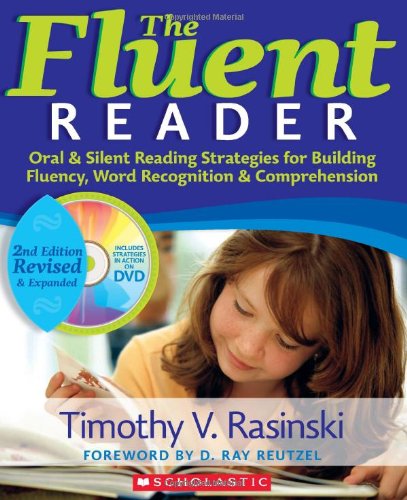
Timothy Rasinski is a professor of literacy education at Kent State University. He has written over 200 articles and has authored, co-authored or edited over 20 books or curriculum programs on reading education. He is author of the best selling book on reading fluency entitled The Fluent Reader, published by Scholastic. His scholarly interests include reading fluency and word study, reading in the elementary and middle grades, and readers who struggle. Tim is the author of the fluency chapter for Volume IV of the Handbook of Reading Research. He recently served a three year term on the Board of Directors of the International Reading Association and from 1992 to 1999 he was co-editor of The Reading Teacher, the world's most widely read journal of literacy education. He has also served as co-editor of the Journal of Literacy Research. In 2010 Tim was elected to the International Reading Hall of Fame.


Have you ever seen a writing rubric that doesn’t include “word choice” as one of the criteria against which to assess the quality of students’ writing? Word choice goes beyond students’ writing. Published authors themselves, whether of adult or children’s literature, choose interesting words to improve their writing. Thus it stands to reason that books, poetry, and other published materials that students read are likely filled with interesting words. As teachers we should take advantage of this treasure trove of words.

I had an old professor who was known for saying, “Teaching is the process of making visible that which is normally invisible.” Teachers help students discover what is often hidden from their view. The words in literature are often hidden from the view of students. When students read or are read to by their teacher or parent, they are often so engrossed in the story that they do not recognize the wonderful words that the author has used to craft her story. The words are essentially invisible to the students. Even in stories for young children, readers can find rich words woven into the texts. Take, for example, the opening pages to William Steig’s (1969) classic Sylvester and Magic Pebble.
Sylvester Duncan lived with his mother and father at Acorn Road in Oatsdale. One of his hobbies was collecting pebbles of unusual shape and color.
On a rainy Saturday during vacation he found a quite extraordinary one. It was flaming red, shiny, and perfectly round, like a marble. As he was studying this remarkable pebble, he began to shiver, probably from excitement, and the rain felt cold on his back. “I wish it would stop raining,” he said.
To his great surprise, the rain stopped. It didn’t stop gradually as rains usually do. It ceased!
Although intended primarily for children in their early childhood years, this excerpt containing a mere 95 words includes the following words: pebbles, extraordinary, remarkable, gradually, ceased. Indeed, Cunningham and Stanovich (1998) report that 1.6% of the words found in books for preschoolers and 3.1% of the words in books for the elementary grades are rare, words that are not normally used in conversation. Comparably, 1.7% of the words uttered in conversations of college graduates are rare words. Now, I am not trying to suggest that adult college graduates converse at the level of a preschool book; rather, the point I make is that literature, even for preschoolers, contains a rich corpus of words worth learning – both for reading and for writing. If students encounter unusual and interesting words in reading literature, clearly it is to their benefit to know these words in order to more fully understand what they read. Additionally, since authors purposefully choose interesting, tier 2 (Beck, McKeown, & Kucan, 2002) words for their writing, students will improve their own writing when they choose to use such interesting words. The question, then, becomes, how can teachers take advantage of the interesting words found in the books and other literature that children read? Word harvesting is one way.

Word harvesting is a simple method to help make these fabulous words found in trade books, poetry, song lyrics, and written texts more visible to students. In word harvesting, students along with the teacher select words they think are interesting from authentic texts that students are reading or have had read to them. Because students choose the words, they have ownership of the words. A good place to start word harvesting is to incorporate it into the daily classroom read aloud. 

Steps involved in word harvesting during read aloud:

1) The teacher reads an authentic piece of literature to students daily. Prior to reading to students the teacher asks students to enjoy the story but also to listen for any interesting words that the author may have used. Students may jot down the words on a piece of scratch paper.

2) At the end of the read aloud teacher and students spend a few minutes talking about the story. The teacher also asks students to call out the interesting words that they may have heard read by the teacher.

3) The teacher writes the words on a sheet of chart paper (Read Aloud Word Wall) displayed in a prominent place in the classroom. The teacher may also add a word of her own choosing. Students may also be asked to write the words in their own personal word journals. As the teacher writes the words she may elaborate on the meanings of the words, provide synonyms, and/or use the words in exemplar sentences. The class should aim for choosing five to ten words from each read aloud session.

4) Think of the Read Aloud Word Wall as a kind of billboard or advertisement for the words – inviting students to read and use the words. Thus, over the course of the next several days the class (teacher and students) make a purposeful effort to use the words from the Read Aloud Word Wall in their oral and written language. Because many of the words are not normally used in students’ normal oral language, the teacher should take the lead in using the words in her own language. Words on the word wall can also be read chorally by the class over the next several days.

5) On subsequent days, the same routine is followed during and after the read aloud. With each read aloud session, a new word wall chart is put on display, making visible for students the words used by the author to help make his or her writing even better.

The beauty of word harvesting is that it is such a simple activity that can easily be fit into an already existing classroom activity --- reading aloud. Word harvesting can also occur when students read a poem chorally or sing a song as group (e.g. I recently sang Grand Old Flag by George M. Cohan with a group of primary grade students. We harvested grand, acquaintance, boast, brag, peace, and emblem). The number of words that can be harvested and learned over the course of a year is nothing short of staggering. If a teacher reads to her students and harvests 5-10 words daily over the course of a 180 day school year, she can expect her students to be exposed to 800-1,600 words -- words that authors have used to craft their texts.

Students can also harvest words individually during their own personal reading. These words can be posted into their own personal word journals. Selected students can be invited to add a word or two from their own reading to the classroom word wall.

Second grade teacher Cheryl McBride (Rasinski, Fawcett, Lems, & Ackland, 2010) employs word harvesting with an interesting twist. While group reading Chicken Sunday (Polacco, 1992) her students added the following words to their word wall: solemn, intricate, solo, and splendid. Students read the word wall regularly in Cheryl’s class. However, she added something else to motivate them to actually use the words in their everyday speech. Each day she puts a hotel call bell on a different student’s desk. Whenever the assigned “bell dinger” hears one of the word wall words in classroom conversation he or she rings the bell. “Not only were students listening for the words to see if the “bell dinger” would catch it, they were intentionally using the words so that the bell would ring” (Rasinski, Fawcett, Lems, & Ackland, 2010, p. 50). Cheryl adds, “What impressed me most was, all of a sudden, they were looking at the word wall… With very little effort on my part, they are trying to use words in conversation. They’re always listening” (Rasinski, Fawcett, Lems, & Ackland, 2010, p. 50-51). During a recent district benchmark testing, the bell was put into Cheryl’s drawer. Throughout the testing period she could hear students softly making a “ding” sound as they encountered previously harvested words that were now part of their vocabulary. With the use of authentic texts and a hotel call bell, Cheryl has been able to make previously invisible words visible to her students.

Students are more likely to learn words when they are given a chance to choose the words they wish to learn. Moreover, students are more likely to appreciate well written texts when they are able to see that published authors improve their writing through their choice of words in their writing. Word harvesting is one way to help make visible to students the wonderful words authors use to craft their texts and to encourage students to make those words their own.

References
  • Beck, I., McKeown, M. & Kucan, L (2002) Bringing words to life: Robust vocabulary instruction. New York: Guilford.
  • Cunningham, A.E. & Stanovich, K.E. (1998). What reading does for the mind. American Educator, 22, 8-15.
  • Polacco, P. (1992). Chicken Sunday. New York: Philomel Books.
  • Rasinski, T., Fawcett, G., Lems, K., & Ackland, R. (2010). The fluent reader in action: Grades PreK-4. New York: Scholastic.
  • Steig, W. (1969). Sylvester and the magic pebble. New York: Simon and Schuster.

Sunday, October 16, 2011

Punny Books and Wordy Reads, for Kids of All Ages

I offer up a sampling from my book collection. These books might nurture interest in various aspects of language and accelerate lexipensity. Titles are listed in order, from simplistic to advanced. Enjoy!


PICTURE BOOKS

Sunshine, Moonshine, by Jennifer Armstrong. A lovely rhyming picture book, suitable for preK to 2. Use this book to develop awareness of compound words, especially how they once started as separate words. After reading and discussing the book, the class might brainstorm compounds that contain sun: sunflower, suntan, sunglasses, etc. (Another picture book for developing awareness of how compounds work is Once There Was a Bull ... (frog): Adventures in Compound Words, by Rick Walton.)  


The Important Book, by Margaret Wise Brown.  This picture book does not tell a story, it asks a question, prompting the reader to drill down to the heart of a thing. The author asks, "What is the most important thing about rain?" (let children brainstorm at this point). Then she provides a list of things that describe rain (characteristics and attributes are academic words teachers might eventually include in the class discussion). She arrives at the conclusion, "The most important thing about rain is that it is wet" (allow the class to debate this).  Another question: What is the most important thing about a spoon?"  Finally, my favorite, "What is the most important thing about YOU?" (Students could make a poster describing themselves or a fellow student, focusing on their most important trait.)

In Philosophy Now, Professor Thomas Wartenberg explains how to use picture books to help children reason. In the post, Picture Book Philosophy, he discusses several books that suit this goal. In the following excerpt, he refers to The Important Book:
I am repeatedly amazed by what children are able to accomplish in a philosophical discussion. I am often struck by how the children make claims that remind me of ideas I learned only after years of reading and thinking about philosophy. For example, consider The Important Book (1990) by Margaret Wise Brown. For each of a number of things, such as grass, an apple, rain, a spoon, and you, the book says that something is the important thing about it. It also lists a number of other things that the object also is. The important thing about rain, for example, is that it is wet; its other properties are falling from the sky, sounding like rain, making things shiny, and not tasting like anything. When a group of eight-year-olds were discussing the book, they were very dissatisfied with that list. They proposed a list of their own, which included: It makes puddles and ponds; it splashes; it can evaporate; and it makes mud. But the children decided that they thought the most important thing about rain was that it makes things grow.


Opposites, More Opposites, and a Few Differences, by Pulitzer Prize-winning author Richard Wilbur. It's pocket-sized with b/w line art, and clever verse. Hard to find and out of print. (Update: It's now available in ebook format!)

An excerpt:
What is the opposite of riot
It's lots of people, keeping quiet.


The Unbreakable Code, by Sara Hoagland Hunter. This beautifully illustrated picture book is suitable for grades 4-6. A Navajo Code Talker tells his grandson about the famous code created by the Navajos, Comanches, and Hopis during World War II. The Japanese were not able to decipher any intercepted messages. Below are several examples of how native words were used in isolation or in combination to create the code:
  • paahu + kiihu = houses (on) water = paaki = ships
  • a/tsá  = eagle =  transport plane
  • béésh +  loo´ = metal fish = submarine
Charles Chibitty, a Comanche Code Talker, describes how the codeword for army tank was invented, after seeing a picture of a tank (source: The National Museum of the American Indian):
Well, when they first got us in there for Code Talkers, we had to work that out among our own selves, so we didn’t have a word for tank. And the one said it’s like a [Comanche words] he said, it’s just like a turtle, you know. It has a hard shell and it moves, and so we called it a wakaree´e, a turtle.


CHAPTER BOOKS

Donavan's Word Jar, by MonaLisa DeGross. In this short chapter book, a third grader collects interesting words and stores them in a glass jar. His classmates think he's a word nerd, but in the end, he (Donavan) saves the day and everyone wants to collect words, too. Some teachers read this book at the beginning of the term, presenting the class with an empty jar. Throughout the year, students insert words, written on colorful strips of paper, finishing the year with a celebration of words and language.


A Series of Unfortunate Events by Lemony Snicket (actually, anything by Lemony Snicket). This author does not assume that readers understand idiomatic expressions, and includes the definition in the narrative, but in a conversational tone that does not seem like a distraction or an intrusion. This is exemplified in the excerpt below, from The Carnivorous Carnival:
But I always insist that the most frightening part of any beast is its belly, for the simple reason that if you are seeing the belly of the beast it means you have already seen the teeth of the beast and the claws of the beast and even the hair of the beast, and now you are trapped and there is probably no hope for you. For this reason, the phrase "in the belly of the beast" has become an expression which means "inside some terrible place with little chance of escaping safely," and it is not an expression one should look forward to using.

  
Frindle, by Andrew Clements. I cannot say enough about this chapter book, so I won't. Go get it. Read it for your own enjoyment. Read it with the class. Applicable to grades 4-12, but especially best for grades 4-6. This book has a fast-paced and highly relevant plot; the focus is on free speech, word coinage, the dictionary, etymology, and entrepreneurship.


The Phantom Tollbooth, by Norton Juster, now celebrating its 50th birthday, and considered to be the Alice in Wonderland of American literature.  Like Alice, this book is quite advanced and best swallowed in small doses; it requires strong verbal reasoning and extensive prior knowledge, including knowledge of idiomatic expressions.

Rather than going down the rabbit hole, Milo, a bored young adolescent, takes a trip through a magical tollbooth into a fantastical wonderland. Juster makes good fun with idioms, as when Milo JUMPS to the island of CONCLUSIONS. In this allegory, well known phrases are served tongue-in-cheek, and life lessons are couched as whimsical words of wisdom. Throughout, the relative merits of numbers and letters are debated, arriving at a happy-ever-after when both Rhyme and Reason finally prevail together, and the Kingdom is restored to sanity.  Read more at The New Yorker.


ACADEMIC BOOKS

A Little Book of Language, by David Crystal (book summary). Even though the author seems to be addressing an older adolescent, I learned a lot about how human language came to be, the components of language, and the sociocultural aspects of language. A delightful read, with a conversational style, and each chapter is only a few pages.


The Mother Tongue: English and How it Got that Way, by Bill Bryson. In typical  style, Bill Bryson serves up history and comedy, in narrative sauce. My own interest in word origins was secured with the first chapter of this book, the first book I read on this topic. Bryson might be off about some stuff, but he makes up for it in humor.


The Pun Also Rises, by John Pollack. This new book describes "How the humble pun revolutionized language, changed history, and made WORDPLAY more than SOME ANTICS." Need I say more? For more about this book, and the punny author, visit The Morning News.


The Professor and the Madman: A Tale of Murder, Insanity, and the Making of the Oxford English Dictionary, by Simon Winchester. A novel, based in fact, describing how a medical doctor, disturbed by the horrors of the Civil War, winds up in England, incarcerated. From the lunatic asylum, he answers Oxford's nationwide appeal to "men of letters" to help find specific words contextualized in published texts, thus occupying himself by locating thousands of the word quotations used in The Oxford English Dictionary, first edition. I read this book from cover to cover, with amazement at times. Not for children--some disturbing and graphic scenes.


That's all for now. I'll save the rest for another day. Drop a comment if I have missed a favorite of yours!

Best,
Susan