Showing posts with label motivation. Show all posts

Monday, June 8, 2020

Using Poetry To Develop Reading Skills and Interests

This post comes to us courtesy of Ally Bush, Marketing/Communications Coordinator at Reading Partners. Reading Partners is a nonprofit dedicated to serving the literacy needs of our nation's students. We envision a future where all children in the US have the reading skills necessary to reach their full potential. By empowering communities through individualized instruction and measurable results, we help our students become lifelong learners. (Originally posted on ReadingPartners.org: How poetry can help kids develop reading skills )


The power of a good poem can help make reading a reality for young kids. From making reading fun to teaching kids different ways to think about phonemic sounds, poetry is an invaluable resource in any young reader’s literacy journey. Here are a few ways poetry helps improve reading skills.

Motivates Children to Read

Some parents may have emergent readers who are struggling to find the motivation to pick up a book and hone their skills. If this is the case, try poetry. Kids will find joy in reciting their favorite poems with a caregiver and they’ll gain important literacy skills at the same time. As poetry is typically only a few lines, it may feel less daunting to a young reader to tackle a poem as opposed to a longer book.

While being short, poetry is still packed with important literary elements such as characters, narrative structure, new words, and sometimes rhyming that can help children build foundational and more advanced literacy skills.

The musical rhythm of poems can also remind kids of their favorite songs. The next time you feel like reading a poem with your child, try singing it and see what happens.


Teaches Young Readers About Sound

Reading poetry helps children learn about voice, pitch, volume, and inflection. While these are mainly functions of speech, they’re also incredibly important for children learning to read. Poetry can teach young readers about speech patterns, which can give them cues to the words on a page. 

Additionally, rhyming can help kids identify sounds in words and identify word families. For example, check out this stanza in the poem “The Letter A” by Darren Sardelli:

“Without the A, you couldn’t aim 
an arrow in the air. 
You wouldn’t ask for apricots 
or almonds at a fair.” 

This stanza could help young readers practice the short “a” and long “a” sounds and expose them to word families such as “air” and “fair.” For children learning to read, poems that play with sound and rhyme like this one can offer a new perspective on phonetics.

Builds Vocabulary 

Like any form of reading, poetry can introduce children to new words. Poetry is unique to other forms of writing in that it typically follows a rhythm. When children read sentences and phrases that have a cadence, it introduces them to new words in new contexts.

Even though it may not seem like it, a poem that rhymes is the result of certain restrictions a poet followed during the writing process. If they want every other line of a poem to rhyme, there are a limited number of rhyming word pairs that could contextually fit in the first and third lines. For the poet, this results in surprising new connections between words. For the reader, these new connections translate to a larger vocabulary.

For example, in the poem “The Dentist and the Crocodile,” Roald Dahl rhymes common words with new words your young reader may not know:

“The crocodile, with cunning smile, sat in the dentist’s chair. 
He said, ‘Right here and everywhere my teeth require repair.’”

While “chair” is a common word, “repair” may be less familiar to your child in the same word family. The fact that these words rhyme creates a connection between them, which may make these specific words and other words with an ending “-air” sound easier to remember. At the very least, this poem would help a young reader add “repair” to their vocabulary.

Not only does poetry teach children new words, but also it teaches them about the power of those words. Learn more about the higher purpose of poetry, how it can provide meaning and nuance to new words, and how it relates to choosing a crayon color in Poetry: The Power of Words.

Encourages Creativity

Pablo Picasso once said, “It took me four years to paint like Raphael, but a lifetime to paint like a child.”

 Children have wonderful, active imaginations. Poetry can help children tap into their creativity by encouraging them to think about the new and unexpected relationships between words. In addition, having young readers try to write poetry can improve their literacy skills.

The wonderful thing about poetry is that it’s subjective. Poetry can have a narrative structure, nonlinear structure, or even just be a collection of your favorite words. When children are learning to read, giving them the freedom to express themselves through poetry can be both an educational and fun experience. And who knows, the creativity of their writing may surprise you!

Reading Aloud

One of the seven most important skills for promoting literacy is supporting oral language. Reading poetry aloud, just like reading other genres aloud, can help children improve their literacy skills. When kids read aloud, they think more deeply about the sound of the words they’re saying and therefore improve their reading skills.

Poetry is the perfect genre for reading aloud because it’s rhythmic, expressive, and fun. Host a poetry reading event in your home or classroom, and share your favorite poems with the little ones.
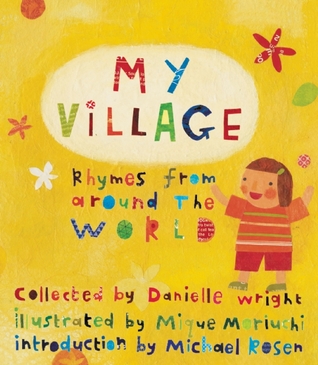

Love the idea but don’t know where to start? Here are some poetry suggestions to get your kids reading:


Sunday, April 1, 2012

Reading with Your Ears: Assistive Technology, 21st Century Skills, and Vocabulary (Filippini & Morey)


Dr. Alexis Filippini is the executive director at Mission Learning Center and a literacy consultant (website). She is passionate about literacy, especially among students who do not fit the "mainstream" mold. She has taught English Language Learners and students with learning disabilities in 1:1 and small group contexts, and conducted research on early reading and vocabulary acquisition. The ideas in this post were first inspired by hearing her husband Ben Foss use text-to-speech for work and play.  

Anne-Marie Becker Morey is the founder of Bay Tree Learning. Anne-Marie is a certified educational therapist with a masters degree in special education from San Francisco State University. She is certified by the Association for Educational Therapists and received specialized training in educational therapy from the University of California Santa Cruz. She has trained extensively in research-based literacy methods, including Lindamood-Bell® and Orton-Gillingham. Anne-Marie is a member of the Association of Educational Therapists, the Council for Exceptional Children, and the International Dyslexia Association.

In my last post, Phonemes and Morphemes for All, I wrote about vocabulary instruction for students with specific learning disabilities (SLD), such as dyslexia, that impact print processing. Today, Anne-Marie and I want to elaborate on my previous hints about using technology to support robust, Vocabulogic-style literacy instruction for these learners. To discuss assistive technology (AT) today, we must consider that we live in an entirely different context than twenty, ten, even five years ago. In the era of "new literacies," many of our students (and most of us!) use computers, phones, smart boards, e-readers, etc. to access information on a regular basis.

New literacies or 21st century information and communication skills are “the ability to use technology to develop 21st century content knowledge and skills in support of 21st century teaching and learning.” In the context of vocabulary, everyday technology offers multi-modal instructional opportunities to hit the major vocabulary principles (e.g., Blachowicz & Fisher’s big four: be active, personalized, immersive, and build multiple sources of knowledge through multiple exposures; 2000). This high-tech plus Vocabulogic-style instruction can capture the hearts and minds of children so much better than copying definitions – but the best part is, it’s more effective, particularly for learners who thrive with accommodations!

For example, learners with SLD may have receptive and expressive language that is far stronger than their encoding and decoding skills and therefore require additional support (accommodations) to access new or old literacies. We commonly focus on remedial support but overlook Assistive Technology (AT) and alternate text formats. AT is any technology that can “increase, maintain, or improve functional capabilities of a child with disabilities” (Individuals with Disabilities Act Amendments, 2004). Alternative text formats are typically audio that is either a “natural” human voice or a synthesized voice (obviously braille as well, although less relevant to this conversation). These formats are available through commercial avenues, such as audible.com, or disability-specific avenues, such as bookshare.org, learningally.org, or the National Library Service. Simple software can turn any computer or gadget into a talking device to read aloud, as well.

Effective use of technology to circumvent encoding or decoding is like using a wheelchair to confidently roll up a ramp and into a neighborhood public school, rather than being denied access. While the current reauthorization of IDEA requires consideration of AT for children with individualized educational plans (Blackhurst, 2005), “consideration” is often limited to checking a box. This lack of consideration may be due in part to uncertainty about how, when, and what to teach with these tools. One of the questions I am asked most often by teachers is when to introduce accommodations, and when and how to adjust the remediation-accommodation balance (illustration below; Edyburn, 2006) for learners with print-related disabilities. (We could also learn a lot from work on augmentative and assistive technology use among individuals with significant communication needs, e.g., Soto & Zangari, 2009, but that is for another conversation).

(click to enlarge; right-click to download
Research in academic technology, new literacies, and AT is “fragmented” and “inconclusive” (Fitzgerald, Kourey, & Mitchem, 2008, p. 215) due to rapid changes in technology, perceived barriers to implementation, and assumptions about the very nature of literacy. Nevertheless, we have an obligation to open every door we can to support our students in accessing meaningful text independently. There is no other route; we know the importance of exposure to text for vocabulary growth.

Assistive Technology (AT) in the Vocabulary-Focused Classroom
A number of tools are available to support children with SLD in accessing grade level content, such as text-to-speech software and devices and “books on tape” (usually digital files, now), and simple low-tech options such as pencil grips. Many common AT tools for literacy like speech-recognition software and spell checkers come pre-packaged with common software (e.g., Microsoft; McKenna & Walpole, 2007). To be effective tools for increasing learning and independence, however, all technology must rest on thoughtful, evidence-based teaching.

Let’s look at some examples of using speech synthesis or audio books as a route into vocabulary learning. By turning on the text-to-speech feature in plain old Microsoft Word, a student can hear text read aloud. For example, if she opened Dr. Mohler's packet of engaging activities as a Word document, and went to the prefix activity, she could first listen to the directions, then click through each prefix and its definition and hear it read as she chooses its function. (See Dr. Mohler's post.)

This means that rather than being bogged down by decoding: 1) She is building skills and confidence by working independently; 2) She is receiving multiple exposures to morphology, meaning, and word analysis. Far more than she would be in the same amount of time. 3) Odds are that she is more on task, because she is not avoiding work that seems impossibly difficult. This improves the classroom climate for all students, as the teacher focuses on teaching literacy rather than redirecting challenging behavior.

Sunday, January 8, 2012

Metalinguistic Awareness, Comprehension, and the Common Core State Standards

Coordinated by the National Governors Association Center for Best Practices (NGA Center), the Common Core State Standards have swept the nation, and nearly every state has sanctioned the call for students to read more complex texts. In response, publishers are rapidly preparing more challenging texts, referring to the exemplars listed in Appendix B of the Standards, including works by Sophocles, Alexis de Tocqueville and Fyodor Dostoevsky. These types of texts will be Waterloo for some students, and the battle begins in kindergarten with a call to understand—and hopefully enjoy—As I was Going to St. Ives. How can teachers help readers meet this challenge? In part, the solution lies in developing metacognitive insights and abilities—including metalinguistic awareness.

Metalinguistic awareness requires a keener than normal conscious awareness of language. We demonstrate this type of metacognition when we remove language from context in order to reflect on it and manipulate it. Metalinguistic awareness is an important ingredient in learning to read, spell and understand words (Donaldson, 1978). Moreover, as Nagy suggests, it explains a portion of the otherwise unexplained variance in comprehension scores, when other important variables have been controlled (2007). Boosting metalinguistic awareness has significant effect on reading comprehension (Cain, 2007; Zipke, 2007, 2011; Zipke, Ehri, & Cairns, 2009). English Language Learners benefit from metalinguistic awareness, too, including metamorphological awareness (Carlo et al., 2004; Ginsberg, Honda, O’Neil, 2011; Kuo & Anderson, 2006; Ramirez, Chen, Geva, & Kiefer, 2010).

Metalinguistic awareness is a cognitive dynamo. At maximum potential, it includes increased awareness of phonemes and syllables and rhymes/rimes, of meaning-bearing morphemes, words, and phrases, of syntax, word referents, and appositives, of denotations, connotations, and lexical ambiguities, of homonyms, synonyms, and antonyms, of slang, dialect, and jargon, of academic language and figurative devices like metaphor, imagery, personification, and more. Writ large, metalinguistic awareness envelops every atom of language.

Researchers have long proclaimed the critical role of phonological awareness (PA) in helping children blend and segment sounds in words. In the past decade, two more types of metalinguistic insight have surfaced repeatedly in reading research journals: morphological awareness (MA) and orthographic awareness (OA). If a student grows in MA, s/he becomes increasingly aware that words sharing the same base or root are similar in form and meaning. For example, the child notices similarities across painted, painter, paintings, painterly, and repaint, at the same time realizing that pain –while somewhat similar in form—is not related to this morphological family. MA also includes knowledge of common suffixes and prefixes.

If a student grows in OA, s/he becomes more aware of the English system of writing, realizing that something “just looks wrong” when presented with “illegal” spellings, such as words beginning with ck or words containing three identical vowels in a row, as in *seeer. As this insight matures, students gradually realize that foreign loan words allow the inclusion of spellings not aligned with English orthography, as in beau, hoi polloi, and faux pas.

Recently, Berninger, Abbott, Nagy, and Carlisle (2010) conducted a longitudinal study spanning first grade to sixth grade in two cohorts (N = 241 students), investigating growth curves for three types of metalinguistic awareness: MA, OA, and PA. They found that PA and receptive OA grew from first to third grade and then tapered off or reached a plateau, for most students. Expressive OA continued to grow a bit after third grade. Meanwhile, MA grew rapidly from first to third grade and then continued to grow, but less rapidly, through sixth grade. Furthermore, MA influenced word knowledge: Vocabulary knowledge was significantly related to how well the student understood that derivational suffixes influence the grammatical category of the word—for example, that instrument is not grammatically the same as instrumentalist or instrumentally, even though there is semantic overlap. Reading comprehension is partially explained by growth in MA (Kuo & Anderson, 2006; Nagy, Berninger, & Abbott, 2006).

As educators, we promote metalinguistic awareness by making explicit the salient aspects of the targeted linguistic concept—for example, the logic behind understanding multiple-meaning words, drawing an inference, or grasping how compound words convey meaning morphologically. We promote keener consciousness when we point out how any detail of language works, making our thoughts transparent in a think-aloud with visual modeling, or when we ask students to explain their reasoning—and we give them feedback. If we exploit metalinguistic insight, we influence word reading, spelling, and vocabulary while moving the ball towards the end goal: comprehension.Thus, we might heed the clarion call of linguist Bill Nagy (2007):
“Vocabulary instruction needs to be more explicitly metalinguistic, that is word consciousness is an obligatory, not an optional, component” (p. 54). 

What about the brave new Common Core? Do they mention the term metalinguistic in the English Language Arts Standards? Alas, no. However, Appendix A circles loosely around the topic (NGA Center & CCSSO, 2010):
The reader brings to the act of reading his or her cognitive capabilities (attention, memory, critical analytic ability, inferencing, visualization); motivation (a purpose for reading, interest in the content, self-efficacy as a reader); knowledge (vocabulary and topic knowledge, linguistic and discourse knowledge, knowledge of comprehension strategies); and experiences.
In another section of the document, metacognitive strategies are mentioned. The Standards, and the forthcoming standards-aligned assessments, are fairly agnostic to instructional methods—they do not care HOW we teach—only that students learn. Professional discretion is encouraged; teachers and administrators decide how to address the Standards, including how to develop metacognitive insight, as indicated in Key Design Considerations:
By emphasizing required achievements, the Standards leave room for teachers, curriculum developers, and states to determine how those goals should be reached and what additional topics should be addressed. Thus, the Standards do not mandate such things as a particular writing process or the full range of metacognitive strategies [formatting added] that students may need to monitor and direct their thinking and learning. Teachers are thus free to provide students with whatever tools and knowledge their professional judgment and experience identify as most helpful for meeting the goals set out in the Standards.
To my knowledge, the term metacognitive only appears once in the CCSS, in the insert above. By integrating the two excerpts above, one might (might) infer that the National Governors Association did indeed include metalinguistic development in the Common Core. I only wish they had been more deliberate about it.

Without conscious awareness of language, second graders may be frustrated by The Jumblies (another exemplar text, by Edward Lear). Indeed, if lessons do not include an explicit focus on metalinguistic awareness, we could be sending whole schools to sea—in a sieve.

~Susan M. Ebbers

References: 

Berninger, V.W., Abbott, R.D., Nagy, W., & Carlisle, J. (2010). Growth in phonological, orthographic, and morphological awareness in grades 1 to 6. Journal of Psycholinguistic Research, 39, 141–163.

Cain, K. (2007). Syntactic awareness and reading ability: Is there any evidence for a special relationship? Applied Psycholinguistics, 28, 679-694.

Carlo, M.S., August, D., McLaughlin, B., Snow, C.E., Dressler, C., Lippman, D., Liveley, T. & White, C.E. (2004). Closing the gap: Addressing the vocabulary needs of ELLs in bilingual and mainstream classrooms. Reading Research Quarterly, 39, 188-215.

Donaldson, M. (1978). Children’s minds. Glasgow: Collins.

Ginsberg, D., Honda, M., & O’Neil, W. (2011). Looking beyond English: Linguistic inquiry for English Language Learners. Language and Linguistics Compass 5/5, 249-264.

Kuo, L-J., & Anderson, R. C. (2006). Morphological awareness and learning to read: A cross-language perspective. Educational Psychologist, 41-3, 161-180.

NGA Center & CCSSO. (2010). The common core state standards for English language arts. Retrieved December 13, 2011 from http://www.corestandards.org/the-standards/english-language-arts-standards

Nagy, W.E. (2007). Metalinguistic awareness and the vocabulary-comprehension connection. In R.K. Wagner, A.E Muse, & K.R. Tannenbaum (Eds.), Vocabulary acquisition: Implications for reading comprehension (pp. 52-77). New York: Guilford Press.

Nagy, W., Berninger, V., & Abbott, R. (2006). Contributions of morphology beyond phonology to literacy outcomes of upper elementary and middle school students. Journal of Educational Psychology, 98(1), 134-147.

Ramirez, G., Chen, X., Geva, E., & Kiefer, H. (2010). Morphological awareness in Spanish-speaking English language learners: Within and cross-language effects on word reading. Reading and Writing, 23(3-4), 337-358.

Zipke, M. (2007). The role of metalinguistic awareness in the reading comprehension of sixth and seventh graders. Reading Psychology, 28(4), 375-396.

Zipke, M. (2011). First graders receive instruction in homonym detection and meaning articulation: The effect of explicit metalinguistic awareness practice on beginning readers. Reading Psychology, 32(4), 349-371.

Zipke, M., Ehri, L. E., & Cairns, H. (2009). Using semantic ambiguity instruction to improve third graders’ metalinguistic awareness and reading comprehension: An experimental study. Reading Research Quarterly, 44(3), 300–321.

_________________

Note:  This post was republished in EdView360 and in the CDL Professional Library

Sunday, January 23, 2011

Word Games to Target the Five Language Components (Cavanaugh)

This post was contributed by Christie L. Cavanaugh, Ph.D. Christie has also written two prior posts describing thematic language centers for preschool, and language facilitation strategies. See  Part 1 here and Part 2 here, along with Christie's bio.

To help my early childhood students deepen their ability to make connections between language and literacy, I gathered a variety of familiar games that reinforce these links. Each game illustrates at least one of the five components of language: phonology, morphology, semantics, syntax, and pragmatics in oral and/or written form. Furthermore, I added the role of background knowledge. We need background knowledge to successfully play many word games and, at the same time, playing these games contributes to the development of background knowledge.

The research base to support the use of games to build the links between language and literacy draw from a large knowledge base about the interaction between language and literacy development, but also from what we know about the features of effective instruction, particularly multiple opportunities to practice and time on task, and building motivation through increased social interaction among students related to reading for students who struggle academically (Guthrie & Davis, 2003; Guthrie & Humenick, 2004). There have been some studies that have used games as a strategy for building vocabulary for English Language Learners (Townsend, 2009), but little exists that explore the value of using games to address all language components and the connection to literacy.

The five language components:
  • Phonology relates to the sounds of a language and how they are combined to form words and phrases. Phonology impacts meaning in the sense that two words may vary only by one phoneme (individual speech sound) but have very different meaning (for example, consider church and chirp). 
  • Morphology relates to word structure through units of meaning (morphemes). Free morphemes are freestanding units of meaning--words like pillow and learn. Bound morphemes are units of meaning that are attached to free morphemes, like the suffix -s in pillows and the prefix re- in relearn.  Morphology influences phonics, semantics/vocabulary and syntax. 
  • Semantics is knowledge of word meanings for specific words, categories, and context to determine meaning or to select the appropriate word to convey a thought or idea. In addition to morphology, vocabulary knowledge relies on the components of phonology and semantics. 
  • Syntax relates to the rules that govern word order in phrases and sentences and this area influences comprehension of oral and written language. 
  • Pragmatics deals with use of language and the knowledge of the functions of various forms of language—knowing when to use a word or expression for a particular purpose and in a particular social setting (Owens, 2008).
There is much interaction between the five language components. When students experience strength in one or more area their strengths influence other components. The converse is also true: If students experience difficulty with one language component, they are likely to also experience difficulty with at least one other component. In order to identify needs and plan lessons accordingly, teachers must understand the connections between language and literacy development.

Teachers also need to recognize how particular games can address students’ needs and how to adapt games to meet specific goals. Modifications require careful planning. An easy and perhaps necessary modification for classroom use would be to transform game responses, from oral to written. Because many games have a timing component, automaticity of recall is also emphasized. Click here to download a chart listing 13 word games with language components identified.  One of the games listed on the chart, Mad Gab, is especially useful for developing phonological awareness, but it also reinforces background knowledge and vocabulary. To learn more, Play MadGab Online. Below, I elaborate on five of the games listed on the chart.

Balderdash (Gameworks Creations, 1984) is a game that targets vocabulary and the skill to define words. Players generate definitions of words, mostly unknown and obscure words, and vote on the one that represents the correct definition (players’ versions are presented along with the real definition). All language components are addressed through playing Balderdash, particularly semantics, syntax, and morphology. Knowledge in these areas allows players to create believable definitions through recognition of morphemes, possible part of speech, and of course, meaning. Pragmatics is addressed because players can also identify how a word might be used as part of the definition, and for bluffing.

Buzzword (Patch Products, 2003) is a game about phrases, terms, or places that are grouped according to a common word. Players use clues to encourage team members to identify the phrase that reflects the meaning of the provided clue, but also contains the “buzz word” or common word contained in all phrases. Teams have 45 seconds to guess all 10 phrases. For example, the buzzword apple appears in phrases for clues such as “the object of my affection, the all-American dessert, lump in a man’s throat, etc.” This game addresses semantics and pragmatics (particularly for understanding when phrases or terms are used) and builds background knowledge.

Funglish (Hasbro, 2009) is a game that targets vocabulary and involves providing clues and guessing. Players use attributes or adjectives to display and indicate whether the item to guess (person, place, or thing) is “definitely,” “kind of,” or “not” like the adjectives displayed. (The use of these clue categories is reminiscent of the use of certain vocabulary graphic organizers such as a 4-square word map). For example, the target word may be carrot, so players might display these words for “definitely:” orange, crunchy, edible, solid; “kind of:” good, sweet, straight; and “not:” stripy, liquid, or fragile. Players can place as many clues on the board as it takes for others to guess the target. Guessers can prompt the clue-giver to place additional adjectives by asking, “What color is it?” This game addresses semantics and syntax, but also taps into morphology and phonology, both of which are particularly important as English language learners build vocabulary.

Hink Pink (Discovery Bay Games, 2008) is a game of riddles and rhymes, so of course, addresses phonology, semantics, morphology, and syntax. Players read descriptions or definitions for word pairs that rhyme. A one-syllable word pair is labeled as a “Hink Pink,” 2-syllable pair, “Hinky Pinky,” and 3-syllable pair, “Hinkity Pinkity.” One example of a clue for a hinkity pinkity is “lying in court about a medical operation” with the correct response surgery perjury. Background knowledge is also activated.

Orijinz (Entspire, 2007) is game of word and phrase origins. Players read origins and definition clues on cards for players to guess the word or phrase, many of which are idiomatic expressions. This game addresses semantics, syntax, and pragmatics (to understand when to use the expressions) while also targeting morphology (etymology in particular with references to base words in other languages) building background knowledge with historical information about the origins of expressions—some more common than others. This game applies to pre-service teachers, but also to elementary through high school students.

Do you have a favorite game that reinforces language and literacy? Let us know. Meanwhile, enjoy!

Christie

References
  • Guthrie, J. T., & Davis, M. H. (2003). Motivating struggling readers in middle school through an engagement model of classroom practice. Reading & Writing Quarterly, 19(1), 59-85. Retrieved from EBSCOhost.
  • Guthrie, J. T., & Humenick, N. M. (2004). Motivating students to read: Evidence for classroom practices that increase reading motivation and achievement. In P. McCardle&V. Chhabra (Eds.), The voice of evidence in reading research (pp. 329–354). Baltimore: Brookes.
  • Owens, R. E. (2008). Language development: An introduction (7th Ed). Boston: Allyn and Bacon.
  • Townsend, D. (2009). Building academic vocabulary in after-school settings: Games for growth with middle school English-language learners. Journal of Adolescent & Adult Literacy, 53(3), 242-251.

Sunday, December 26, 2010

Google Ngrams for All: Exploring Word Use in Current and Historic Publications

Christmas Greetings! I hope you are making merry, because according to the Ngrams graphed below, the English culture as a whole may be losing its grasp on joy, at least as evidenced by how often, relative to other words, the words happy, glad, and merry have appeared in print in the last 200 years.


Needless to say, I am making a gross assumption, doing exactly what we must not do when interpreting these data, but perhaps I have caught your attention? 

I created this graph with a wondrous new analytic tool: Google Books Ngram ViewerGoogle has amassed the world’s largest digitized collection of books, almost 5.2 million scanned books (but it still represents only about 4% of existing publications). Google Labs, working with Erez Lieberman Aiden and Jean-Baptiste Michel, doctoral students from Harvard University, made the dataset freely accessible to the public (only the dataset, not the books). Google continues to scan books to add to the corpus.

In a recent issue of Science (2010), Jean-Baptiste Michel et al. describe their work as "culturomics." Michel et al. state, "Analysis of this corpus enables us to investigate cultural trends quantitatively. We survey the vast terrain of "culturomics," focusing on linguistic and cultural phenomena that were reflected in the English language between 1800 and 2000." But in a recent Language Log post, Berkeley linguist Geoffrey Nunberg discusses both the constraints and the strengths of what he calls "the largest corpus ever assembled for social science and humanities research." (See also his article in the Chronicle of Higher Education.)  The Ngram Viewer is a powerful tool, but without access to supporting information, interpret results loosely.

This tool is certainly motivating, triggering interest. For instance, I was curious about the evolving forms of the compound word songbird, so I created the graph below, plugging in the comma-separated terms songbird and song bird (my first attempt also included the hyphenated form song-bird but hyphens are problematic). I set the smoothing value to 10, thus allowing for 21 years of moving averages, and the date range from 1800-2000. The graph shows that the closed form, songbird, and the open form, song bird, competed for favor, with the closed form eventually taking a sweeping lead.


Teachers might use this tool occasionally. Consider the term imperialism. It often occurs with colonialism. These concepts are distinct yet overlapping. The graph below depicts a relationship between colony and empire (smoothing is set at 7). Students could annotate graphs with pertinent events and related words, possibly using a Smart Board or Promethian. I created the colonialism Wordle (full size here) with text from the Stanford Encyclopedia of Philosophy. (See prior post describing Wordle.)


By clicking on the hyperlinks, listed below the graph, one can see snippets from actual scanned books, sorted by date. Below is a sample snippet. Notice how the word says is spelled fays. In archaic documents, an s (called Long s) often looked like an f, without the horizontal stroke. Google's program did not make the translation, from f to s.
He gave the name also to Martha's Vineyard. t This I suppose is what Josselyn, and no other author, calls the £rst colony of Newr-Plimouth, for he fays it...

Back to the graph, the output percentage, on the y-axis, is the relative frequency of the word—relative to total words published that year. I use the term words loosely--words are case sensitive in this corpus, so meal and Meal are not the same (but then again, how often would a sentence begin with the singular, Meal?).

There is more to learn:
Google Labs describes how to interpret the output and the smoothing function.  View nine descriptive sample graphs.  Scroll through a collection of public-made Ngrams (you could add your own to the site). Read the New York Times. See Scientific American. Read the post and comments at Language hat (dot com). Explore culturomics.org. 

Create your own graph. Type in a single word or several words, separated by a comma. It might be interesting to explore the shifting forms or spellings of your own name, or any other famous personage. One can also search for phrases, such as middle of the night, midnight or House of Lords, House of Commons. To share your discovery, right-click on your graph and click "copy image location." Then, paste the copied link into an email or website, or save the URL, to find your graph again on the Web. Enjoy!

Warm wishes for a peaceful and productive new year.
Susan

Sunday, November 28, 2010

Treated to Language (with video)

If language is valued by the teacher, students know it. They sense that the teacher is unusually aware of words -- otherwise overlooked, as water streaming continuously away. Their teacher treats language like a fabulous dessert, greeting especially scrumptious expressions with delight.  It is possible for educators to ignite an interest in words and phrases that is almost tangible.

This type of teaching behavior is situated within the four-ply framework for  effective vocabulary programs, proposed by Michael Graves (2006). Creating a love for language falls under the first component: Providing rich and varied language experiences. It also falls under the fourth component: Developing word consciousness. (See description of the four components.) Helping children and adolescents learn to treasure words does not replace explicit vocabulary instruction, but it is thought to enhance such instruction. Explicit vocabulary instruction is the second instructional component in the framework proposed by Graves.

How can teachers create a love for language, especially for words and phrases? First, take a sincere interest in the words a student uses. For example, one might tell a student, "I'm so glad to hear someone say kaboodle. That word always makes me smile!" This is gratifying -- having someone pay attention to our own words. It is also motivating to realize that our words have the power to make someone smile--to feel, to think, perhaps even to take action. This type of word-power is conveyed in Donavan's Word Jar.

“Also, make a note of the word gobbledygook. I like it. I want to use it more often in conversation” (General Melchett, in the BBC comedy Black Adder).
Another way to convey the power and presence of words is through poetry, as done with deliberation and enthusiasm in an urban school in Florida, briefly described by Niles (2004). Poetry can also provide a way to showcase the playful value of words. (See prior post for resources for teaching poetry.)

Teachers also promote language through song. In one study, Hines (2010) successfully used lyrics as one tool to teach word decoding and word meaning to adolescents with learning disabilities. In similar manner, when I was a middle school teacher, I invited a different pair of students to discuss their selected song lyrics, every other Friday, for about 15 minutes. After ensuring the lyrics were not offensive, I facilitated as needed, encouraging the pair to lead the class in a discussion, explaining why the lyrics were important to them, and which words were most meaningful. The lyrics were printed in advance. The audio track was played.

Some teachers instill a love for language through storytelling and theater, including reader's theater. For instance,  Keehn, Harmon, and Shoho (2008) found that, compared to traditional (mainly definitional) means of teaching vocabulary to eighth graders, a brief theatrical enactment resulted in significantly greater word learning.

Teachers and librarians share a love for words when they read aloud from news clippings, short stories, excerpts and entire books, both fiction and nonfiction, and when they encourage learners to participate in extended discussions. When peer conversations are prompted that focus on a specific segment of text, word-learning is likely to occur, and this is true for native speakers as well as ELLs.

In a language-friendly learning atmosphere, students and teachers do not use words or rules to shame or to punish. Classroom norms can help ensure that words are used responsibly. Denning, Kessler, and Leben (2007, p. 182) stated:
Ultimately, an enhanced and enlarged vocabulary, like any part of the complex phenomenon called language, is a multipurpose tool. Like a hammer, it can be used either to build or to injure. The individual is responsible for the use to which it is put. 
These ideas are neatly captured by Stephen Fry, English author, journalist, and comedian, who holds assorted honorary titles from the University of Dundee, Cambridge University, Anglia Ruskins, etc.  Fry speaks with humor and insight on the splendor of language, arguing against pomposity and pedantry pertaining to rules and words. To hear his entire discussion, titled Language, visit Steven Fry's Podgrams at iTunes (Series 2, Episode 3). Also, visit his blog: The New Adventures of Mr. Steven Fry. This brief film was created by Matthew Rogers; he set a portion of Fry's lecture to words, cleverly creating a kinetic typography.

Enjoy!


Stephen Fry Kinetic Typography - Language from Matthew Rogers on Vimeo.


References:

Denning, K., Kessler, B., & Leben, W. (2007). English Vocabulary Elements, second edition. Oxford University Press. 

Graves, M.F. (2006). The vocabulary book: Learning and instruction. New York: Teachers College Press. 

Hines, S. (2010). Name that word: Using song lyrics to improve the decoding skills of adolescents with learning disabilities. Teaching Exceptional Children, 43(1), 16-21. 

Keehn, S. Harmon, J., & Shoho, A. (2008). A study of readers theater in eighth grade: Issues of fluency, comprehension, and vocabulary. Reading & Writing Quarterly, 24(4), 335-362. 

Nile, S. (2004, April). A celebration of words. Teaching Pre K-8, 4(7), 56-57.

    Sunday, November 14, 2010

    Processing Digital Text

    As educators, we are concerned with how digital text might influence cognition, interest, and literacy. As I read downloaded e-books, I try to be aware of how I am processing--especially how well I am paying attention. What behaviors do I observe in myself as I read texts online? What does research have to say about this topic?

    Vocabulary: When reading digital text, I can tap a word to make its definition appear (also called a gloss, as in glossary).  I am finding that I take advantage of the embedded pop-up gloss more than I would typically consult the glossary at the back of a printed text and far more than I would typically consult a dictionary. If I do not know how to say the word, the computer will pronounce it for me, in some programs. These features are clearly beneficial.

    But I wonder...could pop-up definitions eventually inhibit readers from attempting to infer the meaning of unknown words? If used to excess, would students stop learning to utilize contextual and morphemic clues? Inferring word meanings is a critical, complex, and challenging literacy skill--one we use to understand spoken conversation as well as written communications. Nonetheless, I think the benefits of e-reader access to definitions and pronunciations will outweigh consequences, especially for English language learners.

    More on glossing: One longitudinal qualitative study (Lenders, 2008) examined how upper-intermediate and advanced students use the gloss feature in e-books. By examining the results of videotaped observations during class periods, along with Likert-scale questionnaires and interviews, Lenders found that learners perceive electronic glosses as useful and appropriate, particularly if the words are perceived as relevant to their future careers. When the e-text was used in combination with a related task, the glossing feature enabled active vocabulary learning.

    "media multitasking"
     "continuous partial attention"
    "HYPER attention"
    Tractable: As I read an e-book, I am distracted by email and attracted to the ever-tempting Web (tract is Latin for 'to pull').  I begin to lose interest in the text. This is not so good. In one related study, Salmerón, Kintsch, and Kintsch (2010) found that adult readers with little prior knowledge of the topic are especially vulnerable to making poor use of hyperlinks, randomly following their interests instead of following links in a logical, sequential order. Comprehension suffers. However, when it comes to reading (offline or online) interest can also work for us, if certain conditions are met:

    The psychological state of interest, that is, being interested in a particular context or content, is characterized by rapt attention and focus. Psychologists have found that readers who are interested in the content tend to stay with the printed text --including scientific texts -- even when it becomes difficult to understand (Ainley, Corrigan, & Richardson, 2005). Interested readers draw more inferences, process more deeply and retain more information, compared to disinterested readers (Hidi, 2001; Renninger, 2009). The likelihood that an adolescent will stay focused on a printed text has been found to vary by gender, by learning goals, and by whether the text aligns with the reader's particular areas of interest and topic knowledge (Graham, Tisher, Ainley, & Kennedy, 2008). Emotion psychologist Paul Silvia found that adults will only become interested in a novelty (e.g., examining abstract artwork, interpreting sophisticated poetry and throwing darts at a board) if they feel capable of comprehending it and of eventually making sense of it; his experiments demonstrated that self-efficacy was essential to the awakening of interest as "the curious emotion" (2005).

    Note-Taking:  When I read something interesting on an e-reader, I highlight or annotate. The text that I highlight -- including newly learned terms -- and the notes that I type are then automatically stored in a separate file. I can read all annotations and all text excerpts at a glance. Essentially, I have created a summary and a study guide. I find myself highlighting and annotating a lot -- maybe too much! It takes longer to read the book, but this feature has the potential to reinforce content and engage readers. 

    Trust: Finally, as I read e-novels, I note a slight but persistent underlying anxiety that urges me to read ever faster and to even skip ahead at times. What is this anxiety? Simply put, I worry that I will not be able to finish the book! The more I like the book, the more I fret.

    How does your own processing differ when reading e-books versus printed material? Have you noticed any differences in your students? For more information on attention, interest, cognitive space, and the digital age, visit these hyperlinks:

    Here is a brief overview regarding interest and reading, written by Dr. Hidi, posted by education.com.

    Here, The National Writing Project offers a collection of readings related to the topic of digital information (Digital IS).  The hyperlinks are quite interesting! Explore the brief videos (Howard Rheingold, UC Berkeley) on Paying Attention to Attention.

    UCLA professor N. Katherine Hayles was co-teaching Media Theory for the 21st Century. In a blog created mainly for students, she discusses the cognitive differences in reading a book with deep attention compared to reading "stuff" online, with what she calls hyper attention. (Download Hayles' entire article, Hyper and Deep Attention, in pdf.)

    A team of French scientists explore multitasking, cognition, and the problems associated with trying to split our attention as we focus on three things at once (like reading text online and attempting to remember the book as we stop to check email and decide how to respond to the email). Their research is reported in Science and summarized by National Public Radio.

    Here is a brief, Divided Attention: In the Age of Classroom Multitasking... written by David Glenn for the Chronicle of Higher Education.

    Also, FRONTLINE (PBS.org) has published a wealth of resources pertinent to these topics. See digital_nation: Life on the Virtual Frontier. There is too much to describe...visit the website. See the video, Digital Nation, published in 2010.

    Wishing you all a Glad Thanksgiving,

    Susan

    References:
    • Ainley, M., Corrigan, M., & Richardson, N. (2005). Students, tasks and emotions: Identifying the contribution of emotions to students' reading of popular culture and popular science texts. Learning and instruction, 15(5 ), 433-447.
    • Graham, J., Tisher, R., Ainley, M., & Kennedy, G. (2008). Staying with the text: The contribution of gender, achievement orientations, and interest to students' performance on a literacy task. Educational Psychology, 28(7), 757-776.
    • Hidi, S. (2001). Interest and reading: Theoretical and practical considerations. Educational Psychology Review 13(3), 191–208.
    • Lenders, O. (2008). Electronic glossing: Is it worth the effort?  Computer Assisted Language Learning, 21(5), 457-481.
    • Renninger, K. A. (2009). Interest and identity development in instruction: An inductive model. Educational Psychologist, 44(2), 105-118.
    • Salmerón, L., Kintsch, W. & Kintsch, E. (2010). Self-regulation and link selection strategies in hypertext. Discourse Processes, 47(3), 175-211.
    • Silvia, P. J. (2005). What is interesting? Exploring the appraisal structure of interest. Emotion, 5, 89-102.

    Sunday, October 17, 2010

    Engaging Vocabulary Activities (Mohler)

    Many thanks to Dr. Geri Marshall Mohler for sharing her engaging word-learning resources with us. Geri currently serves as an education consultant for the California Commission on Teacher Credentialing, working with accreditation and on standards development for reading and library specialists. Previous to her work at CTC, she worked for two years at the California Department of Education in the Reading/Language Arts unit and for five years as a professor of reading/literacy at California State University, Bakersfield. Before coming to California in 2002, she taught English and reading in Nebraska middle and high schools for 18 years. Her major area of research is preschool literacy (see www.csub.edu/plpbakersfield).

    In this post, I offer cognitively engaging activities for promoting word knowledge in the classroom. Prior Vocabulogic posts have made a strong case for the value of teaching vocabulary and morphology. Some of the best thinkers of our time speak to this, as illustrated in the collection of research-based quotes posted by Susan Ebbers. With such research in mind, I use this post to introduce "hands-on" activities for teaching dictionary skills, vocabulary and morphology. These activities are described in my Hands-On Vocabulary Activities packet, provided in pdf format and in Word format. These activities can be used in any content area and adapted to most learning levels (3rd to adult). Feel free to download the packet, adapt it for your own use and share it with others, freely, with my permission. A more extensive article, which contains short explanations of each of the activities, was published in 7-8-9, Poetry, Song and Rhyme (Mohler, 2009).

    Vocabulary development is a reading component that is ongoing throughout life. Other components, such as phonemic awareness and phonics, have received much emphasis in English/language arts standards and curricula, but each of these, once learned, rarely needs to be re-visited. Academic language is a literacy area currently getting a lot of press. Academic language is more than vocabulary; however, it includes facility with intricate terms, complex sentence structure and syntax, text organization, and the function of transitions. Extensive and efficient vocabulary acquisition is a good place to begin developing academic language because direct instruction in vocabulary develops comprehension of academic language more than any other factor (Bromley, 2007).

    To increase vocabulary, morphological awareness is essential (see many previous posts). It allows for independent access to the definitions of many words, without a dictionary, and provides a means to better understand definitions found in a dictionary and to make connections with similar words. In fact, by sixth grade, the meanings of about 60% of the morphologically complex words in school texts can be inferred by analyzing word parts in context (Nagy & Anderson, 1984). These “translations” may only imply meanings, but they can often result in a comprehensible definition. Either way, it is important that students develop the skills and knowledge to independently decipher the meanings of words using knowledge of morphology.

    Many English words contain cognates—a word in a language that has the same origin, or root, as a word in a different language. Spanish-speaking English learners, in particular, need to know about cognates. Many common words in Spanish, for instance, are sophisticated words in English. The English word farming is cultivo or agricultura in Spanish. Cultivate and agriculture are English words related to farming that are derived from Latin roots, like the Spanish cognates are. Spanish-speaking students need to be recognized for their inherent understanding of words that may be unfamiliar to English-only students. (Read more about Spanish-English cognates).

    Using the “Hands-On” Vocabulary Activities Packet 
    (click images to enlarge and download)

    The intent of the activities in Hands-On Vocabulary is to provide students with a fun way to learn about words, so they will be successful in figuring out the meaning of new or unknown words and feel comfortable using sophisticated words in speech and writing. Activities include:
    • Activities 1-6: Dictionary use 
    • Activities 7-10: Spelling practice
    • Activities 11-24: Morphological analysis

    The packet of activities includes mnemonics to help students memorize the meanings of many common prefixes and 10 root words. There are lists of affixes and root words alphabetized by word part and by meaning. Students learn how to use these resources to complete the activities. Examples of favorite activities are the “Affix/Root Word Scramble” (#18), “Sophisticated Sentences” (#21), and “Word Blocks” (#23). Each of these can be adapted for specific content area words and grow with the students’ increased knowledge of morphology.

    I credit others (Ganske, 2000; Bear, Invernizzi, Templeton, & Johnston, 2008) for the activities that are similar to word sorts, which are a great way to practice making sense of pronunciations and spelling, and to help students see connections in words. To save the time and paper required to make the cards for sorting, many activities in the packet are designed so they can be printed and placed in page protectors or laminated. For example, the prefix activity shown here is easily used with a page protector. Students use whiteboard markers to mark and write answers.

    Students who have experienced the variety of ways that words can be dissected, manipulated, and discovered will become confident, competent and curious word sleuths. I have used most of these exercises with a variety of student levels and abilities, including teacher candidates and graduate students to prepare them to teach morphology and to improve their own command of English. The activities are predominantly at the word level—sound, spelling and meaning. Sentence level and contextual activities can be incorporated through additional, integrated oral and written assignments throughout the day and year. It is also important that you model the use of morphology skills and encourage students to apply them when confronted with unknown words. Overall, it is your enthusiasm and spontaneity about words and their foibles that will create students who are interested in and knowledgeable about words.

    Try these activities and see how well you do!
    Questions? Send me an email (gerimohler@gmail.com) or post a comment. 

    Works Cited

    Bear, D. R., Invernizzi, M., Templeton, S., Johnston, F. (2008). Words their way: Word study for phonics, vocabulary, and spelling instruction (3rd ed.). Upper Saddle River, NJ: Pearson.

    Bromley, K. (2007). Nine things every teacher should know about words and vocabulary instruction. Journal of Adolescent and Adult Literacy, 50(7), pp. 528-537.

    Ganske, K. (2000). Word journeys: Assessment guided phonics, spelling and vocabulary instruction. New York: Guilford.

    Mohler, G. M. (2009). Hands-on vocabulary: Activities to develop word knowledge. In S. Neufeld & J. Sawkey (Eds.), 7-8-9, Poetry, song and rhyme (pp. 36-46). Costa Mesa, CA: California Reading Association.

    Nagy, W., & Anderson, R. C. (1984). How many words are there in printed school English? Reading Research Quarterly, 19, 304-330.

    Sunday, June 27, 2010

    School Libraries: Resources for Engaged Reading (Goodin)

    Susie Goodin
    Susie M. Goodin taught elementary school in Vermont and California before the arrival of her four children. For the past 20 years she has developed and managed a variety of school libraries. She loves to be outdoors gardening, swimming and hiking, as well as avidly collecting children’s literature. Currently she is a doctoral candidate at UC Berkeley, Graduate School of Education in the Language, Literacy and Culture program. Her major interest in education research is in exploring the link between school libraries and literacy development.
    With great seriousness, holding the book in both hands to gently return it to me, he stated, “This is the best book I’ve ever read in my life. Can I have another one just like it?” 
    The eighth grader had read the library book overnight and he was anxious to read another, and as it turns out, another and another in quick succession. This anecdote from a small urban school library is emblematic of the importance of giving students access to engaging texts, promoted in school libraries. Hypothesized in Stanovich’s (1986) compelling model of the Matthew effect of reading (‘the rich get richer, the poor get poorer’), the volume of reading that a student does influences automatic word recognition, fluency, vocabulary development, and importantly, the motivation to read more. In an upward and reciprocal spiral of increased reading, the student can learn vocabulary and gain general knowledge that serves to support reading comprehension processes. In this video, Keith Stanovich explains the Matthew Effect.

    Considerable research on independent reading both in and out of school affirms Stanovich’s model (Anderson, Wilson, & Fielding, 1988; Taylor, Frye & Maruyama, 1990). These conclusions speak to the value of school libraries and supportive, knowledgeable librarians:
    • Independent reading volume makes a significant difference in students’ standardized reading test scores.
    •  Reading books has the strongest association of all activities with reading achievement.
    •  Even a small amount of daily book reading(10 minutes!) makes a difference in a student’s reading proficiency.
    Further, we know that incidental exposure to new words during reading is the most powerful way of acquiring an extensive vocabulary (Cunningham & Stanovich, 1998; Nagy, 1988). It is students’ motivation to read that is effected by access to texts of all types in school libraries. We know that for students like the eighth grader noted above, motivation to read—supported by access to interesting texts—generates engagement that in turn, correlates to better reading outcomes (Brozo, Shiel & Topping, 2007; Guthrie & Humenick, 2004). As a school librarian I have repeatedly seen the positive effect of offering a wide range of engaging literature to students at all grade levels. When students are allowed to choose books that they find interesting, they will read more. 
    In my most recent project to develop a secondary school library where there was none, 83% of the students accessed the library over the course of the semester, eager to find a good book.
    The literature on school library effectiveness confirms a strong correlation between robust school library programs with credentialed school librarians, access to engaging literature and student achievement. In reviews of research at the state level (see Krashen, 1993; Lonsdale, 2003) and studies of individual school sites (for example, Achterman, 2008), the importance of school libraries to student achievement is evident.

    Given that the Matthew effect can also have a downward cast to the spiral of reading achievement if students are less engaged in reading over time, supporting school libraries as one way of supporting students’ interests in reading is crucial to building the vocabulary and general information needed to succeed in school.

    June 29th is Library Advocacy Day, as mentioned in a prior post. Visit the American Library Association for more information. To honor and support school libraries on June 29th, check out your state and local community access to school (and public) libraries. Ask some questions to determine if your state is one like California that has only 23.7% of schools supported by paid state-certified school librarians, or is one like Georgia that has 100% staffing by school librarians (figures from NCES, Table 2a. Media Centers, By State: 1999-2000). Once you know the facts about your locality, find a way to advocate for school libraries—because all of our children deserve access to wonderful books they want to read.

    Packhorse librarians go out of their way to deliver books. 
    Photo from National Archives.


    Click for References:

    Sunday, June 6, 2010

    Active Love for Libraries (Mancino)

    Fran Mancino is librarian at St. Edward's University in Austin and has been actively involved with public and private libraries all her adult life. As a parent, she volunteered in school libraries and helped her children participate in story hour at the public library.

    Cleveland Public Library
    an early book mobile
    My love affair with libraries began as a small child when my Aunt Louise took me on excursions to that marvelous wonder, the Cleveland Public Library. The children's area was an enchanted world on the second floor, entered through an arched doorway stenciled with colorful illustrations, just high enough to welcome a child. I knew I was destined to become a librarian when my Grandmother Brazaitis bought me a date stamp and lined paper to glue checkout slips in the Lithuanian encyclopedias. I’ve always had libraries, from the small storefront in South Euclid to the somewhat cramped quarters on the base in Germany. But the size didn’t matter, because libraries are magical. They hold the keys to literacy and the promise of hope. As we wonder through story hour we nurture our imaginations. Dreams take root in a library.

    Cleveland Library (branch)
    a good place to grow
    It's easy to take libraries for granted. All communities have them, don’t they? Well, some don’t. Libraries are generally one of the first to be considered for budget cuts. In this current economic downturn, the outlook for library funding is grim. Not only is there the threat of drastic budget cuts, but some communities may have to permanently close their public library. Some state libraries will slash vital programs such as recordings for the blind and access to books in Braille.  
    Library Advocacy Day is June 29
    The message is not only to think about what libraries
    can do for us but to rally support for continued funding.
    The community library is one of the few public institutions that opens its doors and welcomes all, from infants to seniors. A library card is generally free for residents. The library provides programming from story hours to seminars, literacy training, free reference service and now access to an online world of databases and web searching. We have access to CDs, DVDs, tapes, Kurzweil machines. Special libraries have recordings for the blind and text enhancers. Resources for job hunting are there for the asking. 

    Make a poster with
    any photo at this link
    We expect that our schools will all have libraries and trained librarians to assist our children. But lots of schools don’t have libraries or don’t have the budget to staff a library, instead relying on volunteers. Even university libraries feel the cut. As a parent, one of the most important aspects of a college search is the quality of the library.

    The importance of libraries with trained staff is critical in this information age. With the proliferation and ease of searches on the internet, assistance in finding and evaluating relevant information becomes even more important. Future citizens must be taught to critically evaluate information and who better to help with that than a librarian?

    Library Advocacy Day is something we can all support. View the video below. Register to support the American Library Association. Stop to consider how communities would change if there were no libraries and be vocal in support of them. Students, parents, teachers--everyone can speak and write in defense of these life-changing environments. We can’t let our library doors close and deny the magical gift of reading to future generations. Begin your own love affair with your local library.