Showing posts with label selecting words to teach. Show all posts

Sunday, July 28, 2024

Sixth Grade ESL Study: Promoting Awareness of Unknown Word Meanings

What a fine thing it would be, if students would take note of new and unfamiliar words -- and think about them -- rather than merely skipping over them. This post adds more to the theme of developing word consciousness, including sensitivity to unknown words.
 
The method described here requires one student to develop knowledge of unfamiliar words within a text, in order to then teach the meanings to a small group. This method was successful with a small group of ESL students in sixth grade. 
 
Eminent researcher Andrew Biemiller, expertly assisted by Jody Panto, carried out this study in 2010. I recently asked him more about it, and he provided me with a brief excerpt/ summary for this blog, shown below.


A Procedure for Promoting Student Awareness for Unknown Word Meanings 
excerpt from Biemiller, 2010

 
In a preliminary study with 6 ESL sixth grade students in 1 class for 16 weeks, my assistant, Jody Panto, and I undertook to increase students’ vocabulary. Most of the students in this class spoke English as a second language and spoke their native language at home. Our general goal was to encourage a higher level of asking about unfamiliar words. 
 
Panto’s basic routine for a reading session involved having each student in a reading group take responsibility for the vocabulary on one or two pages of text. The texts were somewhat more complex than these students would be expected to read on their own. The program emphasized seeking direct assistance for unfamiliar words, both from peers and from teachers when necessary. 

Sunday, March 4, 2012

Vocabulary Development for English Language Learners (Cárdenas-Hagan)

Dr. Elsa Cárdenas-Hagan is a Bilingual Speech Language Pathologist and a Certified Academic Language Therapist with a doctorate in Curriculum and Instruction. She is the Director of Valley Speech Language and Learning Center in Brownsville, Texas and works with the Texas Institute for Measurement Evaluation and Statistics at the University of Houston. Dr. Cárdenas-Hagan is the author of Esperanza (HOPE), a Spanish language program designed to assist students who struggle with learning to read. Her research interests include the development of early reading assessments for Spanish-speaking students in addition to the development of reading interventions for bilingual students. She is the Co-Founder of Brownsville READS!, a nonprofit organization to promote literacy. Elsa currently serves as a board member of the International Dyslexia Association.

Demographics
Did you know that according to the United States Census Bureau (2010) there are over 11 million English as second language students in our schools? This student population represents more than 400 native languages spoken in the home. However, 80% of English language learners report Spanish as their first language. As educators, we must be prepared to meet the challenges of teaching this diverse population of students.

Research
Fortunately, we now have some important research findings regarding effective literacy instruction for English language learners. One major resource is The National Literacy Panel Report on Language Minority Children and Youth (August and Shanahan, 2006). This report was funded by the US Department of Education and provides evidence on teaching reading and writing to language minority students. It also defines the gaps in the available research. This report explains that vocabulary is an area where English language learners lag behind their English-speaking peers. The report also describes the body of evidence for vocabulary knowledge as a predictor of reading comprehension. Therefore it is essential to implement evidence-based strategies for teaching vocabulary to English language learners.

STRATEGIES FOR INSTRUCTION

Word Selection
Vocabulary words must be carefully selected. Beck, MeKeown and Kucan (2002) discuss three tiers of words. Tier 1 words are described as common, basic, every day words. Tier 2 words are academic words used in texts across multiple contexts. Tier 3 words are academic words that are discipline specific and very narrow in their usage. Examples of tiered words may be as follows:
Tier 1 Tier 2 Tier 3
boy chatter photosynthesis
table marvelous phoneme
chair precious cerebellum

Polysemous Words with Multiple Meanings
Tier 1 words are basic, common words. We might think our students know them, but these words often have multiple meanings. English language learners may need to consider the varied meanings of common words. For example, think of the word run. How many meanings can you generate for this word? Listed below are eight definitions of the word run, used as a verb.

Definition Example
To go or to move. I can run an errand.
To take part in a race. Jim will run in this weekend's marathon.
To be a candidate. Mario will run for president of the club.
To flow. The Rio Grande River runs through his property.
To extend or continue. Run the add through the weekend.
To operate. Patricia will run the governor's campaign.
To total. You can run the tab.
To recur persistently. He runs on end about his new car.

Further examples of basic words with multiple meanings include bat, sport, and light. Instructors can discuss these words with their students. Students might explore the multiple ways these words are used.

Explicit Instruction: Six Steps
We can teach English language learners word learning strategies. These strategies can become routines that not only increase vocabulary knowledge but also help to develop metalinguistic awareness. English language learners benefit from studying academic Tier 2 words, which occur across many contexts. These words must be explicitly taught. Steps for explicit vocabulary instruction as described by August and Shanahan (2006) include the following:
  1. Say and write the word.
  2. Provide a definition with familiar terms.
  3. Discuss what is known about the word.
  4. Provide examples and non-examples.
  5. Create sentences with the word.
  6. Engage in extended discussions with the word. 
With these steps, we can build a routine for our English language learners. Here are  examples that utilize the six steps, for teaching the academic word chatter.

1. Say and write the word:
One new word from our textbook today is the word chatter.
Let me write the word for you: chatter
Say the word after me: chatter.
Remember the word is chatter. It is not the word shatter.
Do you hear and see the differences between these two words?
2. Provide a definition with familiar terms:
One definition of the word chatter is to talk very quickly or rapidly (but usually not with an angry tone).
3. Discuss what is known about the word:
(click to expand, right-click to download)
Have you ever heard someone chatter? Give me an example of this. We know that people can chatter or speak rapidly, but did you know that chatter can also mean to click your teeth repeatedly? Your teeth can chatter. Let’s make our teeth chatter.
4. Provide examples and non-examples:
People can chatter with one another. Our teeth can chatter when we are cold. A glass light bulb cannot chatter, but it can break, or shatter. A table cannot chatter, but people can sit around the table and chatter.  Let’s discuss some pictures of this.
5. Create a sentence with the word chatter (or a form of the word):
  • The girls were chattering, so the teacher asked them to please quiet down.
  • My teeth were chattering when we were standing outside in the cold weather.

6. Engage in extended discussions with the word:
  • Can a dog chatter? Why or why not?
  • Can a teenager chatter? Why or why not?
  • Can a table chatter? Why or why not?

Bilingual Glossaries
(click to expand, right-click to download)
The use of bilingual glossaries can help English language learners reinforce their word learning. One example adapted from August and Carlo (2005) is below. Students complete the glossary with the teacher's help, and refer to it when speaking, listening, reading, and writing.

Morphological Awareness
Another word learning strategy for English language learners includes introducing the similarities among native language and English word parts. Students will not only build thousands of new English words, they can also make the connections for meaning across languages. Examples are listed below.

Spanish MeaningEnglishMeaning
Prefixes
pre-

antes

pre-

before, in front of
re- otra vezre-back, backward, again
in- noin-not (also means 'in')
Roots
gram pesogramto write or draw; a unit of weight
vis vervisto see
kilo milokilothousand
Suffixes
-osis enfermedad-osisdisease, condition
-itis inflamación-itisinflammation
-or alguien que-orone who

Lastly, the use of cognates can be helpful for English language learners to expand their vocabulary knowledge. However, instructors must be aware that many false cognates exist. That is, some words are spelled and written in the same manner but have different meanings across languages. Some examples are listed below.

True Cognates
Spanish

English
taxi taxi
hospital hospital
profesor professor
inteligente intelligent
explorar explore
False Cognates (meaning)
pie (foot) pie (a dessert)
largo (long) large (big)
arena (sand) arena (stadium)
carpeta (folder) carpet (floor covering)
idioma (language) idiom (figurative expression)

Colorín Colorado (www.colorincolorado.org) provides a list of Spanish and English cognates which can be helpful for instructors of English language learners.

In summary, English language learners benefit from explicit vocabulary instruction. It is necessary to provide them with multiple opportunities to use their recently acquired English vocabulary words. The use of word learning strategies which develop into routines can help English language learners to develop metalinguistic awareness for building word knowledge.

References:

Sunday, November 27, 2011

Word Harvesting: Using Authentic Literature as the Source for Vocabulary Learning (Rasinski)

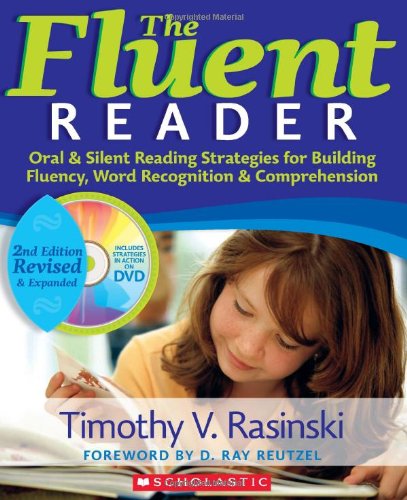
Timothy Rasinski is a professor of literacy education at Kent State University. He has written over 200 articles and has authored, co-authored or edited over 20 books or curriculum programs on reading education. He is author of the best selling book on reading fluency entitled The Fluent Reader, published by Scholastic. His scholarly interests include reading fluency and word study, reading in the elementary and middle grades, and readers who struggle. Tim is the author of the fluency chapter for Volume IV of the Handbook of Reading Research. He recently served a three year term on the Board of Directors of the International Reading Association and from 1992 to 1999 he was co-editor of The Reading Teacher, the world's most widely read journal of literacy education. He has also served as co-editor of the Journal of Literacy Research. In 2010 Tim was elected to the International Reading Hall of Fame.


Have you ever seen a writing rubric that doesn’t include “word choice” as one of the criteria against which to assess the quality of students’ writing? Word choice goes beyond students’ writing. Published authors themselves, whether of adult or children’s literature, choose interesting words to improve their writing. Thus it stands to reason that books, poetry, and other published materials that students read are likely filled with interesting words. As teachers we should take advantage of this treasure trove of words.

I had an old professor who was known for saying, “Teaching is the process of making visible that which is normally invisible.” Teachers help students discover what is often hidden from their view. The words in literature are often hidden from the view of students. When students read or are read to by their teacher or parent, they are often so engrossed in the story that they do not recognize the wonderful words that the author has used to craft her story. The words are essentially invisible to the students. Even in stories for young children, readers can find rich words woven into the texts. Take, for example, the opening pages to William Steig’s (1969) classic Sylvester and Magic Pebble.
Sylvester Duncan lived with his mother and father at Acorn Road in Oatsdale. One of his hobbies was collecting pebbles of unusual shape and color.
On a rainy Saturday during vacation he found a quite extraordinary one. It was flaming red, shiny, and perfectly round, like a marble. As he was studying this remarkable pebble, he began to shiver, probably from excitement, and the rain felt cold on his back. “I wish it would stop raining,” he said.
To his great surprise, the rain stopped. It didn’t stop gradually as rains usually do. It ceased!
Although intended primarily for children in their early childhood years, this excerpt containing a mere 95 words includes the following words: pebbles, extraordinary, remarkable, gradually, ceased. Indeed, Cunningham and Stanovich (1998) report that 1.6% of the words found in books for preschoolers and 3.1% of the words in books for the elementary grades are rare, words that are not normally used in conversation. Comparably, 1.7% of the words uttered in conversations of college graduates are rare words. Now, I am not trying to suggest that adult college graduates converse at the level of a preschool book; rather, the point I make is that literature, even for preschoolers, contains a rich corpus of words worth learning – both for reading and for writing. If students encounter unusual and interesting words in reading literature, clearly it is to their benefit to know these words in order to more fully understand what they read. Additionally, since authors purposefully choose interesting, tier 2 (Beck, McKeown, & Kucan, 2002) words for their writing, students will improve their own writing when they choose to use such interesting words. The question, then, becomes, how can teachers take advantage of the interesting words found in the books and other literature that children read? Word harvesting is one way.

Word harvesting is a simple method to help make these fabulous words found in trade books, poetry, song lyrics, and written texts more visible to students. In word harvesting, students along with the teacher select words they think are interesting from authentic texts that students are reading or have had read to them. Because students choose the words, they have ownership of the words. A good place to start word harvesting is to incorporate it into the daily classroom read aloud. 

Steps involved in word harvesting during read aloud:

1) The teacher reads an authentic piece of literature to students daily. Prior to reading to students the teacher asks students to enjoy the story but also to listen for any interesting words that the author may have used. Students may jot down the words on a piece of scratch paper.

2) At the end of the read aloud teacher and students spend a few minutes talking about the story. The teacher also asks students to call out the interesting words that they may have heard read by the teacher.

3) The teacher writes the words on a sheet of chart paper (Read Aloud Word Wall) displayed in a prominent place in the classroom. The teacher may also add a word of her own choosing. Students may also be asked to write the words in their own personal word journals. As the teacher writes the words she may elaborate on the meanings of the words, provide synonyms, and/or use the words in exemplar sentences. The class should aim for choosing five to ten words from each read aloud session.

4) Think of the Read Aloud Word Wall as a kind of billboard or advertisement for the words – inviting students to read and use the words. Thus, over the course of the next several days the class (teacher and students) make a purposeful effort to use the words from the Read Aloud Word Wall in their oral and written language. Because many of the words are not normally used in students’ normal oral language, the teacher should take the lead in using the words in her own language. Words on the word wall can also be read chorally by the class over the next several days.

5) On subsequent days, the same routine is followed during and after the read aloud. With each read aloud session, a new word wall chart is put on display, making visible for students the words used by the author to help make his or her writing even better.

The beauty of word harvesting is that it is such a simple activity that can easily be fit into an already existing classroom activity --- reading aloud. Word harvesting can also occur when students read a poem chorally or sing a song as group (e.g. I recently sang Grand Old Flag by George M. Cohan with a group of primary grade students. We harvested grand, acquaintance, boast, brag, peace, and emblem). The number of words that can be harvested and learned over the course of a year is nothing short of staggering. If a teacher reads to her students and harvests 5-10 words daily over the course of a 180 day school year, she can expect her students to be exposed to 800-1,600 words -- words that authors have used to craft their texts.

Students can also harvest words individually during their own personal reading. These words can be posted into their own personal word journals. Selected students can be invited to add a word or two from their own reading to the classroom word wall.

Second grade teacher Cheryl McBride (Rasinski, Fawcett, Lems, & Ackland, 2010) employs word harvesting with an interesting twist. While group reading Chicken Sunday (Polacco, 1992) her students added the following words to their word wall: solemn, intricate, solo, and splendid. Students read the word wall regularly in Cheryl’s class. However, she added something else to motivate them to actually use the words in their everyday speech. Each day she puts a hotel call bell on a different student’s desk. Whenever the assigned “bell dinger” hears one of the word wall words in classroom conversation he or she rings the bell. “Not only were students listening for the words to see if the “bell dinger” would catch it, they were intentionally using the words so that the bell would ring” (Rasinski, Fawcett, Lems, & Ackland, 2010, p. 50). Cheryl adds, “What impressed me most was, all of a sudden, they were looking at the word wall… With very little effort on my part, they are trying to use words in conversation. They’re always listening” (Rasinski, Fawcett, Lems, & Ackland, 2010, p. 50-51). During a recent district benchmark testing, the bell was put into Cheryl’s drawer. Throughout the testing period she could hear students softly making a “ding” sound as they encountered previously harvested words that were now part of their vocabulary. With the use of authentic texts and a hotel call bell, Cheryl has been able to make previously invisible words visible to her students.

Students are more likely to learn words when they are given a chance to choose the words they wish to learn. Moreover, students are more likely to appreciate well written texts when they are able to see that published authors improve their writing through their choice of words in their writing. Word harvesting is one way to help make visible to students the wonderful words authors use to craft their texts and to encourage students to make those words their own.

References
  • Beck, I., McKeown, M. & Kucan, L (2002) Bringing words to life: Robust vocabulary instruction. New York: Guilford.
  • Cunningham, A.E. & Stanovich, K.E. (1998). What reading does for the mind. American Educator, 22, 8-15.
  • Polacco, P. (1992). Chicken Sunday. New York: Philomel Books.
  • Rasinski, T., Fawcett, G., Lems, K., & Ackland, R. (2010). The fluent reader in action: Grades PreK-4. New York: Scholastic.
  • Steig, W. (1969). Sylvester and the magic pebble. New York: Simon and Schuster.

Sunday, June 12, 2011

Five-Day Plan for Developing Breadth of Vocabulary via Storybook Reading

This post builds on the prior post, which described how to use storybook reading to build depth of word knowledge. The upcoming third -- and final-- post in the storybook-reading series will describe how to use a method called "Dialogic Reading" to promote language, knowledge, and vocabulary (see published post by Jaci Urbani, Ph.D.).

Today, I describe a research-tested method for using storybooks to develop breadth of word knowledge so young children might learn many meanings relatively quickly, but not deeply. At the least, children need to be able to recognize a word when they hear it and understand its most common and least abstract meaning. Learning many meanings quickly but fairly superficially is an important goal, especially when the students know drastically fewer words than their peers. Children must rapidly develop a broad vocabulary, learning many meanings partially, yet well enough to get the gist of a variety of texts. (Sounds awfully tricky, but the brain was born for this! Language comes naturally to most of us and will flourish if carefully fostered in a word-rich learning environment.)

To learn more about the difference between partial knowledge and more complete mastery of word meanings in elementary grades, see Words Worth Teaching: Closing the Vocabulary Gap (Biemiller, 2010). This book is also an excellent resource when considering which words to teach (and see Fisher and Frey’s post on word selection).

Five-day plan for teaching vocabulary via storybook reading: This plan is based on Biemiller and Boote (2006) and on recent conversations with Dr. Biemiller. The goal is to teach many word meanings quickly and superficially. Thirty minutes per day were allocated for each lesson. Students were taught about 25-30 word meanings per week.

This plan is only a guide. Various factors need be considered, including the grade level and verbal proficiency of the students, the complexity of the target words, and the appeal of the story itself (who wants to hear a boring story four times?). As to that, Biemiller and Boote found that repeating the same story four times resulted in a larger effect size in kindergarten, compared to second grade.

At any rate, here is the basic five-day plan:

Day 1: If necessary, preteach one or two key concepts to enable comprehension of the story. For example, Biemiller and Boote (2006) pretaught circus before reading Clifford at the Circus. Prior to reading the story, 30% of the kindergartners were unfamiliar with the concept. Afterwards, 100% of them demonstrated an understanding of circus.

Read the story once without stopping. Then ask some basic comprehension questions, but do not teach any word meanings.

Day 2: Read the story again, stopping to briefly explain about 7-10 words. New comprehension questions are raised after reading. Word meanings taught that day are reviewed again after reading.

Day 3: Read the story again, stopping to briefly explain about 7-10 more words. New comprehension questions are raised after reading. Word meanings taught that day are reviewed again after reading. (Based on study 2 by Biemiller and Boote, and recent conversations with Biemiller, I suggest teachers briefly review all taught words.)

Day 4: Read the story again, stopping to briefly explain about 7-10 more words. New comprehension questions are raised after reading. Word meanings taught that day are reviewed again after reading.

Day 5: Briefly review all word meanings learned thus far. Informally assess learning. Provide each word in a different context (not context lifted from the story), perhaps asking students to respond with their thumbs-up or thumbs-down. Look for partial understanding of the meaning.

Interpreting your assessment results: Expect students to remember only about one-third to one-half of the words taught, at most, even if the meanings are reviewed cumulatively. In the second part of the study by Biemiller and Boote (2006), the teachers recommended adding more review to the methodology. Biemiller and Boote agreed with the modified procedure, so the teachers folded more review into the lessons. Thus, children learned and remembered about one-half of the words that were unknown to them, according to the pretest, on average. However, in other studies, children have learned and remembered only about one third of the taught words--sometimes not even that many.

Validate children for a job well done if they learn and remember only one-third to one-half of the words taught, because even in fairly optimal research conditions, the average child does not perform better.

Days 6 to… Revisit words in subsequent weeks and months, in varied context. Biemiller and Boote (2006) have found that retention of learned vocabulary was even greater six weeks after instruction. Why was retention greater six weeks later, when typically we forget things over time? Was the initial instruction successful enough so the children could continue to add to their lexical understanding through new context they encountered? Did the teachers continue to use the words in meaningful context? We do not know why the average child knew more meanings six weeks later, but this is certainly a happy finding!

Below, I provide an excerpt from Biemiller and Boote (2006). They discuss how many times to read a book, by grade level, and how each new reading provides another opportunity to learn more word meanings.
How Many Times Should Texts Be Reread?
In Grades 1 and 2, the percentage of meanings learned was about the same when books were read twice as when books were read four times (Study 1). (In kindergarten, reading books several times was more effective and is generally welcomed by children.) However, more word meanings can be taught in a week if the same book is read four times rather than two times. This is because different word meanings are taught on each of three readings rather than one. … The present method was effective, but the issue of repeated reading procedures requires more research. (p. 55)

Book selection: It is important to begin by selecting a suitable and captivating book. Suggestions for selecting books are discussed in the prior post and in Preschool: Where the Wild Words Are.  Biemiller and Boote (2006) used the following books, recommended by the classroom teachers and the school librarian.

Kindergarten
There Is More, Much More (Alexander, 1987)
Mud (Ray, 1996)
Something From Nothing (Gilman, 1992)
Clifford at the Circus (Bridwell, 1985)
Jillian Jiggs (Gilman, 1977)

Grade 1
Going Down the Road (Schertle, 1995)
The Seashore Book (Zolotow, 1992)
The Tree That Grew to the Moon (Fernandes, 1994)
Julian (Khalsa, 1989)

Grade 2
Drac and the Gremlin (Baillie & Tanner, 1991)
Alexander and the Wind-Up Mouse (Lionni, 1969)
Brenda and Edward (Kovalski, 1984)
The Chicken Cat (McLellan, 2000)

References:

Biemiller, A. (2010). Words worth teaching: Closing the vocabulary gap. Columbus, OH: SRA/McGraw-Hill.

Biemiller, A. & Boote, C. (2006). An effective method for building meaning vocabulary in primary grades. Journal of Educational Psychology, 98 (1), 44-62.

Sunday, April 17, 2011

Selecting Words: An Important Consideration in Explicit Vocabulary Instruction (Fisher & Frey)

This post is courtesy of Drs. Douglas Fisher and Nancy Frey. Doug and Nancy are professors at San Diego State University and nationally known for their work with vocabulary and comprehension instruction. Visit their website. They are the co-authors of several professional books for educators, including Word Wise and Content Rich: Five Essential Steps to Teaching Academic Vocabulary.  Key ideas from their book are discussed in this post. In two weeks, Nancy and Doug will post again, elaborating on how to teach vocabulary effectively.

There are a number of instructional components required for students to really learn words. It’s not simply a matter of assigning words, having students define those words, and then testing them on the words. Rather, the evidence suggests that students need explicit instruction in word meanings, repeated exposure to words, opportunities for wide reading, and experiences using the words in the presence of their peers (e.g., Fisher, Blachowicz, & Watts-Taffe, 2011; Graves, 2006).

One of the most difficult aspects of quality vocabulary instruction is deciding which words are worthy of being taught. There are clearly defined categories for words, which have become part of the lexicon for vocabulary researchers and teachers. We are all familiar with Tier 1 or general words, Tier 2 or specialized words, and Tier 3 or technical words (Beck, McKeown, & Kucan, 2002; Vacca & Vacca, 2007). These categories have guided teachers in the selection of words and facilitated an understanding of the value in learning different kinds of words.

While these categorical systems are helpful, they don’t provide teachers with concrete information about selecting words to teach. To address this, we have attempted to create a series of questions that teachers can ask to determine which words are worthy of being taught. We drew on several well-known vocabulary researchers, including Graves (2006), Hiebert and Kamil (2005), and Nagy (1988) to name the six categories useful in identify which words to teach. Figure 1 contains our questions, organized in six categories: Representative, Repeatable, Transportable, Contextual analysis, Structural analysis, and Cognitive load.

Considerations for Selecting Vocabulary Words
Topic Questions to Ask
Representative
  • Is the word representative of a family of words that students should know?
  • Is the concept represented by the word critical to understanding the text?
  • Is the word a label for an idea that students need to know?
  • Does the word represent an idea that is essential for understanding another concept?
Repeatability
  • Will the word be used again in this text? 
    • If so, does the word occur often enough to be redundant?
  • Will the word be used again during the school year?
Transportable
  • Will the word be used in group discussions?
  • Will the word be used in writing tasks?
  • Will the word be used in other content or subject areas?
Contextual Analysis
  • Can students use context clues to determine the correct or intended meaning of the word without instruction?
Structural Analysis
  • Can students use structural analysis to determine the correct or intended meaning of the word without instruction?
Cognitive Load
  • Have I identified too many words for students to successfully integrate?
Figure 1. Considerations for Selecting Vocabulary Words (Fisher & Fry, 2008)


In our teaching, we have found these categories and questions useful. For example, during a recent unit on disability as part of our integrated health curriculum, we used this system to analyze a primary source document that students were going to read in class as part of their Internet Reciprocal Teaching task. From the article about Phenylketonuria (PKU), we selected condition, inherited, gene, enzyme, recessive, and treatable, based on our knowledge of our students and their existing word knowledge. In doing so, we were able to ensure that students understood these key terms, and thus the information about this disability.

Once the words have been selected, instruction begins. There are a host of great ideas about teaching vocabulary on this blog and in a number of other published resources. To our thinking, these are less helpful if we are not clear about which words need to be taught. Having said that, even selecting words worthy of being taught will be useless if we revert to the “assign, define, test” approach to building students’ knowledge.

In sum, selecting words should be foundational in explicit vocabulary instruction, and there should be instruction!

Editorial Note: For a discussion of The Academic Word List, containing morphological families of scholarly words for older students and English Language Learners, see Academic Families of Words. One might apply Fisher and Frey's six considerations to the words in the list, to determine suitability for instruction. For helping students develop conceptual knowledge of words that meet Fisher and Frey's representative condition, read Kathleen Lord's post. For a discussion of essential words for younger students in primary grades and beginning English Language Learners, see prior posts (and books) by Michael Graves and Andrew Biemiller. For a discussion of how to understand words through structural analysis--the fifth consideration suggested by Fisher and Frey--see Morphology (MA) and follow the embedded links to specific posts concerning morphology (e.g., Bellomo, Bowers, Ebbers, Eddy, Filippini, and Henry).

References:

Beck, I. L., McKeown, M. G., & Kucan, L. (2002). Bring words to life: Robust vocabulary instruction. New York: Guilford.

Fisher, P. J., Blachowicz, C. L. Z., & Watts-Taffe, S. (2011). Vocabulary instruction: Three contemporary issues. In D. Lapp & D. Fisher (Eds.), Handbook of research on teaching the English language arts (3rd ed.) (pp. 252-257). Mahwah, NJ: Lawrence Erlbaum.

Fisher, D., & Frey, N. (2008). Word wise and content rich: Five essential steps to teaching academic vocabulary. Portsmouth, NH: Heinemann.

Graves, M. F. (2006). The vocabulary book: Learning & instruction. New York: Teachers College.

Hiebert, E. H., & Kamil, M. L. (Eds.). (2005). Teaching and learning vocabulary: Bringing research to practice. Mahwah, NJ: Erlbaum.

Nagy, W. E. (1988). Teaching vocabulary to improve reading comprehension. Urbana, IL: National Council of Teachers of English.

Vacca, R. T., & Vacca, J. A. (2007). Content area reading: Literacy and learning across the curriculum (9th ed.). Boston: Allyn & Bacon.