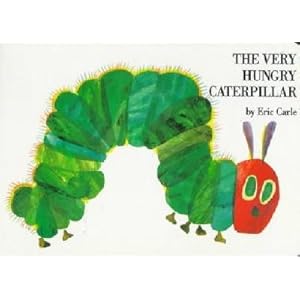
One established way to promote vocabulary is by reading aloud to children. Educators, including librarians and parents, are encouraged to read to children at every age, beginning in infancy. Children's books often contain rich and savory vocabulary. As shown on the chart, Hayes and Ahrens (1988) examined the words used in varied types of content. They found that, compared to the recorded conversations of college students, children's books contained nearly twice as many rare or infrequently used words. The vocabulary used in children's books also far exceeded that of television programs.
What should we read to children?
This varies by age and child, but strive for variety: Read fiction and nonfiction, prose and poetry, news articles, etc. Select materials that offer some unknown words and/or concepts. Younger children tend to benefit from narrative storybooks with a fairly predictable story grammar (e.g., "Once upon a time" or something similar). It is also beneficial to read nonfiction in early childhood, including books about dinosaurs or types of locomotives, for example. Select captivating children's books that contain rich vocabulary (see Where the Wild Words Are by Lucy Hart Paulson).
Also, when selecting books, bear in mind that children come to school with vastly different prior experiences with stories, based largely on the culture and language of the home. This question was explored in a previous Vocabulogic survey. Visit Twiigs Poll to view the closed survey: "Collectively Shared Cultural Literacy and the Movie Industry."
How often and for how long should we read to children?
Read to children every day, if possible. For how long? That varies by the attention span of the child, the interest level of the child, and the competing priorities of the day. Perhaps we should strive for a minimum of 15 minutes each day. Does that sound reasonable?
Can children learn a new word from only one exposure to it?
Yes, children can learn a new word through only one exposure to it as a process called “fast mapping” takes place (Carey & Bartlett, 1978). Children mentally "map" the new word to a superficial and context-specific understanding. Fast mapping does not result in depth of knowledge, but learning does occur, and in a natural manner, through conversations or storybook reading, for example. If the child does not hear the word again within a reasonable time, it is probably forgotten.
Do children learn words if the book is only read once?
 |
| Click to enlarge chart. |
What should we read to children?
This varies by age and child, but strive for variety: Read fiction and nonfiction, prose and poetry, news articles, etc. Select materials that offer some unknown words and/or concepts. Younger children tend to benefit from narrative storybooks with a fairly predictable story grammar (e.g., "Once upon a time" or something similar). It is also beneficial to read nonfiction in early childhood, including books about dinosaurs or types of locomotives, for example. Select captivating children's books that contain rich vocabulary (see Where the Wild Words Are by Lucy Hart Paulson).
Also, when selecting books, bear in mind that children come to school with vastly different prior experiences with stories, based largely on the culture and language of the home. This question was explored in a previous Vocabulogic survey. Visit Twiigs Poll to view the closed survey: "Collectively Shared Cultural Literacy and the Movie Industry."
How often and for how long should we read to children?
Read to children every day, if possible. For how long? That varies by the attention span of the child, the interest level of the child, and the competing priorities of the day. Perhaps we should strive for a minimum of 15 minutes each day. Does that sound reasonable?
Can children learn a new word from only one exposure to it?
Yes, children can learn a new word through only one exposure to it as a process called “fast mapping” takes place (Carey & Bartlett, 1978). Children mentally "map" the new word to a superficial and context-specific understanding. Fast mapping does not result in depth of knowledge, but learning does occur, and in a natural manner, through conversations or storybook reading, for example. If the child does not hear the word again within a reasonable time, it is probably forgotten.
Do children learn words if the book is only read once?
Yes, reading a story only once to children results in word learning. This is good! However, the effect size tends to be small, the knowledge less robust, and the words are more quickly forgotten. In addition, children do not tend to learn the words well enough to produce them themselves via writing or speaking (see Coyne et al., 2010; McKeown & Beck, 2011). Word knowledge is typically receptive, not productive.
How can we improve the likelihood that, by reading aloud to children, words will be learned more deeply and remembered longer?
Even though researchers are still debating how children learn words from read-alouds, and they take different theoretical positions, they tend to agree on three big ideas:
1) In general, reading aloud to children results in more lasting vocabulary growth if we read the book more than once in the same week. However, this varies by grade level. Repeating the same story four times has resulted in a larger effect size in kindergarten, compared to second grade (Biemiller & Boote, 2006).
2) In general, reading aloud to children results in deeper and more lasting vocabulary growth if we read the book more than once in the same week AND we directly teach the meaning of targeted words by paraphrasing them or briefly defining them at point of use in the text.
Note: Read the entire story without stopping, the first time, to better ensure enjoyment and to avoid disrupting the train of thought or losing track of the main ideas of the story. During subsequent readings, stop to briefly explain or paraphrase target words.
3) In general, reading aloud to children results in deeper, more lasting, and more productive vocabulary growth if we read the book more than once in the same week AND we directly but briefly teach target words at point of use in the text AND we follow this with interactive word study (Beck, McKeown, & Kucan, 2002; Coyne et al., 2010; McKeown & Beck, 2011.)
Should we preteach a few words BEFORE we read the text to the class?
Depending on the student's background knowledge, we may need to preteach one or two key words. Often, an understanding of a specific concept is required if the listener is to understand the piece. For example, in a kindergarten lesson, Biemiller and Boote (2006) taught circus before reading Clifford at the Circus. Preteaching key concepts is a practice that applies to every grade level and every subject area (see post by Joan Sedita).
How might we quickly teach word meanings DURING the read-aloud?
There are a number of ways to directly teach word meanings while in the midst of reading to children. Perhaps the simplest is through the use of paraphrasing. When reading aloud at any grade level, teachers paraphrase a word to ensure students understand it. This takes only a moment. For example: “Once upon a time a lass (a girl) lived with her grandmother in a cottage (a small house)." After paraphrasing, reread the sentence, but without the scaffold: "Once upon a time a lass lived with her grandmother in a cottage."
How might we help children interact with target words AFTER the read-aloud, to develop depth of knowledge and productive use of the words? What does interactive, responsive, engaging word study look like?
In follow-up lessons after the story has been read at least once, provide ways for children to engage with the word in contexts other than the story. Help them create semantic connections and build networks of related words and concepts. For example, if children are taught the concept stubborn to augment the rather simple vocabulary in Green Eggs and Ham, they could discuss how stubborn plays out in Mike Mulligan and His Steam Shovel. Thus, they learn another application of the word, with a slightly different nuance. To prompt productive vocabulary, have children say and/or write the word. Encourage discussion and debate as children engage in word sorting activities with partners. Furthermore, have children juxtapose two learned words against each other. For example, after children have learned drenched and stubborn, ask them to use both words in the same sentence. Have them compare shades of meaning: Which word is wetter: drenched, damp, wet, watery, waterlogged, saturated, dripping, soaking, sopping? How is drenched similar to and different from damp? Tell a friend about a time you got drenched. Also, depending on the grade level, include morphology in the lesson if the word contains common prefixes, base words, or suffixes. Again, depending on the grade level, develop figurative knowledge: Could a rose be drenched in sunshine? How could a rock be stubborn?
There is a growing body of research showing the promising effects of elaborative, interactive word study, built around repeatedly reading a story aloud in primary grades (Beck, McKeown, & Kucan, 2002; Coyne et al., 2010; McKeown & Beck, 2011). This research has also been applied to Response to Intervention models of instruction in primary grades (see post by Michael Coyne.) Furthermore, this method of instruction has been found to be effective with English Language Learners in kindergarten (Silverman, 2007). However, by spending so much time interacting with words in responsive and meaningful ways, there is only time to explore about 3-5 words per day.
On the other hand, there is another body of research showing the effects of teaching more words per day during storybook reading (about 7-10 words per day, 3 or 4 days a week). This method teaches words fairly superficially, spending less time interacting with each word, with the goal of developing greater breadth of knowledge (e.g., Biemiller & Boote, 2006). This goal will be discussed in more depth in the next post.
How can we improve the likelihood that, by reading aloud to children, words will be learned more deeply and remembered longer?
Even though researchers are still debating how children learn words from read-alouds, and they take different theoretical positions, they tend to agree on three big ideas:
1) In general, reading aloud to children results in more lasting vocabulary growth if we read the book more than once in the same week. However, this varies by grade level. Repeating the same story four times has resulted in a larger effect size in kindergarten, compared to second grade (Biemiller & Boote, 2006).
2) In general, reading aloud to children results in deeper and more lasting vocabulary growth if we read the book more than once in the same week AND we directly teach the meaning of targeted words by paraphrasing them or briefly defining them at point of use in the text.
Note: Read the entire story without stopping, the first time, to better ensure enjoyment and to avoid disrupting the train of thought or losing track of the main ideas of the story. During subsequent readings, stop to briefly explain or paraphrase target words.
3) In general, reading aloud to children results in deeper, more lasting, and more productive vocabulary growth if we read the book more than once in the same week AND we directly but briefly teach target words at point of use in the text AND we follow this with interactive word study (Beck, McKeown, & Kucan, 2002; Coyne et al., 2010; McKeown & Beck, 2011.)
Should we preteach a few words BEFORE we read the text to the class?
Depending on the student's background knowledge, we may need to preteach one or two key words. Often, an understanding of a specific concept is required if the listener is to understand the piece. For example, in a kindergarten lesson, Biemiller and Boote (2006) taught circus before reading Clifford at the Circus. Preteaching key concepts is a practice that applies to every grade level and every subject area (see post by Joan Sedita).
How might we quickly teach word meanings DURING the read-aloud?
There are a number of ways to directly teach word meanings while in the midst of reading to children. Perhaps the simplest is through the use of paraphrasing. When reading aloud at any grade level, teachers paraphrase a word to ensure students understand it. This takes only a moment. For example: “Once upon a time a lass (a girl) lived with her grandmother in a cottage (a small house)." After paraphrasing, reread the sentence, but without the scaffold: "Once upon a time a lass lived with her grandmother in a cottage."
How might we help children interact with target words AFTER the read-aloud, to develop depth of knowledge and productive use of the words? What does interactive, responsive, engaging word study look like?
In follow-up lessons after the story has been read at least once, provide ways for children to engage with the word in contexts other than the story. Help them create semantic connections and build networks of related words and concepts. For example, if children are taught the concept stubborn to augment the rather simple vocabulary in Green Eggs and Ham, they could discuss how stubborn plays out in Mike Mulligan and His Steam Shovel. Thus, they learn another application of the word, with a slightly different nuance. To prompt productive vocabulary, have children say and/or write the word. Encourage discussion and debate as children engage in word sorting activities with partners. Furthermore, have children juxtapose two learned words against each other. For example, after children have learned drenched and stubborn, ask them to use both words in the same sentence. Have them compare shades of meaning: Which word is wetter: drenched, damp, wet, watery, waterlogged, saturated, dripping, soaking, sopping? How is drenched similar to and different from damp? Tell a friend about a time you got drenched. Also, depending on the grade level, include morphology in the lesson if the word contains common prefixes, base words, or suffixes. Again, depending on the grade level, develop figurative knowledge: Could a rose be drenched in sunshine? How could a rock be stubborn?
There is a growing body of research showing the promising effects of elaborative, interactive word study, built around repeatedly reading a story aloud in primary grades (Beck, McKeown, & Kucan, 2002; Coyne et al., 2010; McKeown & Beck, 2011). This research has also been applied to Response to Intervention models of instruction in primary grades (see post by Michael Coyne.) Furthermore, this method of instruction has been found to be effective with English Language Learners in kindergarten (Silverman, 2007). However, by spending so much time interacting with words in responsive and meaningful ways, there is only time to explore about 3-5 words per day.
On the other hand, there is another body of research showing the effects of teaching more words per day during storybook reading (about 7-10 words per day, 3 or 4 days a week). This method teaches words fairly superficially, spending less time interacting with each word, with the goal of developing greater breadth of knowledge (e.g., Biemiller & Boote, 2006). This goal will be discussed in more depth in the next post.
References:
Beck, I., McKeown, M., & Kucan, L. (2002). Bringing words to life: Robust vocabulary instruction. New York: Guilford Press.
Biemiller, A. & Boote, C. (2006). An effective method for building meaning vocabulary in primary grades. Journal of Educational Psychology, 98 (1), 44-62.
Carey, S. & Bartlett, E. (1978). Acquiring a single new word. Proceedings of the Stanford Child Language Conference, 15, 17-29. (Republished in Papers and Reports on Child Language Development 15, 17-29.)
Coyne, M. D., McCoach, D. B., Loftus, S., Zipoli, R., Ruby, M., Crevecoeur, Y. & Kapp, S. (2010). Direct and extended vocabulary instruction in kindergarten: Investigating transfer effects. Journal of Research on Educational Effectiveness, 3, 93-120.
Hayes, D. P., & Ahrens, M. G. (1988). Vocabulary simplification for children: A special case of 'motherese'? Journal of Child Language, 15, 395-410.
McKeown, M. & Beck, I. (2011, April). Two approaches to vocabulary instruction for kindergarteners: Comparing effects on comprehension. (Poster talk at American Educational Research Association, New Orleans.)
Silverman, R. (2007.) Vocabulary development of English-language and English-only learners in kindergarten. Elementary School Journal, 107(4), 365-383.