Showing posts with label preschool. Show all posts

Sunday, May 27, 2012

Be Not *Dismighted


A note from the publisher:

I will no longer send out email notification for each new Vocabulogic post. If you wish to be notified when a new post is published, enter your email address into Feedburner. After you do so, Feedburner will send you a verification email; you will need to confirm to activate your subscription. To subscribe, click the Feedburner link.


Greetings! 

I am on holiday, so I did not write a post. 

But be not dismayed!

(A curious word--dismayed--composed of dis- + may. With the prefix dis- denoting 'not, opposite of, away' and the forerunner to one sense of may historically denoting 'might, power, ability' (Ayto, 1990) we see that dismayed indicated far more than mere "disappointment" or "shock and surprise" as sometimes used today. For one example, a Google search yielded, "I was dismayed when the TV show was cut." 

The Oxford English Dictionary defines dismay:
 1. trans (verb). To deprive of moral courage at the prospect of peril or trouble; to appal [sic] or paralyze with fear or the feeling of being undone; utterly to discourage, daunt, or dishearten. refl. †To be filled with dismay; to lose courage entirely.

Be not *dismighted.  

Ahem. But maybe a look at dismay is fitting for Memorial Day.)


Instead of writing a post, I offer two treats:

#1 : How Students Approach New Words (podcast)
 

Click this hyperlink to visit the Voice of Literacy podcast page, where Dr. Betsy Baker (University of Missouri ) interviews Dr. Jocelyn Folk (Kent State University). The run time is just over 13 minutes.

Dr. Jocelyn Folk is a cognitive psychologist. She investigates incidental vocabulary learning among skilled readers. In the podcast, Dr. Folk explains:
"I have always been interested in the processes skilled readers use when they encounter a word that is unfamiliar to them--so it's a new vocabulary word--but that is not your task--your task isn't about learning new vocabulary words, you are just reading a book. So the question is this: How do skilled readers deal with words they do not know?"


 #2: The Humorous Option

View a fast and furious video outlining the convoluted history of the English language. This clever video is courtesy of The Open University. If the video does not open in the player below, click one of the links beneath the video.


View the video in ten one-minute segments, at The Open University or view the entire ten-minute video on YouTube

View video WHERE DID ENGLISH COME FROM by Claire Bowern


Enjoy!

Susan 


References: 

Ayto, John. (1990). Dictionary of word origins. New York: Arcade Publishing.

Baker, E. A. & Folk, J. (2012, April 2). Vocabulary instruction: How students approach new words. Voice of Literacy. Podcast retrieved from http://voiceofliteracy.org

Sunday, December 11, 2011

Two Brief Podcasts on Vocabulary Instruction

Something new this time! This is a special treat, just in time for the holidays!

It is my pleasure to share a few thoughtful yet brief podcasts on vocabulary, from The Voice of Literacy (dot) org. I have listened to each podcast below and have read manuscripts written by each expert. Drs. Neuman and McCutchen discuss their specific line of research, with practical applications for pedagogy.

Each interview at The Voice of Literacy (and there are many more) runs for about 10 -15 minutes. 

Turn up the volume and enjoy!
 
Door # 1) Dr. Betsy Baker interviews Dr. Susan Neuman, on the topic of helping young children learn words and organize newly learned words into conceptual categories. This should help children learn, remember, and retrieve the words. Some elements of the podcast relate to developing word consciousness, prioritizing vocabulary instruction as a vital literacy element, and elevating the daily vocabulary used by teachers in the classroom. Go directly to the Voice of Literacy website for the podcast; just click the link below.


Door #2)  Dr. Betsy Baker interviews Dr. Deb McCutchen on the topic of developing morphological awareness, both in the home and at school. Dr. McCutchen suggests several ways that parents and teachers might promote morphological awareness. For example, help learners notice similarity in form and meaning across morphologically related words, as in joy, joyous, joyously, enjoy, enjoyable, and, for a little fun with cognates, Joyeux Noël. The long-term goal is that students will independently infer the meaning of unknown words. Go directly to the Voice of Literacy website for the podcast; just click the link below.


PS.  Since you asked  ;- )

Here's a sneak peek at my new children's book, coming soon from Rowe Publishing and Design. Jamie's Journey has been six years in the making--the idea came to me before I started graduate school. What fun to watch illustrator Cory Godbey bring the book to life. Woot!


References:

Baker, E. A. & McCutchen, D. (2011, October 3). Using morphological analysis to infer word meanings. Voice of Literacy. Podcast retrieved from http://voiceofliteracy.org. 


Baker, E. A. & Neuman, S. (2011, September 5). Using categories to teach vocabulary to preschoolers. Voice of Literacy. Podcast retrieved from http://voiceofliteracy.org.

Sunday, October 30, 2011

The Two-Questions Method of Word Meaning Assessment: A Group Procedure for Use with Preliterate Children (Kearns & Biemiller)

This post is courtesy of Gail Kearns and Andrew Biemiller. Gail Kearns is a reading specialist and former teacher who founded a diagnostic and remedial reading clinic in Concord, Massachusetts. She worked for Jeanne Chall at Harvard University as a research assistant on readability projects and on the first edition of the Diagnostic Assessments of Reading (DAR); more recently she co-authored the Second Edition of the DAR. Gail also co-authored Trial Teaching Strategies (TTS), a useful tool for planning tutorials and interventions.  Andrew Biemiller, Professor Emeritus, University of Toronto, is a vocabulary researcher and the author of Words Worth Teaching: Closing the Vocabulary Gap. Andrew is advisor to the WGBH television program for young children, Martha Speaks. Please see  Andrew's prior post describing this educational and yet entertaining PBS program. Andrew is a national expert in reading and language comprehension, and has also investigated self-direction in schools. Gail and Andrew have collaborated together on vocabulary research, described below.


For too long, classroom teachers and researchers have been unable to assess vocabulary reliably and efficiently with classes of preliterate children—young children who either can’t read or can’t read reliably. These difficulties have made individual assessment of word meaning with such students a necessity. We believe the amount of time that has been needed for assessment is partly why educators have tended to neglect vocabulary with children in the primary grades and also why so few word meaning studies have been able to be conducted in these grades.

Young children’s general vocabulary level has been assessed to date with tests such as the well-known Peabody Picture Vocabulary Test (PPVT). However, this test, like other such vocabulary tests for students in these grades, requires individual assessment, taking 15 to 25 minutes per student. This is more time than classroom teachers can spend with each child, particularly for regular assessment at intervals following instruction. Furthermore, the PPVT is largely limited to assessment of concrete meanings, i.e., word meanings that can be readily pictured.

We have recently published a study of our method for group testing vocabulary word meanings that was conducted with 257 students in grades K, 1, and 2 (Kearns & Biemiller, 2010). The results of our validation study demonstrated that results similar to individual PPVT assessments could also be obtained with our group method. (Correlations between overall children’s PPVT raw scores and scores from our group test were r = .76 in Kindergarten, r = .71 in Grade One, and r = .70 in Grade Two. Correlations between word mean scores from the two methods were .76 (Kindergarten), .79 (Grade 1), and .94 (Grade 2). In short, these results indicate that teachers could use this method both to determine overall vocabulary needs in classrooms, and to monitor the acquisition of word meanings and success of vocabulary instruction. Researchers could use this new group method to shorten the amount of time needed to conduct vocabulary acquisition studies in these grades.

In this entry, we want to briefly describe how the Two-Questions Vocabulary method is used for assessment of word meanings in the primary grades. Additional details for conducting such assessments are available from the authors and in our journal article about the study.

When constructing a Two-Questions assessment, each word should be assessed with two short questions, each of which can be answered with either “yes” or “no,” and with one “yes” question and one “no” question used for each word. For a child to be credited with knowledge of a word meaning, both questions have to be answered correctly. (When this is done, the odds of guessing a correct answer is the same as on the PPVT, where the student must choose 1 of 4 possible alternative pictures.)

With the exception of the assessed word, all other words in the questions are of high text frequency, and the questions are kept simple (no complex clauses, etc.). The two questions for each word are placed in random order on the test; they never follow each other and are kept as far apart as possible. In the study, we used one of the questions for each word in each test session. We chose equal numbers of “yes” and “no” questions (and arranged them in random order) for each test session.

Here are some examples of Two-Questions items taken from a test administrator’s form. (Words in these sample items have not been taken from the copyrighted PPVT test.)

Items from a sample administrator’s test form. (© Kearns & Biemiller, 2010). Graphics
used are from collection of 6,000 “Literacy Support Pictures,” courtesy Slater Software.

The authors strongly recommend use of a Student Response form, particularly when assessing kindergartners. Children are asked to circle a “yes” or “no” alternative for each item. We found that use of 5”x 7” cards for tracking items were also needed with kindergartners and for many first graders. Details of how best to use the cards and Response Sheets are available in the article or from the authors.

Sample items from a Student Response Sheet. (© Kearns & Biemiller, 2010). Graphics
used are from collection of 6,000 “Literacy Support Pictures,” courtesy Slater Software.


How long does administering the Two-Questions tests take? In our experience, the first time, we recommend two sessions on different days be used for assessing approximately 20 words. The first session will take about 45 minutes, with at least half of the session used to introduce the Response Sheet and to practice answering sample test items. The second session, conducted on a different day, should take 15 to 20 minutes. Second graders may be able to be assessed in a single session of about 50 minutes.

Later in the year, after the group assessment method has been used earlier with a classroom, and after the students have become familiar with how these tests are conducted, additional word meaning assessments for instructional purposes with the Two-Questions method may be able to be completed with single sessions of about 30 minutes for 20 words.

During the course of the study, we came to believe that an additional separate initial group session for training purposes would have been desirable for the kindergarten children and should be built into other studies involving group testing of word meanings in kindergarten.

In conclusion, we believe that this method can be used to create items for both assessing general vocabulary knowledge and for regularly testing samples of word meanings taught throughout the school year in the classroom. (We recommend teaching word meanings in the context of stories read aloud by the teacher and through other on-going classroom activities. Methods of teaching are discussed in Beck, McKeown, & Kucan (2002 and 2008), Graves (2006 and 2009), Stahl & Nagy (2006), Blachowicz & Fisher (2006), and Biemiller (2010). Ways of choosing words for instruction are discussed in the Beck et al and Biemiller books.

References
Beck, I. L., McKeown, M. G., & Kucan, L. (2002). Bringing Words to Life: Robust Vocabulary Instruction. New York: NY, Guilford Press Inc.

Beck, I. L., McKeown, M. G., & Kucan, L. (2008). Creating Robust Vocabulary: Frequently Asked Questions and Expanded Examples. New York: NY, Guilford Press Inc.

Biemiller, A. (2010). Words Worth Teaching. Columbus, OH: SRA/McGraw-Hill.

Blachowicz & Fisher (2009). Teaching Vocabulary in All Classrooms. Boston, MA: Allyn & Bacon.

Graves, M. F. (2006). The Vocabulary Book: Learning and Instruction. New York, NY: Teachers College Press.

Graves, M. F. (2009). Teaching Individual Words: One Size Does Not Fit All. New York, NY: Teachers College Press.

Kearns, G., & Biemiller, A. (2010). Two-Questions vocabulary assessment: Developing a new method for group testing in kindergarten through second grade. Journal of Education, 190 (1/2), 31-41.

Stahl, S. A. & Nagy, W. E. (2006). Teaching Word Meanings. Mahwah, NJ: Lawrence Erlbaum Associates.

Sunday, June 26, 2011

Developing Language, Knowledge, and Vocabulary via Dialogic Reading Methods (Urbani)

Jacquelyn M. Urbani, Ph.D., contributed this post. Dr. Urbani specializes in reading research and in educating students who are deaf and hard of hearing, where learning to read and developing a broad vocabulary is particularly challenging. Her groundbreaking doctoral research involved helping teachers use dialogic reading procedures during storytime in deaf education classrooms. Before gaining her doctorate at UC Berkeley, Jaci was a teacher for 12 years.

Recent posts have described ways to optimize student vocabulary growth through storybook reading (see prior posts one and two). Reading to children is considered one of the best activities for developing the language, knowledge, and vocabulary essential for future success in reading (1). In particular, reading to children is considered valuable because of the simultaneous presentation of oral and written language as well as its interactive nature (2). This post will describe a specific kind of reading to children, dialogic reading, developed for the express purpose of facilitating students’ expressive language.

What is Dialogic Reading?
Dialogic reading aims to make students more active participants in the reading process by having adult readers engage students in discussion and retellings of the stories (3). Parents and teachers are encouraged to use specific kinds of interactions with children, based on the acronyms PEER and CROWD. PEER stands for Prompting of the child, Evaluating and Expanding upon their responses, and asking children to Repeat correct responses. Prompts are further described using the acronym CROWD: Completion questions (asking students to complete a phrase); Recall (asking children to remember details); Open-ended questions (encouraging student discussion of story ideas and the use of new vocabulary); Wh-word questions (who, what, where, when); and Distancing (making connections between the book and the students’ lives). Examples of dialogic reading prompts are provided below (4), referring to the children’s classic storybook Corduroy, by Don Freeman.


CROWD 
A mnemonic for types of questions and interactions: Completion, Recall, Open-Ended, Wh-word (who, why, where, what, when), Distancing

  • Completion       "Corduroy lost a _____________." 

  • Recall               "Do you remember what happened with the security guard?" 

  • Open-Ended     "What happens when Corduroy looks for his button?" 

  • Wh-word          "Who found Corduroy in the bed?" 

  • Distancing        "What are your favorite toys?" 


PEER 
A mnemonic for Prompt, Evaluate, Expand, Repeat

  • Prompt        (prompting the child -- a question or comment) 

  • Evaluate      Provide gentle correction to student misinformation: "This is not an elevator. It's      called an escalator." 

  • Expand        Provide further information: "Escalators are like stairs that move for you, so you don't have to use your energy." 

  • Repeat         Ask students to repeat a correct response: "Tell me again why Lisa's mom does not let her buy Corduroy." (First, discuss the reasons.)


In my research, I found that teachers often responded to a description of dialogic reading by saying, “I’m already doing that. I ask lots of questions.” However, I found that teachers initially were using simple question types, such as yes/no questions or comprehension checks that required only a one-word response from students. As teachers became aware of the kinds of questions they were asking (this can occur through team teaching, mentoring, and/or critical friends), they were able to modify their language to incorporate more recommended features. Similar to previous posts, the recommendation with dialogic reading is for multiple readings. The first reading serves to engage students in the story and plotline. Subsequent re-readings provide opportunities for students to discuss topics and concepts presented by the book. However, typical teacher-student ratios of early childhood classes often limit such opportunities—which can be particularly problematic for students with language delays and/or English Language Learners. Therefore, teachers are encouraged to work with small groups of three to five students.

Potential Challenges When Implementing Dialogic Reading
Dialogic reading does require effort: quite honestly, it is easier to conduct a storybook reading if the teacher is the only one talking. Using dialogic reading emphasizes the multi-tasking nature of teaching. The teacher is reading and managing behavior as well as engaging students by using specific prompts, encouraging comments, facilitating conversational turn-taking, and keeping track of who has yet to enter the discussion.

Facilitating this student conversation is often uncomfortable for teachers, as they leave their comfort zone and give up some control. In my research on implementing dialogic reading practices, one teacher remarked that she was not sure how far to allow the conversation to go. My response was that if students are asking questions and making comments, these may indicate areas of interest and areas where they do not have the necessary background knowledge; she could then offer explanations to further both their conceptual knowledge and the conversation. However, it is also important to recognize when the conversation has strayed and it is necessary for the teacher to refocus the group on the storybook reading.

Dialogic reading may be difficult to implement, especially initially. An important feature for success is pre-reading the book. While teachers expressed frustration that they did not have time to pre-read the book, when they did make the time, they found it allowed them to consider appropriate prompts and questions, which were more easily integrated into the reading activity. (Because of the multiple readings of the book, this means teachers only need to read one book per week, which should be much easier than reading a new book per day.)

Because of the re-readings of the same book, I suggest reading to the same small group of students during the week. If it is necessary to stop the reading, teachers can resume at the appropriate place the next day. Also, teachers can continue previous conversation by saying, “Remember yesterday Talia asked about . . . and Billy commented on . . .” This also brings focus and support to the social aspect of learning. Students can rotate to new small groups weekly so they learn from each other and are not in static peer groups.

There are days when teachers will say, “Today, I’m just going to read, and we’re not going to make comments, and you all can relax and calm down.” This is necessary—for general sanity—every once in a while. But it shouldn’t be the nature of reading everyday, especially when dialogic reading offers clear benefits for language development, including vocabulary growth.

Dialogic reading is a recommended practice of the What Works Clearinghouse. Further description and research can be found there.
____________________________________
1.  Adams, 1990; Dickinson, McCabe, & Anastasopoulos, 2003; National Academy of Education, 1985.
2.  Ezell & Justice, 2005; National Academy of Education, 1985; and Snow, Griffin, & Burns, 2005).
3.  Whitehurst, et al., 1988; Whitehurst, Arnold, et al., 1994; Whitehurst, et al., 1999).
4.  Adapted from Pearson Early Learning, 2006.

References: 
  • Adams, M. J. (1990). Beginning to read: Thinking and learning about print. Cambridge, MA: MIT   Press.
  • Dickinson, D. K., McCabe, A., & Anastasopoulos, L. (2003). A framework forexamining book reading in early childhood classrooms. In A. van Kleeck, E. B. Bauer, & S. Stahl (Eds.), On reading books to children: Parents and teachers (pp. 95–113). Hillsdale, NJ: Erlbaum.
  • Ezell, H. K. & Justice, L. M. (2005). Shared storybook reading. Baltimore: Paul H. Brookes Publishing Co.
  • National Academy of Education (1985). Becoming a nation of readers: The report of the Commission on Reading. Washington, DC: Author.
  • Pearson Early Learning. (2006). Read together, talk together: A dialogic reading program for young children. Available from Pearson Early Learning at www.PearsonEarlyLearning.com.
  • Snow, C. E., Griffin, M., & Burns, M. S. (Eds.) (2005). Knowledge to support the teaching of reading: Preparing teachers for a changing world. San Francisco: Jossey-Bass.
  • Whitehurst, G. J., Arnold, D.S., Epstein, J.N., Angell, A.L., Smith, M., & Fischel, J.E. (1994). A picture book reading intervention in day care and home for children from low-income families. Developmental Psychology, 30(5), 679-689.
  • Whitehurst, G. J., Falco, F. L., Lonigan, C. J., Fischel, J. E., DeBaryshe, B. D., Valdez-Menchaca, M. C., et al. (1988). Accelerating language development through picture book reading. Developmental Psychology, 24(4), 552-559.
  • Whitehurst, G.J., Zevenbergen, A.A., Crone, D.A., Schultz, M.D., Velting, O.N., & Fischel, J.E. (1999). Outcomes of an emergent literacy intervention from Head Start through second grade. Journal of Educational Psychology, 91(2), 261-272.

Sunday, June 12, 2011

Five-Day Plan for Developing Breadth of Vocabulary via Storybook Reading

This post builds on the prior post, which described how to use storybook reading to build depth of word knowledge. The upcoming third -- and final-- post in the storybook-reading series will describe how to use a method called "Dialogic Reading" to promote language, knowledge, and vocabulary (see published post by Jaci Urbani, Ph.D.).

Today, I describe a research-tested method for using storybooks to develop breadth of word knowledge so young children might learn many meanings relatively quickly, but not deeply. At the least, children need to be able to recognize a word when they hear it and understand its most common and least abstract meaning. Learning many meanings quickly but fairly superficially is an important goal, especially when the students know drastically fewer words than their peers. Children must rapidly develop a broad vocabulary, learning many meanings partially, yet well enough to get the gist of a variety of texts. (Sounds awfully tricky, but the brain was born for this! Language comes naturally to most of us and will flourish if carefully fostered in a word-rich learning environment.)

To learn more about the difference between partial knowledge and more complete mastery of word meanings in elementary grades, see Words Worth Teaching: Closing the Vocabulary Gap (Biemiller, 2010). This book is also an excellent resource when considering which words to teach (and see Fisher and Frey’s post on word selection).

Five-day plan for teaching vocabulary via storybook reading: This plan is based on Biemiller and Boote (2006) and on recent conversations with Dr. Biemiller. The goal is to teach many word meanings quickly and superficially. Thirty minutes per day were allocated for each lesson. Students were taught about 25-30 word meanings per week.

This plan is only a guide. Various factors need be considered, including the grade level and verbal proficiency of the students, the complexity of the target words, and the appeal of the story itself (who wants to hear a boring story four times?). As to that, Biemiller and Boote found that repeating the same story four times resulted in a larger effect size in kindergarten, compared to second grade.

At any rate, here is the basic five-day plan:

Day 1: If necessary, preteach one or two key concepts to enable comprehension of the story. For example, Biemiller and Boote (2006) pretaught circus before reading Clifford at the Circus. Prior to reading the story, 30% of the kindergartners were unfamiliar with the concept. Afterwards, 100% of them demonstrated an understanding of circus.

Read the story once without stopping. Then ask some basic comprehension questions, but do not teach any word meanings.

Day 2: Read the story again, stopping to briefly explain about 7-10 words. New comprehension questions are raised after reading. Word meanings taught that day are reviewed again after reading.

Day 3: Read the story again, stopping to briefly explain about 7-10 more words. New comprehension questions are raised after reading. Word meanings taught that day are reviewed again after reading. (Based on study 2 by Biemiller and Boote, and recent conversations with Biemiller, I suggest teachers briefly review all taught words.)

Day 4: Read the story again, stopping to briefly explain about 7-10 more words. New comprehension questions are raised after reading. Word meanings taught that day are reviewed again after reading.

Day 5: Briefly review all word meanings learned thus far. Informally assess learning. Provide each word in a different context (not context lifted from the story), perhaps asking students to respond with their thumbs-up or thumbs-down. Look for partial understanding of the meaning.

Interpreting your assessment results: Expect students to remember only about one-third to one-half of the words taught, at most, even if the meanings are reviewed cumulatively. In the second part of the study by Biemiller and Boote (2006), the teachers recommended adding more review to the methodology. Biemiller and Boote agreed with the modified procedure, so the teachers folded more review into the lessons. Thus, children learned and remembered about one-half of the words that were unknown to them, according to the pretest, on average. However, in other studies, children have learned and remembered only about one third of the taught words--sometimes not even that many.

Validate children for a job well done if they learn and remember only one-third to one-half of the words taught, because even in fairly optimal research conditions, the average child does not perform better.

Days 6 to… Revisit words in subsequent weeks and months, in varied context. Biemiller and Boote (2006) have found that retention of learned vocabulary was even greater six weeks after instruction. Why was retention greater six weeks later, when typically we forget things over time? Was the initial instruction successful enough so the children could continue to add to their lexical understanding through new context they encountered? Did the teachers continue to use the words in meaningful context? We do not know why the average child knew more meanings six weeks later, but this is certainly a happy finding!

Below, I provide an excerpt from Biemiller and Boote (2006). They discuss how many times to read a book, by grade level, and how each new reading provides another opportunity to learn more word meanings.
How Many Times Should Texts Be Reread?
In Grades 1 and 2, the percentage of meanings learned was about the same when books were read twice as when books were read four times (Study 1). (In kindergarten, reading books several times was more effective and is generally welcomed by children.) However, more word meanings can be taught in a week if the same book is read four times rather than two times. This is because different word meanings are taught on each of three readings rather than one. … The present method was effective, but the issue of repeated reading procedures requires more research. (p. 55)

Book selection: It is important to begin by selecting a suitable and captivating book. Suggestions for selecting books are discussed in the prior post and in Preschool: Where the Wild Words Are.  Biemiller and Boote (2006) used the following books, recommended by the classroom teachers and the school librarian.

Kindergarten
There Is More, Much More (Alexander, 1987)
Mud (Ray, 1996)
Something From Nothing (Gilman, 1992)
Clifford at the Circus (Bridwell, 1985)
Jillian Jiggs (Gilman, 1977)

Grade 1
Going Down the Road (Schertle, 1995)
The Seashore Book (Zolotow, 1992)
The Tree That Grew to the Moon (Fernandes, 1994)
Julian (Khalsa, 1989)

Grade 2
Drac and the Gremlin (Baillie & Tanner, 1991)
Alexander and the Wind-Up Mouse (Lionni, 1969)
Brenda and Edward (Kovalski, 1984)
The Chicken Cat (McLellan, 2000)

References:

Biemiller, A. (2010). Words worth teaching: Closing the vocabulary gap. Columbus, OH: SRA/McGraw-Hill.

Biemiller, A. & Boote, C. (2006). An effective method for building meaning vocabulary in primary grades. Journal of Educational Psychology, 98 (1), 44-62.

Sunday, May 29, 2011

How to Read Aloud to Children to Optimize Vocabulary Growth

One established way to promote vocabulary is by reading aloud to children. Educators, including librarians and parents, are encouraged to read to children at every age, beginning in infancy. Children's books often contain rich and savory vocabulary. As shown on the chart, Hayes and Ahrens (1988) examined the words used in varied types of content. They found that, compared to the recorded conversations of college students, children's books contained nearly twice as many rare or infrequently used words. The vocabulary used in children's books also far exceeded that of television programs.
Click to enlarge chart.

What should we read to children?
This varies by age and child, but strive for variety: Read fiction and nonfiction, prose and poetry, news articles, etc. Select materials that offer some unknown words and/or concepts. Younger children tend to benefit from narrative storybooks with a fairly predictable story grammar (e.g., "Once upon a time" or something similar). It is also beneficial to read nonfiction in early childhood, including books about dinosaurs or types of locomotives, for example. Select captivating children's books that contain rich vocabulary (see Where the Wild Words Are by Lucy Hart Paulson).

Also, when selecting books, bear in mind that children come to school with vastly different prior experiences with stories, based largely on the culture and language of the home. This question was explored in a previous Vocabulogic survey. Visit Twiigs Poll  to view the closed survey: "Collectively Shared Cultural Literacy and the Movie Industry."

How often and for how long should we read to children?
Read to children every day, if possible. For how long? That varies by the attention span of the child, the interest level of the child, and the competing priorities of the day. Perhaps we should strive for a minimum of 15 minutes each day. Does that sound reasonable?

Can children learn a new word from only one exposure to it?
Yes, children can learn a new word through only one exposure to it as a process called “fast mapping” takes place (Carey & Bartlett, 1978). Children mentally "map" the new word to a superficial and context-specific understanding. Fast mapping does not result in depth of knowledge, but learning does occur, and in a natural manner, through conversations or storybook reading, for example. If the child does not hear the word again within a reasonable time, it is probably forgotten. 

Do children learn words if the book is only read once?
Yes, reading a story only once to children results in word learning. This is good! However, the effect size tends to be small, the knowledge less robust, and the words are more quickly forgotten. In addition, children do not tend to learn the words well enough to produce them themselves via writing or speaking (see Coyne et al., 2010; McKeown & Beck, 2011). Word knowledge is typically receptive, not productive.

How can we improve the likelihood that, by reading aloud to children, words will be learned more deeply and remembered longer? 
Even though researchers are still debating how children learn words from read-alouds, and they take different theoretical positions, they tend to agree on three big ideas:

1) In general, reading aloud to children results in more lasting vocabulary growth if we read the book more than once in the same week. However, this varies by grade level. Repeating the same story four times has resulted in a larger effect size in kindergarten, compared to second grade (Biemiller & Boote, 2006).

2) In general, reading aloud to children results in deeper and more lasting vocabulary growth if we read the book more than once in the same week AND we directly teach the meaning of targeted words by paraphrasing them or briefly defining them at point of use in the text.

Note: Read the entire story without stopping, the first time, to better ensure enjoyment and to avoid disrupting the train of thought or losing track of the main ideas of the story. During subsequent readings, stop to briefly explain or paraphrase target words. 

3) In general, reading aloud to children results in deeper, more lasting, and more productive vocabulary growth if we read the book more than once in the same week AND we directly but briefly teach target words at point of use in the text AND we follow this with interactive word study (Beck, McKeown, & Kucan, 2002; Coyne et al., 2010; McKeown & Beck, 2011.)

Should we preteach a few words BEFORE we read the text to the class? 
Depending on the student's background knowledge, we may need to preteach one or two key words. Often, an understanding of a specific concept is required if the listener is to understand the piece. For example, in a kindergarten lesson, Biemiller and Boote (2006) taught circus before reading Clifford at the Circus. Preteaching key concepts is a practice that applies to every grade level and every subject area (see post by Joan Sedita).

How might we quickly teach word meanings DURING the read-aloud?
There are a number of ways to directly teach word meanings while in the midst of reading to children. Perhaps the simplest is through the use of paraphrasing. When reading aloud at any grade level, teachers paraphrase a word to ensure students understand it. This takes only a moment. For example: “Once upon a time a lass (a girl) lived with her grandmother in a cottage (a small house)." After paraphrasing, reread the sentence, but without the scaffold: "Once upon a time a lass lived with her grandmother in a cottage."

How might we help children interact with target words AFTER the read-aloud, to develop depth of knowledge and productive use of the words? What does interactive, responsive, engaging word study look like?
In follow-up lessons after the story has been read at least once, provide ways for children to engage with the word in contexts other than the story.  Help them create semantic connections and build networks of related words and concepts. For example, if children are taught the concept stubborn to augment the rather simple vocabulary in Green Eggs and Ham, they could discuss how stubborn plays out in Mike Mulligan and His Steam Shovel. Thus, they learn another application of the word, with a slightly different nuance. To prompt productive vocabulary, have children say and/or write the word. Encourage discussion and debate as children engage in word sorting activities with partners. Furthermore, have children juxtapose two learned words against each other. For example, after children have learned drenched and stubborn, ask them to use both words in the same sentence. Have them compare shades of meaning: Which word is wetter: drenched, damp, wet, watery, waterlogged, saturated, dripping, soaking, sopping? How is drenched similar to and different from damp? Tell a friend about a time you got drenched. Also, depending on the grade level, include morphology in the lesson if the word contains common prefixes, base words, or suffixes. Again, depending on the grade level, develop figurative knowledge: Could a rose be drenched in sunshine? How could a rock be stubborn?

There is a growing body of research showing the promising effects of elaborative, interactive word study, built around repeatedly reading a story aloud in primary grades (Beck, McKeown, & Kucan, 2002; Coyne et al., 2010; McKeown & Beck, 2011). This research has also been applied to Response to Intervention models of instruction in primary grades (see post by Michael Coyne.) Furthermore, this method of instruction has been found to be effective with English Language Learners in kindergarten (Silverman, 2007). However, by spending so much time interacting with words in responsive and meaningful ways, there is only time to explore about 3-5 words per day.

On the other hand, there is another body of research showing the effects of teaching more words per day during storybook reading (about 7-10 words per day, 3 or 4 days a week). This method teaches words fairly superficially, spending less time interacting with each word, with the goal of developing greater breadth of knowledge (e.g., Biemiller & Boote, 2006). This goal will be discussed in more depth in the next post.

References:

Beck, I., McKeown, M., & Kucan, L. (2002). Bringing words to life: Robust vocabulary instruction. New York: Guilford Press.

Biemiller, A. & Boote, C. (2006). An effective method for building meaning vocabulary in primary grades. Journal of Educational Psychology, 98 (1), 44-62.

Carey, S. & Bartlett, E. (1978). Acquiring a single new word. Proceedings of the Stanford Child Language Conference, 15, 17-29. (Republished in Papers and Reports on Child Language Development 15, 17-29.)

Coyne, M. D., McCoach, D. B., Loftus, S., Zipoli, R., Ruby, M., Crevecoeur, Y. & Kapp, S. (2010). Direct and extended vocabulary instruction in kindergarten: Investigating transfer effects. Journal of Research on Educational Effectiveness, 3, 93-120.

Hayes, D. P., & Ahrens, M. G. (1988). Vocabulary simplification for children: A special case of 'motherese'? Journal of Child Language, 15, 395-410.

McKeown, M.  & Beck, I. (2011, April). Two approaches to vocabulary instruction for kindergarteners: Comparing effects on comprehension. (Poster talk at American Educational Research Association, New Orleans.)

Silverman, R. (2007.) Vocabulary development of English-language and English-only learners in kindergarten. Elementary School Journal, 107(4), 365-383.

Sunday, September 5, 2010

Preschool: Where the Wild Words Are (Paulson)

Lucy Hart Paulson, Ed.D., CCC-SLP, is a communication specialist for young children. She is on the faculty of the Communicative Sciences and Disorders Department at The University of Montana, sharing responsibilities for teaching, supervising, research, and outreach. Lucy provides professional development for a variety of audiences and is the lead author of the Early Childhood Language Essentials for Teachers of Reading and Spelling (EC LETRS), Building Early Literacy and Language Skills, a resource and activity guide for young children, and  Good Talking Words, a social communication skills program for preschool and kindergarten.

Children’s books are one of the most valuable resources for developing and expanding language and early literacy skills in preschool and in primary grades. Using thematic units revolving around a central storybook is an effective strategy in early childhood education settings. Storybooks are read repeatedly during the thematic unit time period. With multiple readings, children have many valuable opportunities to learn unfamiliar words in the context of language, often with the support of wonderful illustrations. These new words, within the language structure of the sentences, give children wonderful exposure to the complexities and nuances of language. 

Children’s books are where the wild, rare, and unfamiliar words are. Check it out for yourself. Analyze your favorite children’s book. Before reading it for the nth time, predict how many words may be unfamiliar to young children, and then predict how many words there are in the longest sentence within the text.

Here are a few of my favorite books. For each book, I provide a summary of unfamiliar vocabulary and the word count per sentence:

Where the Wild Things Are, by Maurice Sendak (1963), is a classic children’s book with a powerful social emotional message. There are more than 20 words that may be unfamiliar to young children including wolf, suit, mischief, vines, private, gnashed, tame, rumpus, start, and lonely. This story has only nine sentences; three have 60 or more words with the longest being 75(!); four have 20 to 30 words; and the two shortest sentences have 9 and 15 words.

The Big Red Barn, a classic story by Margaret Wise Brown (1956), follows animals in rhyming text through their day in the barnyard as they make noises, play, and go to sleep. A quick count results in more than 20 words that may be unfamiliar to young children including great, golden, squeal, weather vane, rustling, and sailed. This story has a few short sentences. However, most of the sentences contain more than 10 words, and four sentences have 20 to 25 words.

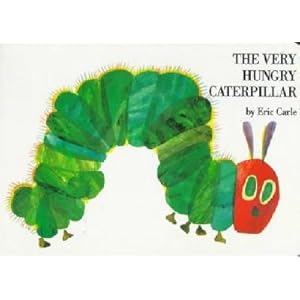
Another popular book, especially during spring, is The Very Hungry Caterpillar, by Eric Carle (1969, 1987). Concepts embedded in this pattern story of a caterpillar turning into a butterfly through metamorphosis include size, the days of the week, counting, and wise eating habits. Nearly 20 words may be unfamiliar to young children. Five of the sentences are 6 to 8 words in length, nine of the sentences contain 13-19 words, and the longest sentence is 40 words.

The Mitten, by Jan Brett (1989), is an adapted version of a Ukrainian folktale. This story contains more than 60 potentially unfamiliar words such as discovered, mole, snuffling, jostled, argue, disappeared, attracted, commotion, drowsy, lumbered, bulged, force, scattered, distance, silhouetted, and an abstract meaning of sound. The sentence length ranges from 4 to 36 words but most sentences are longer, comprised of at least 13 words.

Are children capable of comprehending so many unfamiliar words when they listen to a story? Are they able to learn them? Research suggests that not only are children able to learn new words at a surprising rate, exposure to unfamiliar words seems to “prime” their brains for learning more. An interesting phenomenon in young children is called fast mapping (first described by Carey and Bartlett in 1978) in which a young child may be exposed to a new word or concept in one salient instance, or with limited exposure, and can make an educated guess about the meaning within the context. The child is able to create a mental image of that word. In theory, this phenomenon begins during the language development stage when toddlers’ vocabulary seems to explode and continue through the preschool years. By re-reading the same book to children several times, new vocabulary words and related concepts are reinforced in the mental lexicon. (See How to Read to Children to Optimize Word Learning).

In a study conducted in 1988 looking at vocabulary in a variety of print and media contexts, Hayes and Ahrens identified that children’s books contained an average of 30.1 unfamiliar words per 1000. In contrast, educational television programs such as Sesame Street had only two unfamiliar words per 1000. It would be interesting to make a similar comparison today, 20 years later, to see if there have been changes in vocabulary in newer children’s books and if the writers of educational programs are including more complex vocabulary. One television program written with sophisticated vocabulary for young children is the Martha Speaks Program (prior post by Andy Biemiller).

The context is important in learning multiple meanings. For example, in The Mitten, the little boy’s grandmother, Baba, wants to see that he is “safe and sound.” This represents a new meaning for sound, not something heard. Also, Big Red Barn ends with the animals being “sound asleep” which is another meaning for sound, having nothing to do with the sounds animals make.

Using sophisticated storybooks is one of the best opportunities for young children to learn vocabulary and complex sentence structures needed for competent oral language use. An important job for us, as their language guides and facilitators, is to intentionally plan how to use those words to help make children’s learning wild, wonderful, and powerful.

Finally, it is important to read (and re-read) both fiction and nonfiction to young children. Fiction helps children develop story grammar and vocabulary. Nonfiction helps children develop vocabulary and content knowledge—something that becomes increasingly important as children advance in elementary school.

References:

Carey, S., & Bartlett, E. (1978). Acquiring a single new word: Proceedings of the Stanford Child Language. Papers and Reports on Child Language Development 15, 17-29.

Hayes, D. P.,  & Ahrens, M. G. (1988). Vocabulary simplification for children: A special case of “motherese”? Journal of Child Language, 15(2), 395-410.

Sunday, August 8, 2010

Helping Parents Become Strong Language and Literacy Partners (Berg)

Michele Berg, Ph.D. contributed the following post. Michele is the Director of the Center for Learning Disorders at the Family Service and Guidance Center in Topeka, Kansas (visit FSGC). Dr. Berg formerly founded and directed the Center for Learning Disabilities at the Menninger Clinic and served on the faculty of the Karl Menninger School of Psychiatry for over twenty years. She specializes in the diagnosis and treatment of complex learning disorders in children and adults and is a frequently invited presenter on the topics of early literacy development, dyslexia, memory disorders, nonverbal learning disorder, and ADHD at the state and national level. She served as the head of professional development for two Early Reading First grants and is a consultant to the FSGC Early Childhood Intervention Program.


When Susan asked me to write something for her awesome Vocabulogic site, I thought I would address preschool language and literacy interventions; however, Christie Cavanaugh provided such a wonderful and thorough piece on this topic that I decided to do an “infomercial” for a powerful program available through the American Library Association. And … if you have not yet read Part I and Part II of Dr. Cavanaugh’s post, I urge you to do so! 

EVERY CHILD READY TO READ @ your library is a joint project of the Public Library Association and the Association for Library Service to Children. A series of parent and caregiver workshops have been developed to help prepare parents for their critical role as their child’s first teacher; these workshops are offered by community libraries using resources incorporating the latest research. Drs. Grover C. Whitehurst and Christopher Lonigan, eminent researchers in early literacy, developed the ECRR curriculum and workshop tools which have been refined by library demonstration projects around the country. All of the information presented in the workshops has been approved by NICHD. The workshops are also appropriate for early childhood educators, child advocates, and policy makers. Three different workshops target a range of developmental needs: Early Talkers targets ages 0 to 2 years; Talkers targets 2 to 3 year olds; and Pre-Readers addresses the needs of 4 to 5 year olds.

Visit the Site
The ECRR program was developed as an outreach program to help to address the national crisis in reading. Roughly, about 35% of children who enter kindergarten do not possess the early language skills necessary for learning to read (Waldorf, 1994). Children who struggle the most come from low income/low education families regardless of race or ethnicity. These families often do not have books, newspapers, or magazines at home and live in neighborhoods that do not contain much environmental print. One study found that 47% of parents receiving public aid reported no alphabet books in their home in contrast with only 3% of professional parents. Other studies suggest that children from middle to upper income families have anywhere from 1,000 to 1,700 hours of shared book time with a parent or caring adult during their preschool years as opposed to 25 hours or less in low income or low education families (Adams, 1990).

The lack of shared reading is alarming since reading books to children is the most effective way to build vocabulary … and strong vocabulary skills are necessary for reading comprehension. Typically, an adult will use only about 9 “rare” words per 1,000 words when speaking to a child under 5 years of age. Three times as many rare words are encountered in children’s books (Trelease, 2001). While regular family conversations will help build basic vocabulary, reading books to children helps them leap into the rare words that are essential when it’s time for school and formal learning.

As a culture that values school and views education as one of the major routes to job and financial stability, we need to help parents gain access to the skills, books and other resources needed to create language-rich experiences in their homes. We cannot afford to wait until at-risk children enter kindergarten to begin efforts to level the language playing field. Pre/post testing demonstrates that parents who attend ECRR at the Library workshops make huge gains in the quality of reading and language activities they provide their children. Parents with the lowest income and parents with the least education made the largest gains in terms of implementing new skills; teen-age parents and parents of very young children also demonstrated significant gains.

What do the workshops target? The workshop curriculum stresses Six Skills to Get Ready to Read: Print Motivation, Print Awareness, Vocabulary, Phonological Awareness, Narrative Skills, and Letter Knowledge. The emphasis is on simple, fun, developmentally appropriate ways to increase language skills and comfort with books in order to better prepare children for later success in school. Participants actively explore materials and practice new skills matched to the age of their child. A broad range of resources to be used at home are provided. Parents are taught how to select books to reinforce different skills such as phonological awareness, vocabulary, or narrative skill; they learn how to read picture books with two and three year olds and/or Dialogic Hear and Say strategies to use with preschool-age children. Simple songs paired with movement are introduced. Tip sheets are sent home as are colorful activity sheets.

Community agencies around the country are pairing with local libraries to make ECRR available. Many parents of low education or low income are not comfortable with literacy environments and may visit libraries only to access music and movies. For this reason, it may be best to offer the parent workshops at other sites such as Head Start, Salvation Army, community-based preschools, or church-affiliated child care and preschools. Parents as Teachers staff can also be trained to offer the ECRR workshops. The possibilities are many. Visit the American Library Association website for additional information. Call your local library and promote the availability of ECRR in your area. Let’s support this important early literacy initiative!

And please remember … the information presented and the skills learned in the ECRR workshops are beneficial and enjoyable for all adults involved in the care of young children regardless of income or education level … parents, grandparents, early childhood educators, child care providers, Sunday school teachers … I am sure you can think of more.

Note: This post  builds on prior entries pertaining to the invaluable relationship between libraries and literacy. Fran Mancino's post urges us to support public libraries and Susie Goodin's post illustrates the relationship between school libraries and reading motivation. 

Sunday, June 20, 2010

Preschool Language Intervention: Part 2 (Cavanaugh)

Today, Christie Cavanaugh, Ph.D. continues her description of a preschool language intervention, providing specific examples and models to encourage rich use of oral language in early childhood. Readers are encouraged to download Christie's slides and use them with educators and parents. For part one, see last week's post.

The reference to incidental teaching in last week’s post reminds us that teaching language to young children should be purposeful, yet accomplished in the context of children’s play or “incidents” of opportunity. Hart and Risley (1975) described incidental teaching in reference to language teaching as a naturally-occurring interaction between a child and adult, usually in the context of free play and that the child-initiated interaction is considered an opportunity for the adult to impact a child’s skill development. Child initiation, adult support, and naturally-occurring situations are fundamental principles that have underscored decades of research in this area related to naturalistic language intervention. 

Incidental language teaching is both implicit and child-centered due to the nature of following children’s leads and using these contexts to determine how to scaffold appropriately and elevate language appropriately. Hence, this approach is also explicit because we plan purposefully to ensure that children have a variety of topics (e.g., theme-based centers to expand background knowledge and experiences) from which to initiate language. We also know development to determine children’s language levels and use this to provide support for elaborating language and providing models of rich vocabulary and sentence structure of increasing complexity. Planning ahead allows us to generate multiple opportunities to use new vocabulary embedded in various contexts to serve as models and prompts for children to integrate new language into their repertoires. Bonnie Raitt’s lyrics, “Let’s give ‘em somethin’ to talk about . . .” resonates with our actions of planning purposefully.

Click slide to enlarge or save/download.
A simple tool for teachers to use as an environmental prompt or cue to assist in modeling efforts is something I’ve labeled as “The Teacher’s Word Wall” (see slide at right).

This word wall serves as a reminder for teachers to use sophisticated language or expressions in place of common, routine comments produced in the child’s environment. The table provides examples of alternate ways to say common expressions, like “Great job” or “thank you.” Because some of these alternatives may not be part of one’s typical vocabulary when conversing with young children, the adults present and talking to young children can easily glance at the word wall and select an option to insert into a comment or dialogue. Over time as the common expressions are replaced with more sophisticated options in a fluent manner, the children will hear them used multiple times and eventually weave them into their speaking vocabulary. The idea is to replace the expressions often to continue building on children’s vocabulary.


Click to enlarge.
An extension of the “Teacher’s Word Wall” includes vocabulary, anchors for conversation or conversation starters, prompts (questions and comments), and actions that relate to a specific theme. This slide relates to a flower shop themed center.”Again, these cues serve as reminders for adults to embed the language into the context of playing with children. 

We do have a strong research base for some very simple, effective strategies. These translate to simple actions: Talk to children, converse, plan for the opportunity for children to use their language, follow children’s leads (but remember to plant a few seeds), model, model, model, prompt (comments and questions), use rich vocabulary, build background knowledge, make connections between words, concepts, and topics.

The personal narrative Susan Ebbers provided in a prior post, describing how her early childhood experience of looking for buds in spring helped her to immediately understand the word dormant several years later, illustrates the importance of early language experiences for building background knowledge and comprehending both oral and written language. Susan was interested and initiated the interaction, her mother followed her lead to use this interaction to provide the oral vocabulary (appropriate support and modeling), and the dialogue on Susan’s initiated topic deepened her understanding. All of this impacted her understanding of related vocabulary and concepts in the written form. This is a very simple, yet powerful example and many like these help us realize that the goal of building children’s oral vocabularies is attainable, but there are many who will rely on us to model and disseminate the simplicity.

Responses are encouraged and appreciated, especially if they include examples to disseminate to early childhood teachers.

References and Resources

  • Byrnes, J. P., & Wasik, B. A. Language and literacy development: What educators need to know. New York: Guilford Press.
  • Copple, C. & Bredekamp, S. (Eds). (2009). Developmentally appropriate practice in early childhood programs serving children from birth through age 8. Washington, DC: NAEYC.
  • Hart, B., & Risley, T. (2003). The early catastrophe: The 30 million word gap. American Educator, 27, 4-9.
  • Hart, B., & Risley, T. (1995). Meaningful differences in the everyday experiences of young American children. Baltimore: Brookes.
  • Hart, B., & Risley, T. (1975). Incidental teaching of language in the preschool. Journal of Applied Behavior Analysis, 8, 411-420.
  • Israel, S. E. (2009). Vocabulary lists and activities for the PreK-2 classroom. Thousand Oaks, CA: Corwin.
  • Otto, B. Language development in early childhood (3rd Ed.). Columbus, OH: Merrill.
  • Otto, B. (2008). Literacy development in early childhood. Upper Saddle River, NJ: Pearson.
  • Owens, R. E. (2008). Language development: An introduction (7th Ed). Boston: Allyn and Bacon.
  • Soderman, A. K., & Farrell, P. (2008). Creating literacy-rich preschools and kindergartens. Boston: Allyn and Bacon.
  • Warren, S. F., & Kaiser, A. P. (1986). Incidental language teaching: A critical review. Journal of Hearing and Speech Disorders, 51, 291-299. 

Sunday, June 13, 2010

Preschool Language Intervention, Part 1 (Cavanaugh)

Christie L. Cavanaugh, Ph.D. has been an educator for 30+ years, earning her degrees from Tusculum College, Vanderbilt University, and The University of Texas at Austin. She spent many of her 30+ years in early childhood settings, preparing future teachers, and providing professional development to educators in the areas of language and literacy. She continues this work as an educational consultant and also as a literacy consultant for a reading intervention project at the University of North Carolina at Chapel Hill as part of the National Research Center on Rural Education Support. This is the first of a two-part series on preschool language intervention (read Part Two here).

"Oh, I've got it!" These were the sentiments one of my former students expressed when I was sharing a model of a language and literacy-enriched play center for preschool. These centers provided multiple opportunities to build vocabulary and background knowledge (with little monetary investment). The model's theme, a flower shop named "Flower Power," generated rich vocabulary for young children: 

arrangement, bouquet, garden, dish garden, dozen, floral, florist, fragrant, greetings, celebrations, decorations, purchasing, deliver, tending, order, place an order, pruning, soil, vase, bud vase, planter, nutrients, mist, moss, embellishment (as well as specific flower names and parts)

Upon discussing prompts for language and modeling scenarios that are likely to occur in a flower shop, including writing notes to place on plastic holders that are often inserted into floral arrangements, my student asked, 

"What if my children have never been to a flower shop? How will they know what to do?" 

My reply was simply, "Exactly!" That's precisely why we do what we do when we create these centers. We think through the language and the actions that are important components of a particular setting and then model it in a center. 

Her emphatic response, "Oh, I've got it!" became an acronym for Opportunities to Impact Vocabulary Elaboration and Growth Intentionally through Incidental Teaching.
   
I asked my student-teachers to develop thematic and language-prompting play centers for preschool. In doing so, they prepared "prompts" to help integrate vocabulary and build background knowledge. Prompts are comments and questions that teachers use to invite children to talk about the experience. "Mands" are used to elicit more elaborative discussion. The teachers also created a list of actions or scenarios that serve as anchors for using the language, and of course, opportunities to embed written language (collection of theme-related books, signs, labels, resource books, calendars, appointment books, menus, writing pads, or notes, etc.). 

     
The early childhood period spans birth to eight years and promoting language should begin early in infancy. Early childhood is the time to establish a strong foundation for oral vocabulary development and this goal is accomplished without tremendous effort and expense. 

However, despite the apparent simplicity of the model, similar language-rich experiences are not consistently provided in early childhood education. Conversing with young children is essential yet I continue to hear preschool teachers and other professionals use simplistic language in terms of semantics and syntax and conversing about topics that are limited to children's current and/or past experiences. This is particularly worrisome when we consider the vocabulary gap that exists among children at risk for academic difficulties and it further contributes to an academic achievement gap.
     
Policies and lessons for young children that reflect a deep understanding of the language-literacy connection are needed. Educators and parents must recognize that building oral language and background knowledge in early childhood predicts eventual comprehension of the written word. It is important to build relationships between phonology, morphology, semantics, syntax, and pragmatics. Make explicit connections across these language components throughout and beyond the early childhood years.
     
The National Association for the Education of Young Children's (NAEYC) shifting philosophy articulated in the most recent position statement on Developmentally Appropriate Practice (2009) recognizes the value of teacher input and a balance between teacher-directed and child-centered activities. A quick examination of pre-kindergarten standards in several states reveals that we have a responsibility to teach deliberately and appropriately (see Texas, Nebraska, Florida, Illinois, Virginia state standards or guidelines for Pre-K for examples). A more purposeful and conscientious role of the "teacher" for promoting language and literacy development among other developmental domains is not only supported but encouraged. Furthermore, Hart and Risley's longitudinal study (1995) revealing the varied quantity and quality of language experiences for young children and how language experiences in the home relate to school success actually built upon work they began more than four decades ago. Their work serves as the basis for one of the most established bodies of research in early childhood. Revisiting this body of research (that includes vast work from A. Kaiser and colleagues) reminds us of some basic principles that can guide our actions in education, described below:


Incidental teaching as a language intervention was first implemented with groups of preschoolers considered at-risk based on socioeconomic status or identified as "impoverished" in the 1960's. We can extend the meaning of "impoverished" beyond socioeconomic status into language or vocabulary or background knowledge and recognize that the strategies are ageless.
     
Incidental teaching as a language intervention aims to increase young children's opportunities to talk (particularly spontaneous language use). Strategies that promote spoken language include following children's leads, determining children's skill level and scaffolding for growth, modeling, expanding, elaborating, providing feedback in the form of additional mands or models, and using the child's environment to elicit language strategically. Connections can be drawn between this work and others that share common characteristics such as naturalistic intervention, environmental arrangement strategies, the features of effective instruction, embedded learning opportunities, and other vocabulary enhancing strategies for young children. Below, I provide examples to illustrate a few of these strategies:

      Child: (points to flowers) Flowers are pretty.
      Teacher: (following child's lead): Yes, those flowers are colorful and gorgeous (Elaboration and extension) instead of "Yes, the flowers ARE pretty (repetition and slight extension).
     
      Child: (chooses the bakery center for play) I want to cook something.
      Teacher: (again, following child's lead after arranging an inviting center): Great! Let's create something delicious together. Do you have a special recipe in this cookbook to guide us (elaboration, embedded vocabulary with support)? Tell me how we'll make it (open-ended prompt) instead of "I want to cook with you."
     
The teacher continues to converse, narrate, and model vocabulary and syntax during play and also uses opportunities for the child to say key vocabulary words using mands and models (to emphasize the important connection between phonology and semantics).  For example, the teacher might prompt, "These chocolate-flavored biscuits you created are scrumptious! Scrumptious is another word for delicious. Say 'scrumptious' (model). 


The teacher might scaffold by allowing the young child to first say the word in two parts by syllable and then model putting it together. Later, the teacher might prompt by saying, "This cake is not only delicious, it's ______," (mand or prompt) waiting patiently for the child to insert the new vocabulary word.
     
Starting with a theme or topic allows teachers to create webs of connections so children see relationships between concepts, experiences and language.
If more adults who spend any time with young children embrace these fundamental yet implicit instructional principles we just might be able to chunk (not chip) away at the vocabulary gap. 
     
Responses are encouraged and appreciated, especially if they include examples to share with early childhood teachers. I will elaborate more on these ideas in next Sunday's issue of Vocabulogic. Read Part Two here.