Showing posts with label interest. Show all posts

Monday, June 8, 2020

Using Poetry To Develop Reading Skills and Interests

This post comes to us courtesy of Ally Bush, Marketing/Communications Coordinator at Reading Partners. Reading Partners is a nonprofit dedicated to serving the literacy needs of our nation's students. We envision a future where all children in the US have the reading skills necessary to reach their full potential. By empowering communities through individualized instruction and measurable results, we help our students become lifelong learners. (Originally posted on ReadingPartners.org: How poetry can help kids develop reading skills )


The power of a good poem can help make reading a reality for young kids. From making reading fun to teaching kids different ways to think about phonemic sounds, poetry is an invaluable resource in any young reader’s literacy journey. Here are a few ways poetry helps improve reading skills.

Motivates Children to Read

Some parents may have emergent readers who are struggling to find the motivation to pick up a book and hone their skills. If this is the case, try poetry. Kids will find joy in reciting their favorite poems with a caregiver and they’ll gain important literacy skills at the same time. As poetry is typically only a few lines, it may feel less daunting to a young reader to tackle a poem as opposed to a longer book.

While being short, poetry is still packed with important literary elements such as characters, narrative structure, new words, and sometimes rhyming that can help children build foundational and more advanced literacy skills.

The musical rhythm of poems can also remind kids of their favorite songs. The next time you feel like reading a poem with your child, try singing it and see what happens.


Teaches Young Readers About Sound

Reading poetry helps children learn about voice, pitch, volume, and inflection. While these are mainly functions of speech, they’re also incredibly important for children learning to read. Poetry can teach young readers about speech patterns, which can give them cues to the words on a page. 

Additionally, rhyming can help kids identify sounds in words and identify word families. For example, check out this stanza in the poem “The Letter A” by Darren Sardelli:

“Without the A, you couldn’t aim 
an arrow in the air. 
You wouldn’t ask for apricots 
or almonds at a fair.” 

This stanza could help young readers practice the short “a” and long “a” sounds and expose them to word families such as “air” and “fair.” For children learning to read, poems that play with sound and rhyme like this one can offer a new perspective on phonetics.

Builds Vocabulary 

Like any form of reading, poetry can introduce children to new words. Poetry is unique to other forms of writing in that it typically follows a rhythm. When children read sentences and phrases that have a cadence, it introduces them to new words in new contexts.

Even though it may not seem like it, a poem that rhymes is the result of certain restrictions a poet followed during the writing process. If they want every other line of a poem to rhyme, there are a limited number of rhyming word pairs that could contextually fit in the first and third lines. For the poet, this results in surprising new connections between words. For the reader, these new connections translate to a larger vocabulary.

For example, in the poem “The Dentist and the Crocodile,” Roald Dahl rhymes common words with new words your young reader may not know:

“The crocodile, with cunning smile, sat in the dentist’s chair. 
He said, ‘Right here and everywhere my teeth require repair.’”

While “chair” is a common word, “repair” may be less familiar to your child in the same word family. The fact that these words rhyme creates a connection between them, which may make these specific words and other words with an ending “-air” sound easier to remember. At the very least, this poem would help a young reader add “repair” to their vocabulary.

Not only does poetry teach children new words, but also it teaches them about the power of those words. Learn more about the higher purpose of poetry, how it can provide meaning and nuance to new words, and how it relates to choosing a crayon color in Poetry: The Power of Words.

Encourages Creativity

Pablo Picasso once said, “It took me four years to paint like Raphael, but a lifetime to paint like a child.”

 Children have wonderful, active imaginations. Poetry can help children tap into their creativity by encouraging them to think about the new and unexpected relationships between words. In addition, having young readers try to write poetry can improve their literacy skills.

The wonderful thing about poetry is that it’s subjective. Poetry can have a narrative structure, nonlinear structure, or even just be a collection of your favorite words. When children are learning to read, giving them the freedom to express themselves through poetry can be both an educational and fun experience. And who knows, the creativity of their writing may surprise you!

Reading Aloud

One of the seven most important skills for promoting literacy is supporting oral language. Reading poetry aloud, just like reading other genres aloud, can help children improve their literacy skills. When kids read aloud, they think more deeply about the sound of the words they’re saying and therefore improve their reading skills.

Poetry is the perfect genre for reading aloud because it’s rhythmic, expressive, and fun. Host a poetry reading event in your home or classroom, and share your favorite poems with the little ones.
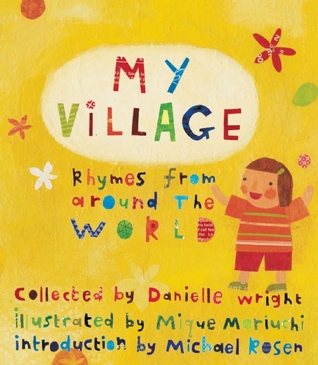

Love the idea but don’t know where to start? Here are some poetry suggestions to get your kids reading:


Thursday, November 10, 2016

Meta Meta Meta

Metacognitive, Metalinguistic, Metamorphological


The purpose of Vocabulogic is to help educators "bridge the verbal divide" that exists between those students who freely use language as a precision tool and those who do not, for whatever reason. 

The photo of the Golden Gate Bridge (The Tahoe Guy / CC) is a metaphor for spanning the language gulf. This gulf is deepened by variance in socioeconomic status, including exposure to books and academic language in the home (e.g. Corson, 1984; Hart & Risley, 1995).

Vocabulogic strives to promote literacy via word-reasoning skills, knowledge, and a keener-than-normal conscious awareness of language. Numerous experts have posted on a variety of pertinent topics, always with some connection to language and literacy goals. Articles posted here implicitly or explicitly accord value to metacognition as it relates to some aspect of metalinguistic awareness.

Berko, 1958
“Metalinguistic awareness is broadly defined as the ability to think about and reflect upon the nature and functions of language” (Pratt & Grieve, 1984, p. 2). This type of cognition involves conscious awareness of language as an object that one can examine, manipulate, and reflect upon.

Metalinguistic awareness encompasses far more than the ability to reflect on single words. It includes awareness of phonemes and syllables, graphemes and symbols, morphemes and meaning, phrases and sentences, grammar and syntax, context and definitions, homonyms, synonyms and antonyms, slang, dialect, and jargon, lexical ambiguities, riddles, and word play. It includes metaphor, imagery, personification, onomatopoeia, and rhyming. In sum, metalinguistic awareness encompasses all aspects of language (Nagy, 2007). Or at least, it can. If needed. If called upon.

Flavell (1981) suggests that metalinguistic awareness falls under the general rubric of metacognition, which subsumes metamemory, meta-attention, metalinguistics, etc., all of which allow us to exercise intellectual oversight while learning. Gombert (1992) grouped metalinguistic awareness into six subcategories of language: metaphonological, metasyntactic, metalexical, metasemantic, metapragmatic, and metatextual.

More recently -- and highly pertinent to Vocabulogic -- Duncan, Casalis, and Colé (2009) included another subcategory: metamorphological awareness of word structure. Their conception of metamorphological awareness overlaps with several of Gombert’s subcategories, but also gleans from the growing body of research focused on morphological awareness.

Metalinguistic awareness facilitates early literacy (Andrews, Yaden, & Templeton, 1986; Donaldson, 1978).  Zipke asserted, “Metalinguistic awareness, the ability to manipulate language independent of meaning, is an important ingredient in learning to read.” (2011, p. 349). Cain (2007) investigated the relations between word reading accuracy, reading comprehension and two measures of syntactic awareness, which is a type of metalinguistic awareness. Assessing two groups of children, aged 7-8 and 9-10 years, she found evidence that word reading accuracy and syntactic awareness share unique variance that is not explained by vocabulary and grammatical knowledge or memory.

Activities involving conscious levels of “meta” thought include self-dialogue, thinking aloud to clarify our reasoning, and to gain a better sense of our own understanding. It also includes conversations that elucidate our thoughts to others, including teachers, hopefully receiving a thoughtful response in reply. Teachers can encourage independent thought at times, but also prompt students to work together, teaching them to explain their thinking as they problem solve or create. Metacognitive processing is integral to learning, and especially to mastery levels of learning.   Unless the need for metacognitive processing exists, thoughts will not necessarily become conscious. The teacher must create the task that generates the need for metacognitive, metalinguistic thought. Many such tasks are described throughout Vocabulogic.


References:

Andrews, J. F., Yaden, D. B., & Templeton, S. (1986). Metalinguistic awareness and beginning literacy: Conceptualizing what it means to read and write. Portsmouth, N.H: Heinemann.

Cain, K. (2007). Syntactic awareness and reading ability: Is there any evidence for a special relationship? Applied Psycholinguistics, 28, 679-694.

Corson, D.J. (1984) The lexical bar: lexical change from 12 to 15 years measured by social class, region and ethnicity. British Educational Research Journal 10, 2: 115-133.

Donaldson, M. (1978). Children’s minds. Glasgow: Collins.

Duncan, L. G., Casalis, S., & Colé, P. (2009). Early metalinguistic awareness of derivational morphology: Observations from a comparison of English and French. Applied Psycholinguistics, 30, 405-440.

Flavell, J. H. (1981) Cognitive Monitoring. In W. P. Dickson (Ed.), Children’s Oral Communication (pp. 35-60). New York: Academic Press.

Gombert JE. Le développement métalinguistique. Paris, France: Presses Universitaires de France; 1990.

Hart, B., & Risley, T.R. (1995). Meaningful differences in the everyday experience of young American children. Baltimore: Paul H. Brookes.

Nagy, W. E. (2007). Metalinguistic awareness and the vocabulary-comprehension connection. In R. K. Wagner, A. E Muse, & K. R. Tannenbaum (Eds.), Vocabulary acquisition: Implications for reading comprehension (pp. 52–77). New York: Guilford Press.

Pratt C, Grieve R. (1984). The development of metalinguistic awareness: An introduction. In Tunmer WE, Pratt C, Herriman ML (Ed.), Metalinguistic awareness in children (pp. 2–11). Berlin, Germany: Springer-Velag.

The Tahoe Guy, (Retrieved 2010).  Moon Over San Francisco. Licensed under Creative Commons. Cropped.

Zipke, M. (2011): First Graders Receive Instruction in Homonym Detection and Meaning Articulation: The Effect of Explicit Metalinguistic Awareness Practice on Beginning Readers. Reading Psychology, 32:4, 349-371.


Sunday, January 8, 2012

Metalinguistic Awareness, Comprehension, and the Common Core State Standards

Coordinated by the National Governors Association Center for Best Practices (NGA Center), the Common Core State Standards have swept the nation, and nearly every state has sanctioned the call for students to read more complex texts. In response, publishers are rapidly preparing more challenging texts, referring to the exemplars listed in Appendix B of the Standards, including works by Sophocles, Alexis de Tocqueville and Fyodor Dostoevsky. These types of texts will be Waterloo for some students, and the battle begins in kindergarten with a call to understand—and hopefully enjoy—As I was Going to St. Ives. How can teachers help readers meet this challenge? In part, the solution lies in developing metacognitive insights and abilities—including metalinguistic awareness.

Metalinguistic awareness requires a keener than normal conscious awareness of language. We demonstrate this type of metacognition when we remove language from context in order to reflect on it and manipulate it. Metalinguistic awareness is an important ingredient in learning to read, spell and understand words (Donaldson, 1978). Moreover, as Nagy suggests, it explains a portion of the otherwise unexplained variance in comprehension scores, when other important variables have been controlled (2007). Boosting metalinguistic awareness has significant effect on reading comprehension (Cain, 2007; Zipke, 2007, 2011; Zipke, Ehri, & Cairns, 2009). English Language Learners benefit from metalinguistic awareness, too, including metamorphological awareness (Carlo et al., 2004; Ginsberg, Honda, O’Neil, 2011; Kuo & Anderson, 2006; Ramirez, Chen, Geva, & Kiefer, 2010).

Metalinguistic awareness is a cognitive dynamo. At maximum potential, it includes increased awareness of phonemes and syllables and rhymes/rimes, of meaning-bearing morphemes, words, and phrases, of syntax, word referents, and appositives, of denotations, connotations, and lexical ambiguities, of homonyms, synonyms, and antonyms, of slang, dialect, and jargon, of academic language and figurative devices like metaphor, imagery, personification, and more. Writ large, metalinguistic awareness envelops every atom of language.

Researchers have long proclaimed the critical role of phonological awareness (PA) in helping children blend and segment sounds in words. In the past decade, two more types of metalinguistic insight have surfaced repeatedly in reading research journals: morphological awareness (MA) and orthographic awareness (OA). If a student grows in MA, s/he becomes increasingly aware that words sharing the same base or root are similar in form and meaning. For example, the child notices similarities across painted, painter, paintings, painterly, and repaint, at the same time realizing that pain –while somewhat similar in form—is not related to this morphological family. MA also includes knowledge of common suffixes and prefixes.

If a student grows in OA, s/he becomes more aware of the English system of writing, realizing that something “just looks wrong” when presented with “illegal” spellings, such as words beginning with ck or words containing three identical vowels in a row, as in *seeer. As this insight matures, students gradually realize that foreign loan words allow the inclusion of spellings not aligned with English orthography, as in beau, hoi polloi, and faux pas.

Recently, Berninger, Abbott, Nagy, and Carlisle (2010) conducted a longitudinal study spanning first grade to sixth grade in two cohorts (N = 241 students), investigating growth curves for three types of metalinguistic awareness: MA, OA, and PA. They found that PA and receptive OA grew from first to third grade and then tapered off or reached a plateau, for most students. Expressive OA continued to grow a bit after third grade. Meanwhile, MA grew rapidly from first to third grade and then continued to grow, but less rapidly, through sixth grade. Furthermore, MA influenced word knowledge: Vocabulary knowledge was significantly related to how well the student understood that derivational suffixes influence the grammatical category of the word—for example, that instrument is not grammatically the same as instrumentalist or instrumentally, even though there is semantic overlap. Reading comprehension is partially explained by growth in MA (Kuo & Anderson, 2006; Nagy, Berninger, & Abbott, 2006).

As educators, we promote metalinguistic awareness by making explicit the salient aspects of the targeted linguistic concept—for example, the logic behind understanding multiple-meaning words, drawing an inference, or grasping how compound words convey meaning morphologically. We promote keener consciousness when we point out how any detail of language works, making our thoughts transparent in a think-aloud with visual modeling, or when we ask students to explain their reasoning—and we give them feedback. If we exploit metalinguistic insight, we influence word reading, spelling, and vocabulary while moving the ball towards the end goal: comprehension.Thus, we might heed the clarion call of linguist Bill Nagy (2007):
“Vocabulary instruction needs to be more explicitly metalinguistic, that is word consciousness is an obligatory, not an optional, component” (p. 54). 

What about the brave new Common Core? Do they mention the term metalinguistic in the English Language Arts Standards? Alas, no. However, Appendix A circles loosely around the topic (NGA Center & CCSSO, 2010):
The reader brings to the act of reading his or her cognitive capabilities (attention, memory, critical analytic ability, inferencing, visualization); motivation (a purpose for reading, interest in the content, self-efficacy as a reader); knowledge (vocabulary and topic knowledge, linguistic and discourse knowledge, knowledge of comprehension strategies); and experiences.
In another section of the document, metacognitive strategies are mentioned. The Standards, and the forthcoming standards-aligned assessments, are fairly agnostic to instructional methods—they do not care HOW we teach—only that students learn. Professional discretion is encouraged; teachers and administrators decide how to address the Standards, including how to develop metacognitive insight, as indicated in Key Design Considerations:
By emphasizing required achievements, the Standards leave room for teachers, curriculum developers, and states to determine how those goals should be reached and what additional topics should be addressed. Thus, the Standards do not mandate such things as a particular writing process or the full range of metacognitive strategies [formatting added] that students may need to monitor and direct their thinking and learning. Teachers are thus free to provide students with whatever tools and knowledge their professional judgment and experience identify as most helpful for meeting the goals set out in the Standards.
To my knowledge, the term metacognitive only appears once in the CCSS, in the insert above. By integrating the two excerpts above, one might (might) infer that the National Governors Association did indeed include metalinguistic development in the Common Core. I only wish they had been more deliberate about it.

Without conscious awareness of language, second graders may be frustrated by The Jumblies (another exemplar text, by Edward Lear). Indeed, if lessons do not include an explicit focus on metalinguistic awareness, we could be sending whole schools to sea—in a sieve.

~Susan M. Ebbers

References: 

Berninger, V.W., Abbott, R.D., Nagy, W., & Carlisle, J. (2010). Growth in phonological, orthographic, and morphological awareness in grades 1 to 6. Journal of Psycholinguistic Research, 39, 141–163.

Cain, K. (2007). Syntactic awareness and reading ability: Is there any evidence for a special relationship? Applied Psycholinguistics, 28, 679-694.

Carlo, M.S., August, D., McLaughlin, B., Snow, C.E., Dressler, C., Lippman, D., Liveley, T. & White, C.E. (2004). Closing the gap: Addressing the vocabulary needs of ELLs in bilingual and mainstream classrooms. Reading Research Quarterly, 39, 188-215.

Donaldson, M. (1978). Children’s minds. Glasgow: Collins.

Ginsberg, D., Honda, M., & O’Neil, W. (2011). Looking beyond English: Linguistic inquiry for English Language Learners. Language and Linguistics Compass 5/5, 249-264.

Kuo, L-J., & Anderson, R. C. (2006). Morphological awareness and learning to read: A cross-language perspective. Educational Psychologist, 41-3, 161-180.

NGA Center & CCSSO. (2010). The common core state standards for English language arts. Retrieved December 13, 2011 from http://www.corestandards.org/the-standards/english-language-arts-standards

Nagy, W.E. (2007). Metalinguistic awareness and the vocabulary-comprehension connection. In R.K. Wagner, A.E Muse, & K.R. Tannenbaum (Eds.), Vocabulary acquisition: Implications for reading comprehension (pp. 52-77). New York: Guilford Press.

Nagy, W., Berninger, V., & Abbott, R. (2006). Contributions of morphology beyond phonology to literacy outcomes of upper elementary and middle school students. Journal of Educational Psychology, 98(1), 134-147.

Ramirez, G., Chen, X., Geva, E., & Kiefer, H. (2010). Morphological awareness in Spanish-speaking English language learners: Within and cross-language effects on word reading. Reading and Writing, 23(3-4), 337-358.

Zipke, M. (2007). The role of metalinguistic awareness in the reading comprehension of sixth and seventh graders. Reading Psychology, 28(4), 375-396.

Zipke, M. (2011). First graders receive instruction in homonym detection and meaning articulation: The effect of explicit metalinguistic awareness practice on beginning readers. Reading Psychology, 32(4), 349-371.

Zipke, M., Ehri, L. E., & Cairns, H. (2009). Using semantic ambiguity instruction to improve third graders’ metalinguistic awareness and reading comprehension: An experimental study. Reading Research Quarterly, 44(3), 300–321.

_________________

Note:  This post was republished in EdView360 and in the CDL Professional Library

Sunday, October 16, 2011

Punny Books and Wordy Reads, for Kids of All Ages

I offer up a sampling from my book collection. These books might nurture interest in various aspects of language and accelerate lexipensity. Titles are listed in order, from simplistic to advanced. Enjoy!


PICTURE BOOKS

Sunshine, Moonshine, by Jennifer Armstrong. A lovely rhyming picture book, suitable for preK to 2. Use this book to develop awareness of compound words, especially how they once started as separate words. After reading and discussing the book, the class might brainstorm compounds that contain sun: sunflower, suntan, sunglasses, etc. (Another picture book for developing awareness of how compounds work is Once There Was a Bull ... (frog): Adventures in Compound Words, by Rick Walton.)  


The Important Book, by Margaret Wise Brown.  This picture book does not tell a story, it asks a question, prompting the reader to drill down to the heart of a thing. The author asks, "What is the most important thing about rain?" (let children brainstorm at this point). Then she provides a list of things that describe rain (characteristics and attributes are academic words teachers might eventually include in the class discussion). She arrives at the conclusion, "The most important thing about rain is that it is wet" (allow the class to debate this).  Another question: What is the most important thing about a spoon?"  Finally, my favorite, "What is the most important thing about YOU?" (Students could make a poster describing themselves or a fellow student, focusing on their most important trait.)

In Philosophy Now, Professor Thomas Wartenberg explains how to use picture books to help children reason. In the post, Picture Book Philosophy, he discusses several books that suit this goal. In the following excerpt, he refers to The Important Book:
I am repeatedly amazed by what children are able to accomplish in a philosophical discussion. I am often struck by how the children make claims that remind me of ideas I learned only after years of reading and thinking about philosophy. For example, consider The Important Book (1990) by Margaret Wise Brown. For each of a number of things, such as grass, an apple, rain, a spoon, and you, the book says that something is the important thing about it. It also lists a number of other things that the object also is. The important thing about rain, for example, is that it is wet; its other properties are falling from the sky, sounding like rain, making things shiny, and not tasting like anything. When a group of eight-year-olds were discussing the book, they were very dissatisfied with that list. They proposed a list of their own, which included: It makes puddles and ponds; it splashes; it can evaporate; and it makes mud. But the children decided that they thought the most important thing about rain was that it makes things grow.


Opposites, More Opposites, and a Few Differences, by Pulitzer Prize-winning author Richard Wilbur. It's pocket-sized with b/w line art, and clever verse. Hard to find and out of print. (Update: It's now available in ebook format!)

An excerpt:
What is the opposite of riot? 
It's lots of people, keeping quiet.


The Unbreakable Code, by Sara Hoagland Hunter. This beautifully illustrated picture book is suitable for grades 4-6. A Navajo Code Talker tells his grandson about the famous code created by the Navajos, Comanches, and Hopis during World War II. The Japanese were not able to decipher any intercepted messages. Below are several examples of how native words were used in isolation or in combination to create the code:
  • paahu + kiihu = houses (on) water = paaki = ships
  • a/tsá  = eagle =  transport plane
  • béésh +  loo´ = metal fish = submarine
Charles Chibitty, a Comanche Code Talker, describes how the codeword for army tank was invented, after seeing a picture of a tank (source: The National Museum of the American Indian):
Well, when they first got us in there for Code Talkers, we had to work that out among our own selves, so we didn’t have a word for tank. And the one said it’s like a [Comanche words] he said, it’s just like a turtle, you know. It has a hard shell and it moves, and so we called it a wakaree´e, a turtle.


CHAPTER BOOKS

Donavan's Word Jar, by MonaLisa DeGross. In this short chapter book, a third grader collects interesting words and stores them in a glass jar. His classmates think he's a word nerd, but in the end, he (Donavan) saves the day and everyone wants to collect words, too. Some teachers read this book at the beginning of the term, presenting the class with an empty jar. Throughout the year, students insert words, written on colorful strips of paper, finishing the year with a celebration of words and language.


A Series of Unfortunate Events by Lemony Snicket (actually, anything by Lemony Snicket). This author does not assume that readers understand idiomatic expressions, and includes the definition in the narrative, but in a conversational tone that does not seem like a distraction or an intrusion. This is exemplified in the excerpt below, from The Carnivorous Carnival:
But I always insist that the most frightening part of any beast is its belly, for the simple reason that if you are seeing the belly of the beast it means you have already seen the teeth of the beast and the claws of the beast and even the hair of the beast, and now you are trapped and there is probably no hope for you. For this reason, the phrase "in the belly of the beast" has become an expression which means "inside some terrible place with little chance of escaping safely," and it is not an expression one should look forward to using.

  
Frindle, by Andrew Clements. I cannot say enough about this chapter book, so I won't. Go get it. Read it for your own enjoyment. Read it with the class. Applicable to grades 4-12, but especially best for grades 4-6. This book has a fast-paced and highly relevant plot; the focus is on free speech, word coinage, the dictionary, etymology, and entrepreneurship.


The Phantom Tollbooth, by Norton Juster, now celebrating its 50th birthday, and considered to be the Alice in Wonderland of American literature.  Like Alice, this book is quite advanced and best swallowed in small doses; it requires strong verbal reasoning and extensive prior knowledge, including knowledge of idiomatic expressions.

Rather than going down the rabbit hole, Milo, a bored young adolescent, takes a trip through a magical tollbooth into a fantastical wonderland. Juster makes good fun with idioms, as when Milo JUMPS to the island of CONCLUSIONS. In this allegory, well known phrases are served tongue-in-cheek, and life lessons are couched as whimsical words of wisdom. Throughout, the relative merits of numbers and letters are debated, arriving at a happy-ever-after when both Rhyme and Reason finally prevail together, and the Kingdom is restored to sanity.  Read more at The New Yorker.


ACADEMIC BOOKS

A Little Book of Language, by David Crystal (book summary). Even though the author seems to be addressing an older adolescent, I learned a lot about how human language came to be, the components of language, and the sociocultural aspects of language. A delightful read, with a conversational style, and each chapter is only a few pages.


The Mother Tongue: English and How it Got that Way, by Bill Bryson. In typical  style, Bill Bryson serves up history and comedy, in narrative sauce. My own interest in word origins was secured with the first chapter of this book, the first book I read on this topic. Bryson might be off about some stuff, but he makes up for it in humor.


The Pun Also Rises, by John Pollack. This new book describes "How the humble pun revolutionized language, changed history, and made WORDPLAY more than SOME ANTICS." Need I say more? For more about this book, and the punny author, visit The Morning News.


The Professor and the Madman: A Tale of Murder, Insanity, and the Making of the Oxford English Dictionary, by Simon Winchester. A novel, based in fact, describing how a medical doctor, disturbed by the horrors of the Civil War, winds up in England, incarcerated. From the lunatic asylum, he answers Oxford's nationwide appeal to "men of letters" to help find specific words contextualized in published texts, thus occupying himself by locating thousands of the word quotations used in The Oxford English Dictionary, first edition. I read this book from cover to cover, with amazement at times. Not for children--some disturbing and graphic scenes.


That's all for now. I'll save the rest for another day. Drop a comment if I have missed a favorite of yours!

Best,
Susan

Sunday, November 28, 2010

Treated to Language (with video)

If language is valued by the teacher, students know it. They sense that the teacher is unusually aware of words -- otherwise overlooked, as water streaming continuously away. Their teacher treats language like a fabulous dessert, greeting especially scrumptious expressions with delight.  It is possible for educators to ignite an interest in words and phrases that is almost tangible.

This type of teaching behavior is situated within the four-ply framework for  effective vocabulary programs, proposed by Michael Graves (2006). Creating a love for language falls under the first component: Providing rich and varied language experiences. It also falls under the fourth component: Developing word consciousness. (See description of the four components.) Helping children and adolescents learn to treasure words does not replace explicit vocabulary instruction, but it is thought to enhance such instruction. Explicit vocabulary instruction is the second instructional component in the framework proposed by Graves.

How can teachers create a love for language, especially for words and phrases? First, take a sincere interest in the words a student uses. For example, one might tell a student, "I'm so glad to hear someone say kaboodle. That word always makes me smile!" This is gratifying -- having someone pay attention to our own words. It is also motivating to realize that our words have the power to make someone smile--to feel, to think, perhaps even to take action. This type of word-power is conveyed in Donavan's Word Jar.

“Also, make a note of the word gobbledygook. I like it. I want to use it more often in conversation” (General Melchett, in the BBC comedy Black Adder).
Another way to convey the power and presence of words is through poetry, as done with deliberation and enthusiasm in an urban school in Florida, briefly described by Niles (2004). Poetry can also provide a way to showcase the playful value of words. (See prior post for resources for teaching poetry.)

Teachers also promote language through song. In one study, Hines (2010) successfully used lyrics as one tool to teach word decoding and word meaning to adolescents with learning disabilities. In similar manner, when I was a middle school teacher, I invited a different pair of students to discuss their selected song lyrics, every other Friday, for about 15 minutes. After ensuring the lyrics were not offensive, I facilitated as needed, encouraging the pair to lead the class in a discussion, explaining why the lyrics were important to them, and which words were most meaningful. The lyrics were printed in advance. The audio track was played.

Some teachers instill a love for language through storytelling and theater, including reader's theater. For instance,  Keehn, Harmon, and Shoho (2008) found that, compared to traditional (mainly definitional) means of teaching vocabulary to eighth graders, a brief theatrical enactment resulted in significantly greater word learning.

Teachers and librarians share a love for words when they read aloud from news clippings, short stories, excerpts and entire books, both fiction and nonfiction, and when they encourage learners to participate in extended discussions. When peer conversations are prompted that focus on a specific segment of text, word-learning is likely to occur, and this is true for native speakers as well as ELLs.

In a language-friendly learning atmosphere, students and teachers do not use words or rules to shame or to punish. Classroom norms can help ensure that words are used responsibly. Denning, Kessler, and Leben (2007, p. 182) stated:
Ultimately, an enhanced and enlarged vocabulary, like any part of the complex phenomenon called language, is a multipurpose tool. Like a hammer, it can be used either to build or to injure. The individual is responsible for the use to which it is put. 
These ideas are neatly captured by Stephen Fry, English author, journalist, and comedian, who holds assorted honorary titles from the University of Dundee, Cambridge University, Anglia Ruskins, etc.  Fry speaks with humor and insight on the splendor of language, arguing against pomposity and pedantry pertaining to rules and words. To hear his entire discussion, titled Language, visit Steven Fry's Podgrams at iTunes (Series 2, Episode 3). Also, visit his blog: The New Adventures of Mr. Steven Fry. This brief film was created by Matthew Rogers; he set a portion of Fry's lecture to words, cleverly creating a kinetic typography.

Enjoy!


Stephen Fry Kinetic Typography - Language from Matthew Rogers on Vimeo.


References:

Denning, K., Kessler, B., & Leben, W. (2007). English Vocabulary Elements, second edition. Oxford University Press. 

Graves, M.F. (2006). The vocabulary book: Learning and instruction. New York: Teachers College Press. 

Hines, S. (2010). Name that word: Using song lyrics to improve the decoding skills of adolescents with learning disabilities. Teaching Exceptional Children, 43(1), 16-21. 

Keehn, S. Harmon, J., & Shoho, A. (2008). A study of readers theater in eighth grade: Issues of fluency, comprehension, and vocabulary. Reading & Writing Quarterly, 24(4), 335-362. 

Nile, S. (2004, April). A celebration of words. Teaching Pre K-8, 4(7), 56-57.

    Sunday, November 14, 2010

    Processing Digital Text

    As educators, we are concerned with how digital text might influence cognition, interest, and literacy. As I read downloaded e-books, I try to be aware of how I am processing--especially how well I am paying attention. What behaviors do I observe in myself as I read texts online? What does research have to say about this topic?

    Vocabulary: When reading digital text, I can tap a word to make its definition appear (also called a gloss, as in glossary).  I am finding that I take advantage of the embedded pop-up gloss more than I would typically consult the glossary at the back of a printed text and far more than I would typically consult a dictionary. If I do not know how to say the word, the computer will pronounce it for me, in some programs. These features are clearly beneficial.

    But I wonder...could pop-up definitions eventually inhibit readers from attempting to infer the meaning of unknown words? If used to excess, would students stop learning to utilize contextual and morphemic clues? Inferring word meanings is a critical, complex, and challenging literacy skill--one we use to understand spoken conversation as well as written communications. Nonetheless, I think the benefits of e-reader access to definitions and pronunciations will outweigh consequences, especially for English language learners.

    More on glossing: One longitudinal qualitative study (Lenders, 2008) examined how upper-intermediate and advanced students use the gloss feature in e-books. By examining the results of videotaped observations during class periods, along with Likert-scale questionnaires and interviews, Lenders found that learners perceive electronic glosses as useful and appropriate, particularly if the words are perceived as relevant to their future careers. When the e-text was used in combination with a related task, the glossing feature enabled active vocabulary learning.

    "media multitasking"
     "continuous partial attention"
    "HYPER attention"
    Tractable: As I read an e-book, I am distracted by email and attracted to the ever-tempting Web (tract is Latin for 'to pull').  I begin to lose interest in the text. This is not so good. In one related study, Salmerón, Kintsch, and Kintsch (2010) found that adult readers with little prior knowledge of the topic are especially vulnerable to making poor use of hyperlinks, randomly following their interests instead of following links in a logical, sequential order. Comprehension suffers. However, when it comes to reading (offline or online) interest can also work for us, if certain conditions are met:

    The psychological state of interest, that is, being interested in a particular context or content, is characterized by rapt attention and focus. Psychologists have found that readers who are interested in the content tend to stay with the printed text --including scientific texts -- even when it becomes difficult to understand (Ainley, Corrigan, & Richardson, 2005). Interested readers draw more inferences, process more deeply and retain more information, compared to disinterested readers (Hidi, 2001; Renninger, 2009). The likelihood that an adolescent will stay focused on a printed text has been found to vary by gender, by learning goals, and by whether the text aligns with the reader's particular areas of interest and topic knowledge (Graham, Tisher, Ainley, & Kennedy, 2008). Emotion psychologist Paul Silvia found that adults will only become interested in a novelty (e.g., examining abstract artwork, interpreting sophisticated poetry and throwing darts at a board) if they feel capable of comprehending it and of eventually making sense of it; his experiments demonstrated that self-efficacy was essential to the awakening of interest as "the curious emotion" (2005).

    Note-Taking:  When I read something interesting on an e-reader, I highlight or annotate. The text that I highlight -- including newly learned terms -- and the notes that I type are then automatically stored in a separate file. I can read all annotations and all text excerpts at a glance. Essentially, I have created a summary and a study guide. I find myself highlighting and annotating a lot -- maybe too much! It takes longer to read the book, but this feature has the potential to reinforce content and engage readers. 

    Trust: Finally, as I read e-novels, I note a slight but persistent underlying anxiety that urges me to read ever faster and to even skip ahead at times. What is this anxiety? Simply put, I worry that I will not be able to finish the book! The more I like the book, the more I fret.

    How does your own processing differ when reading e-books versus printed material? Have you noticed any differences in your students? For more information on attention, interest, cognitive space, and the digital age, visit these hyperlinks:

    Here is a brief overview regarding interest and reading, written by Dr. Hidi, posted by education.com.

    Here, The National Writing Project offers a collection of readings related to the topic of digital information (Digital IS).  The hyperlinks are quite interesting! Explore the brief videos (Howard Rheingold, UC Berkeley) on Paying Attention to Attention.

    UCLA professor N. Katherine Hayles was co-teaching Media Theory for the 21st Century. In a blog created mainly for students, she discusses the cognitive differences in reading a book with deep attention compared to reading "stuff" online, with what she calls hyper attention. (Download Hayles' entire article, Hyper and Deep Attention, in pdf.)

    A team of French scientists explore multitasking, cognition, and the problems associated with trying to split our attention as we focus on three things at once (like reading text online and attempting to remember the book as we stop to check email and decide how to respond to the email). Their research is reported in Science and summarized by National Public Radio.

    Here is a brief, Divided Attention: In the Age of Classroom Multitasking... written by David Glenn for the Chronicle of Higher Education.

    Also, FRONTLINE (PBS.org) has published a wealth of resources pertinent to these topics. See digital_nation: Life on the Virtual Frontier. There is too much to describe...visit the website. See the video, Digital Nation, published in 2010.

    Wishing you all a Glad Thanksgiving,

    Susan

    References:
    • Ainley, M., Corrigan, M., & Richardson, N. (2005). Students, tasks and emotions: Identifying the contribution of emotions to students' reading of popular culture and popular science texts. Learning and instruction, 15(5 ), 433-447.
    • Graham, J., Tisher, R., Ainley, M., & Kennedy, G. (2008). Staying with the text: The contribution of gender, achievement orientations, and interest to students' performance on a literacy task. Educational Psychology, 28(7), 757-776.
    • Hidi, S. (2001). Interest and reading: Theoretical and practical considerations. Educational Psychology Review 13(3), 191–208.
    • Lenders, O. (2008). Electronic glossing: Is it worth the effort?  Computer Assisted Language Learning, 21(5), 457-481.
    • Renninger, K. A. (2009). Interest and identity development in instruction: An inductive model. Educational Psychologist, 44(2), 105-118.
    • Salmerón, L., Kintsch, W. & Kintsch, E. (2010). Self-regulation and link selection strategies in hypertext. Discourse Processes, 47(3), 175-211.
    • Silvia, P. J. (2005). What is interesting? Exploring the appraisal structure of interest. Emotion, 5, 89-102.